
Feast
Passover
Also called the Feast of Unleavened Bread · 14th of Nisan (March or April)
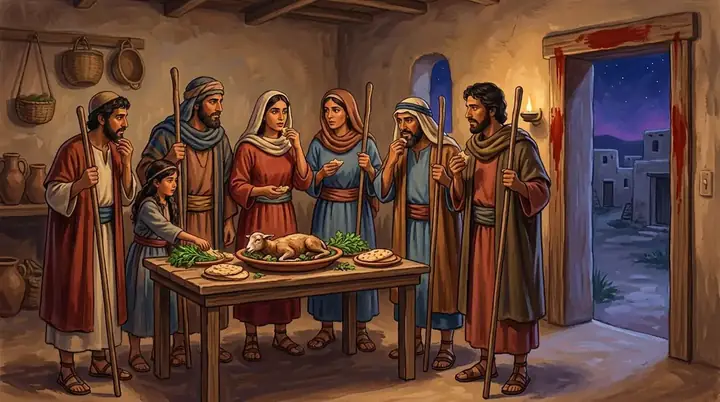
The yearly feast remembering the night God rescued Israel from Egypt, when death passed over every house marked with a lamb's blood. Jesus died at Passover, and is called "our passover".
- When
- The evening of the 14th day of the first month (Abib or Nisan), then seven days of unleavened bread
- The meal
- A roast lamb, unleavened bread and bitter herbs, eaten in haste
- Hebrew
- Pesach, "a passing over"
- In the New Testament
- Jesus was crucified at Passover; the Lord's Supper began at a Passover meal
What it was
Passover was the first and greatest of Israel's three yearly feasts. It looked back to the night of the tenth plague. God told each family to kill a year-old lamb without blemish, put its blood on the doorposts and lintel of the house, and eat the meat roasted with unleavened bread and bitter herbs, dressed and ready to travel. That night the firstborn died in every Egyptian home, but where God saw the blood he passed over, and no harm came (Exodus 12:1–13). By morning Pharaoh was begging Israel to go.
God made it a feast for ever. Each year, when evening came on the fourteenth day of the first month, every family killed and ate its lamb, and for the next seven days no leaven was to be found in any house (Exodus 12:14–20; Leviticus 23:5–8). Children would ask what it meant, and the father would tell them how the LORD brought them out of Egypt (Exodus 12:26–27).
How it was kept
Once Israel had a temple, the lambs were killed there in Jerusalem and eaten in the city (Deuteronomy 16:5–7). The feast was renewed at great moments: when Joshua led Israel into Canaan (Joshua 5:10), under Hezekiah (2 Chronicles 30) and Josiah (2 Chronicles 35), and when the exiles came home (Ezra 6:19). By the time of Jesus, wine, a sauce for the herbs and psalms of praise were part of the meal, and Jerusalem overflowed with pilgrims.
Jesus kept the feast from boyhood (Luke 2:41–42). His last supper with the disciples was a Passover meal (Luke 22:7–15), and there he took the bread and the cup and gave them a new meaning.
Points to Christ
John the Baptist called Jesus "the Lamb of God" (John 1:29). He died at Passover, at the hour the lambs were being killed, and like the lamb not a bone of him was broken (John 19:36). Paul says it plainly: "Christ our passover is sacrificed for us" (1 Corinthians 5:7). His blood turns away judgment from all who shelter under it, and his people are to clear out the old leaven of sin and live as a new, unleavened loaf (1 Corinthians 5:8).
Key verses
- Exodus 12:1–13
And the Lord spake unto Moses and Aaron in the land of Egypt, saying, This month shall be unto you the beginning of months: it shall be the first month of the year to you. Speak ye unto all the congregation of Israel, saying, In the tenth day of this month they shall take to them every man a lamb, according to the house of their fathers, a lamb for an house: …
- Exodus 12:26–27
And it shall come to pass, when your children shall say unto you, What mean ye by this service? That ye shall say, It is the sacrifice of the Lord’s passover, who passed over the houses of the children of Israel in Egypt, when he smote the Egyptians, and delivered our houses. And the people bowed the head and worshipped.
- Deuteronomy 16:1–8
Observe the month of Abib, and keep the passover unto the Lord thy God: for in the month of Abib the Lord thy God brought thee forth out of Egypt by night. Thou shalt therefore sacrifice the passover unto the Lord thy God, of the flock and the herd, in the place which the Lord shall choose to place his name there. Thou shalt eat no leavened bread with it; seven days shalt thou eat unleavened bread therewith, even the bread of affliction; for thou camest forth out of the land of Egypt in haste: that thou mayest remember the day when thou camest forth out of the land of Egypt all the days of thy life. …
- Luke 22:7–20
Then came the day of unleavened bread, when the passover must be killed. And he sent Peter and John, saying, Go and prepare us the passover, that we may eat. And they said unto him, Where wilt thou that we prepare? …
- John 19:36
For these things were done, that the scripture should be fulfilled, A bone of him shall not be broken.
- 1 Corinthians 5:7
Purge out therefore the old leaven, that ye may be a new lump, as ye are unleavened. For even Christ our passover is sacrificed for us:
On the map
Read next
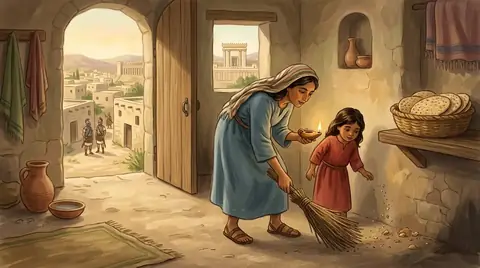 FeastThe Feast of Unleavened BreadThe seven days after Passover when Israel ate only bread without yeast and cleared all leaven from their homes…
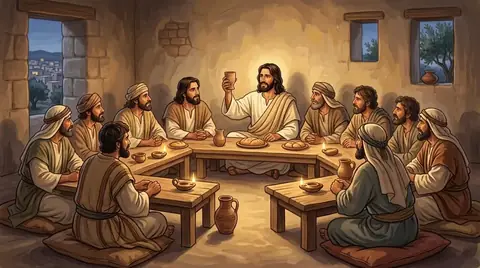 Custom · WorshipLord's SupperThe meal of bread and wine that Jesus gave his disciples on the night before he died, to be eaten in remembrance of him…
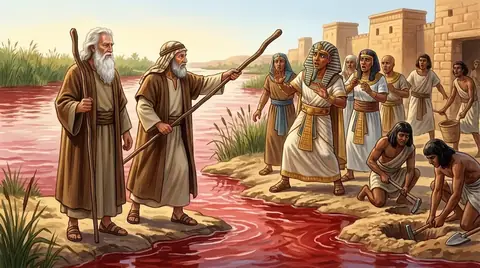 JudgmentThe plagues of EgyptThe ten disasters God sent on Egypt when Pharaoh would not let Israel go: from the Nile turned to blood to the death of…
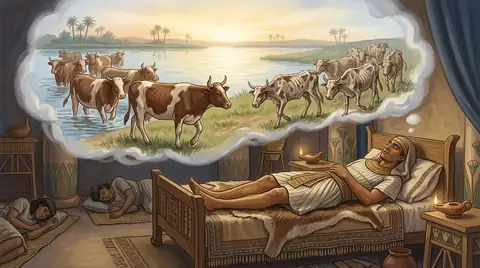 Title · RulerPharaohNot a personal name but the title borne by every king of Egypt, like "Caesar". The Bible names several, the best known…
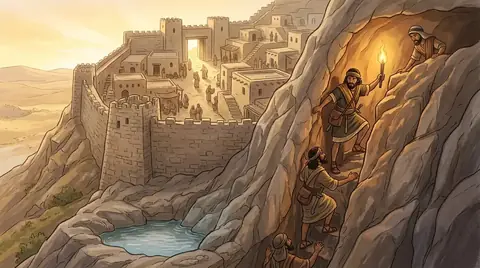 PlaceJerusalemThe city David made his capital and where Solomon built the temple. Jesus died and rose there and the church began…
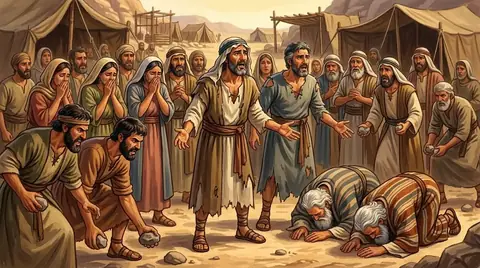 PersonJoshuaMoses' helper who took over from him and led Israel across the Jordan into the Promised Land. He fought the wars of…
Written for this app in its own words, from the Bible, with the facts checked against Bible dictionaries and encyclopedias: Easton's, Smith's, Fausset's, ISBE, Holman, the New Bible Dictionary, Vine's and the Thompson Chain topics. Also: Edersheim, The Temple.
