
Nation
Canaanite
KAY-na-niteOld Testament · the people of Canaan before Israel · also Simon "the Canaanite", one of the Twelve
The descendants of Canaan, son of Ham, who lived in the land before Israel. They were famous traders and worshipped Baal. In the Gospels the apostle Simon is called the Canaanite, meaning the Zealot.
- Descended from
- Canaan, son of Ham (Genesis 10:15–19)
- Lived
- By the sea and along the Jordan (Numbers 13:29); the cities of Tyre and Sidon
- Worshipped
- Baal and Ashtoreth
- Simon
- "Simon the Canaanite" (Matthew 10:4), called Zelotes in Luke 6:15
Who they were
Genesis traces the Canaanites to Canaan, a grandson of Noah through Ham. His family spread from Sidon in the north to Gaza in the south, and into many peoples, among them the Jebusites, Amorites and Hivites (Genesis 10:15–19). In a narrow sense the Canaanites were one of these peoples, who held the plains by the sea and the Jordan valley, while others held the hills (Numbers 13:29). In a wider sense the name covers everyone who lived in the land: "the Canaanite was then in the land" when Abraham arrived (Genesis 12:6).
They lived in walled cities, fought with iron chariots (Joshua 17:16) and grew rich by trade, so that "Canaanite" came to mean a merchant (Proverbs 31:24, where the Hebrew word is used). Along the coast they were the people the Greeks called Phoenicians.
Israel and the Canaanites
Their religion was the worship of Baal and Ashtoreth, with temple prostitution and even the burning of children (Deuteronomy 12:31). God gave them centuries to turn (Genesis 15:16), but at last told Israel to drive them out and make no covenant with them, so that Israel would not learn their ways (Deuteronomy 7:1–4). Israel never fully obeyed. Tribe after tribe left Canaanites in its land (Judges 1:27–33), and their gods became a snare, just as God had warned (Judges 2:3). In Solomon's day those who remained were made to serve as forced labourers (1 Kings 9:20–21).
Simon the Canaanite
One of the twelve apostles is called "Simon the Canaanite" in the KJV (Matthew 10:4; Mark 3:18). Here the word does not mean a man of Canaan; it comes from an Aramaic word for zeal, and Luke gives it in Greek as "Simon called Zelotes" (Luke 6:15). He had probably been one of the Zealots, who longed to throw off Rome. See also Canaanite woman.
Key verses
- Genesis 10:15–19
And Canaan begat Sidon his firstborn, and Heth, And the Jebusite, and the Amorite, and the Girgasite, And the Hivite, and the Arkite, and the Sinite, …
- Numbers 13:29
The Amalekites dwell in the land of the south: and the Hittites, and the Jebusites, and the Amorites, dwell in the mountains: and the Canaanites dwell by the sea, and by the coast of Jordan.
- Deuteronomy 7:1–4
When the Lord thy God shall bring thee into the land whither thou goest to possess it, and hath cast out many nations before thee, the Hittites, and the Girgashites, and the Amorites, and the Canaanites, and the Perizzites, and the Hivites, and the Jebusites, seven nations greater and mightier than thou; And when the Lord thy God shall deliver them before thee; thou shalt smite them, and utterly destroy them; thou shalt make no covenant with them, nor shew mercy unto them: Neither shalt thou make marriages with them; thy daughter thou shalt not give unto his son, nor his daughter shalt thou take unto thy son. …
- Judges 1:27–28
Neither did Manasseh drive out the inhabitants of Beth–shean and her towns, nor Taanach and her towns, nor the inhabitants of Dor and her towns, nor the inhabitants of Ibleam and her towns, nor the inhabitants of Megiddo and her towns: but the Canaanites would dwell in that land. And it came to pass, when Israel was strong, that they put the Canaanites to tribute, and did not utterly drive them out.
- Matthew 10:4
Simon the Canaanite, and Judas Iscariot, who also betrayed him.
On the map
Read next
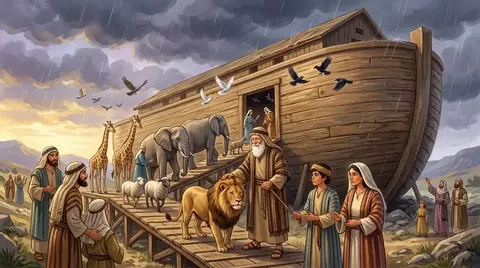 PersonHamNoah's youngest son, saved in the ark with his wife. After the flood he shamed his drunken father, and Noah's curse…Place · RiverJordanThe river of the Bible: Israel crossed it on dry ground into the promised land, Elijah and Elisha parted it, Naaman…
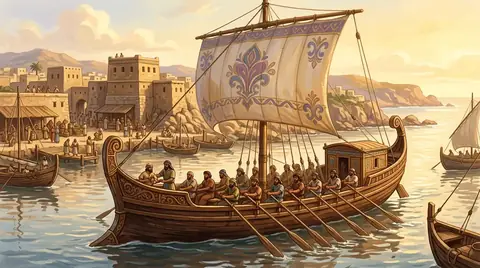 Place · CityTyreThe great trading port of Phoenicia, on the coast north of Israel. Its king Hiram helped build Solomon's temple; later…
 Place · CitySidonOne of the two great Phoenician port cities, with Tyre. Its sailors and craftsmen were famous, its goddess Ashtoreth…
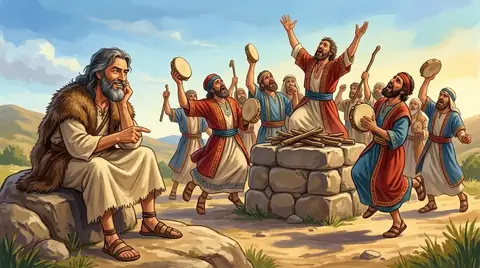 IdolBaalThe Canaanites' chief god, a storm god believed to send rain and harvests. Israel kept falling into his worship, until…IdolAshtorethThe chief goddess of the Canaanites and Phoenicians, worshipped beside Baal as a goddess of love, fertility and war.…
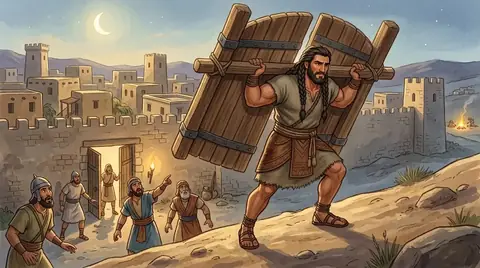 Place · CityGazaThe southernmost of the five Philistine cities, on the coast road to Egypt. Samson carried off its gates and later died…
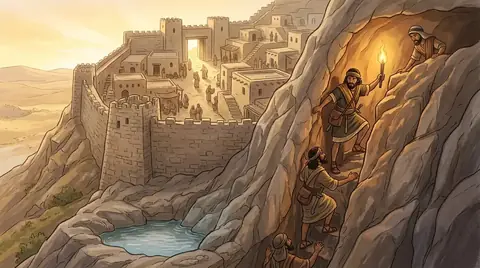 NationJebusitesThe Canaanite people who held Jerusalem, then called Jebus, until David captured it. They kept their hill fortress for…
Written for this app in its own words, from the Bible, with the facts checked against Bible dictionaries and encyclopedias: Easton's, Smith's, Fausset's, ISBE, Holman, the New Bible Dictionary, Vine's and the Thompson Chain topics.
