
Idol
Ashtoreth
ASH-toh-rethplural Ashtaroth · the Greeks' Astarte, Babylon's Ishtar
The chief goddess of the Canaanites and Phoenicians, worshipped beside Baal as a goddess of love, fertility and war. Israel bowed to her from the judges to Solomon.
- Worshipped by
- The Sidonians, the Philistines, and Israel in its worst days
- Paired with
- Baal; the plural "Baalim and Ashtaroth" means the whole crowd of local gods
- Also called
- Probably the "queen of heaven" of Jeremiah's day
Who she was
Ashtoreth was the goddess of the people of Sidon and the Canaanite cities. Her worshippers looked to her for children, good harvests and victory in battle, and her rites were shameful. She was the female partner of Baal, and the Bible often names the two together: "Baalim and Ashtaroth" stands for the whole set of gods that the Canaanites served.
Israel's weakness for her
As soon as Joshua's generation died, Israel began to serve Baal and Ashtoreth (Judges 2:13). Samuel told the people they could only expect God's help if they put her away, and they did (1 Samuel 7:3–4). After Saul fell at Gilboa, the Philistines hung his armour in her temple as a trophy (1 Samuel 31:10).
The worst fall came with Solomon. In his old age his foreign wives led him to follow "Ashtoreth the goddess of the Zidonians", and he built her a high place east of Jerusalem (1 Kings 11:5,33). It stood for three hundred years until Josiah defiled it (2 Kings 23:13).
The queen of heaven
In Jeremiah's day the families of Judah baked cakes and poured out drink offerings to the "queen of heaven" (Jeremiah 7:18). Most take this to be Ashtoreth under another name. When Jeremiah warned the refugees in Egypt, the women answered that things had gone well when they served her, and they would not stop (Jeremiah 44:17–19).
For us
Ashtoreth promised what everyone wants, love, plenty and safety, and asked for the heart in return. The Bible's answer is that these are gifts of the living God, and no carved goddess can give them.
Key verses
- Judges 2:13
And they forsook the Lord, and served Baal and Ashtaroth.
- 1 Samuel 7:3–4
And Samuel spake unto all the house of Israel, saying, If ye do return unto the Lord with all your hearts, then put away the strange gods and Ashtaroth from among you, and prepare your hearts unto the Lord, and serve him only: and he will deliver you out of the hand of the Philistines. Then the children of Israel did put away Baalim and Ashtaroth, and served the Lord only.
- 1 Kings 11:5
For Solomon went after Ashtoreth the goddess of the Zidonians, and after Milcom the abomination of the Ammonites.
- 2 Kings 23:13
And the high places that were before Jerusalem, which were on the right hand of the mount of corruption, which Solomon the king of Israel had builded for Ashtoreth the abomination of the Zidonians, and for Chemosh the abomination of the Moabites, and for Milcom the abomination of the children of Ammon, did the king defile.
- Jeremiah 44:17–19
But we will certainly do whatsoever thing goeth forth out of our own mouth, to burn incense unto the queen of heaven, and to pour out drink offerings unto her, as we have done, we, and our fathers, our kings, and our princes, in the cities of Judah, and in the streets of Jerusalem: for then had we plenty of victuals, and were well, and saw no evil. But since we left off to burn incense to the queen of heaven, and to pour out drink offerings unto her, we have wanted all things, and have been consumed by the sword and by the famine. And when we burned incense to the queen of heaven, and poured out drink offerings unto her, did we make her cakes to worship her, and pour out drink offerings unto her, without our men?
Read next
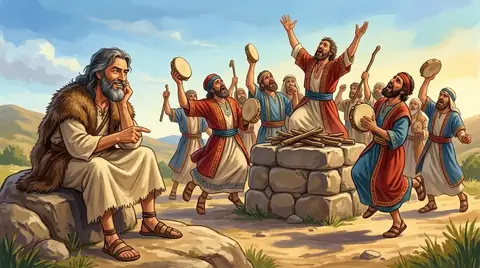 IdolBaalThe Canaanites' chief god, a storm god believed to send rain and harvests. Israel kept falling into his worship, until…
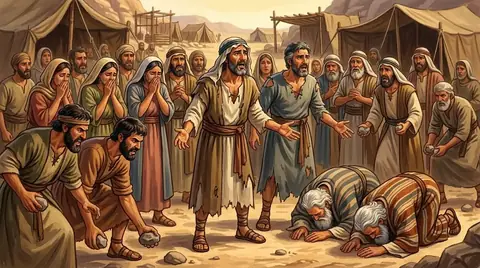 PersonJoshuaMoses' helper who took over from him and led Israel across the Jordan into the Promised Land. He fought the wars of…
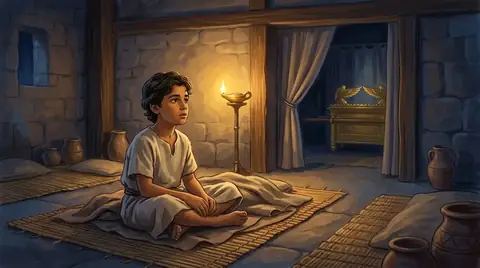 Person · Prophet and judgeSamuelThe prophet who led Israel from the time of the judges into the time of the kings. Given to God by his mother Hannah…
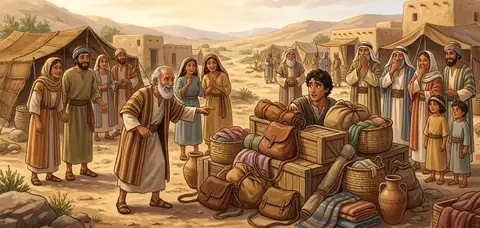 Person · KingSaulIsrael's first king, a tall Benjamite chosen when the people demanded a king like the nations. He began humbly and won…NationThe PhilistinesA warlike people from over the sea, settled in five cities on the coastal plain to the south-west of Israel. With iron…
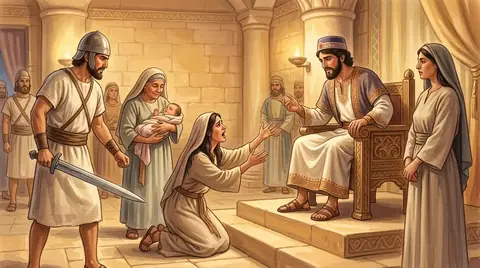 Person · KingSolomonDavid's son and Israel's third king, who asked God for wisdom and received riches and fame as well. He built the temple…
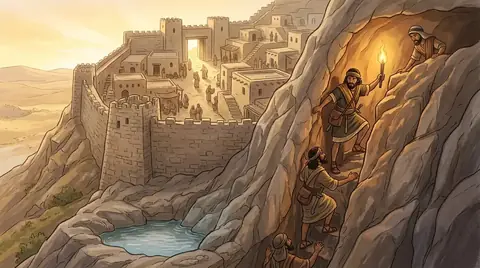 PlaceJerusalemThe city David made his capital and where Solomon built the temple. Jesus died and rose there and the church began…
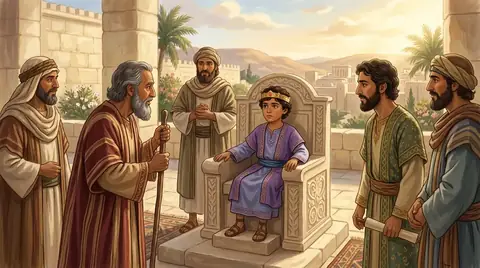 PersonJosiahThe boy king of Judah who turned the nation back to God. When the lost Book of the Law was found in the temple, he tore…
Written for this app in its own words, from the Bible, with the facts checked against Bible dictionaries and encyclopedias: Easton's, Smith's, Fausset's, ISBE, Holman, the New Bible Dictionary, Vine's and the Thompson Chain topics.
