
Nation
Amorites
AM-or-itesA people of Canaan, descended from Canaan the son of Ham · the name means "hill-dwellers"
One of the chief peoples of Canaan before Israel, living in the hills on both sides of the Jordan. Their kings Sihon and Og were beaten by Moses, and the name often stands for all the Canaanites together.
- Descended from
- Canaan, son of Ham (Genesis 10:15–16)
- Where
- The hill country west of the Dead Sea, and the kingdoms of Sihon and Og east of the Jordan
- Kings
- Sihon of Heshbon, Og of Bashan, the five kings beaten at Gibeon (Joshua 10)
- Known for
- Great size (Amos 2:9) and great wickedness (Genesis 15:16)
Who they were
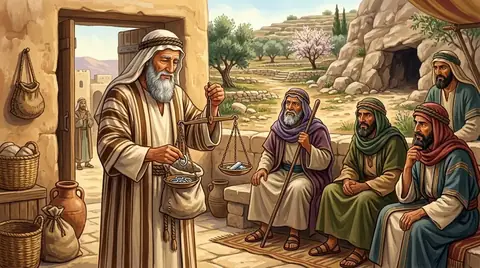
The Amorites were among the oldest inhabitants of Canaan, and in the days of Abraham they held the hill country around Hebron; three Amorite chiefs were Abraham's allies (Genesis 14:13). Their name means "highlanders". Because they were so widespread, the Bible sometimes uses "Amorites" for all the peoples of the land, just as it sometimes uses "Canaanites". God told Abraham that his descendants would come back to the land only after four hundred years, "for the iniquity of the Amorites is not yet full" (Genesis 15:16): the land would not change hands until its people had earned judgment.
Sihon and Og
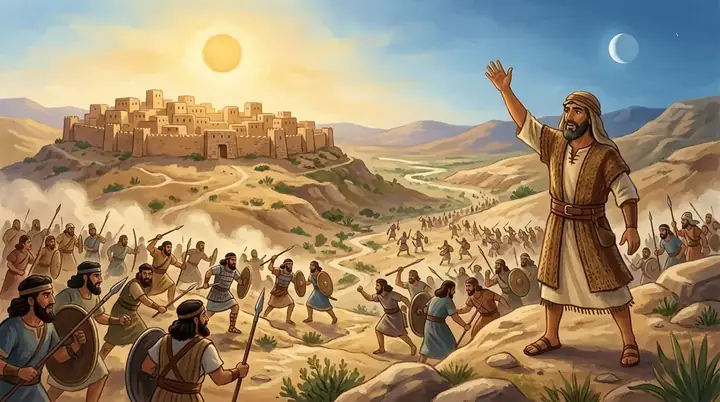
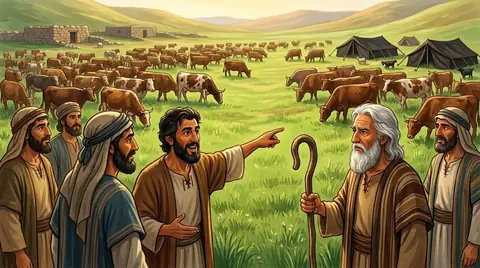
By Moses' time two Amorite kings ruled east of the Jordan: Sihon at Heshbon and Og in Bashan, a giant whose iron bed was nine cubits long (Deuteronomy 3:11). When Sihon refused Israel passage and attacked, Israel destroyed him and took his land; Og followed (Numbers 21:21–35). Their defeat was sung for generations as the first proof that God would give Israel the land (Psalms 135:11; Psalms 136:19–20). The tribes of Reuben, Gad and half of Manasseh settled there.
In the conquest
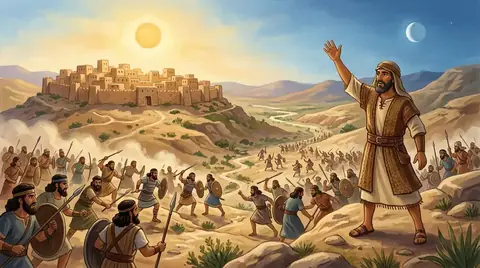
West of the Jordan, five Amorite kings led by the king of Jerusalem attacked Gibeon for making peace with Israel. Joshua marched all night, the LORD threw great hailstones on the fleeing army, and the sun stood still until the victory was complete (Joshua 10:1–14). Even so, the Amorites were not driven out everywhere; they forced the tribe of Dan back into the hills (Judges 1:34–36), and the survivors were made forced labourers by Solomon (1 Kings 9:20–21).
What to learn
Amos reminds Israel that God destroyed the Amorite, tall as cedars and strong as oaks, for their sake (Amos 2:9); Ezekiel reminds them that in their own idolatry they had become the Amorites' children (Ezekiel 16:3). The people who replaced the Amorites were judged by the same standard.
Key verses
- Genesis 15:16
But in the fourth generation they shall come hither again: for the iniquity of the Amorites is not yet full.
- Numbers 21:21–24
And Israel sent messengers unto Sihon king of the Amorites, saying, Let me pass through thy land: we will not turn into the fields, or into the vineyards; we will not drink of the waters of the well: but we will go along by the king’s high way, until we be past thy borders. And Sihon would not suffer Israel to pass through his border: but Sihon gathered all his people together, and went out against Israel into the wilderness: and he came to Jahaz, and fought against Israel. …
- Joshua 10:12–14
Then spake Joshua to the Lord in the day when the Lord delivered up the Amorites before the children of Israel, and he said in the sight of Israel, Sun, stand thou still upon Gibeon; and thou, Moon, in the valley of Ajalon. And the sun stood still, and the moon stayed, until the people had avenged themselves upon their enemies. Is not this written in the book of Jasher? So the sun stood still in the midst of heaven, and hasted not to go down about a whole day. And there was no day like that before it or after it, that the Lord hearkened unto the voice of a man: for the Lord fought for Israel.
- Amos 2:9–10
Yet destroyed I the Amorite before them, whose height was like the height of the cedars, and he was strong as the oaks; yet I destroyed his fruit from above, and his roots from beneath. Also I brought you up from the land of Egypt, and led you forty years through the wilderness, to possess the land of the Amorite.
On the map
Family
- Brothers and sisters
- Sidon, Heth, Jebusites, Girgashites, Hivites, Arkites, Sinites, Arvadites, Zemarites, Hamathites
Mentioned in 86 verses
- Genesis 6
- Exodus 6
- Numbers 12
- Deuteronomy 15
- Joshua 20
- Judges 11
- 1 Samuel 1
- 2 Samuel 1
- 1 Kings 3
- 2 Kings 1
- 1 Chronicles 1
- 2 Chronicles 1
- Ezra 1
- Nehemiah 1
- Psalms 2
- Ezekiel 2
- Amos 2
Read next
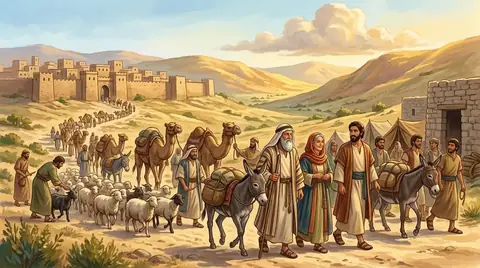 PlaceCanaanThe land between the Jordan and the Mediterranean that God promised to Abraham and gave to Israel under Joshua. It took…
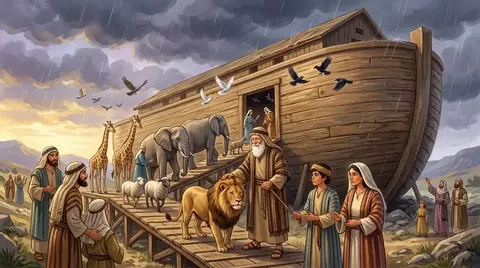 PersonHamNoah's youngest son, saved in the ark with his wife. After the flood he shamed his drunken father, and Noah's curse…Person · KingSihonThe Amorite king of Heshbon who refused to let Israel pass through his land and marched out to fight them. Israel…
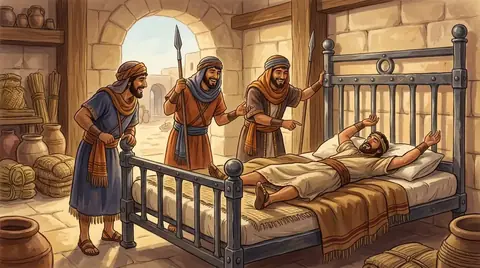 PersonOgThe giant king of Bashan, east of the Jordan, whom Israel defeated and killed at Edrei on the way to the Promised Land.…
 Place · CityHebronAn ancient city in the hills of Judah where Abraham lived and the patriarchs were buried in the cave of Machpelah.…
 Place · CityHeshbonThe city of Sihon, king of the Amorites, captured by Israel under Moses and given to the tribe of Reuben. Later it…Place · RegionBashanA rich, high tableland east of the Sea of Galilee, famous for its oaks and fat cattle. Israel took it from the giant…
 Place · CityGibeonThe Hivite city whose people fooled Joshua into a treaty, and where the sun stood still over the battle that followed.…
Written for this app in its own words, from the Bible, with the facts checked against Bible dictionaries and encyclopedias: Easton's, Smith's, Fausset's, ISBE, Holman, the New Bible Dictionary, Vine's and the Thompson Chain topics. People and places: STEPBible.org (TIPNR), CC BY 4.0; where a place is today and its photo: OpenBible.info, CC BY 4.0.
