
Person
Uriah
yoo-RYE-ahOld Testament · about 980 BC · the name may mean "the LORD is my light"
A Hittite soldier in David's army and husband of Bathsheba. David took his wife, then had him killed in battle to hide the sin; Nathan the prophet exposed it.
- Family
- Husband of Bathsheba; a Hittite by birth
- Known for
- Loyalty to his fellow soldiers; killed on David's orders
- Died
- Before the walls of Rabbah, by Joab's arrangement (2 Samuel 11:17)
- Also called
- Urias in Matthew 1:6
His story
Uriah was one of King David's mighty men, the picked band of warriors listed at the end of 2 Samuel (2 Samuel 23:39). Though a Hittite, he had taken his place in Israel and bore a Hebrew name. His house in Jerusalem stood near the palace, and his wife was Bathsheba.
While Uriah was away besieging the Ammonite city of Rabbah under Joab, David saw Bathsheba bathing, sent for her and slept with her. When she sent word that she was pregnant, David called Uriah home on the pretext of asking about the war, hoping he would go to his wife and the child would pass as his. Uriah would not. He slept at the palace door with the king's servants, saying that the ark and the army were in tents in the field, so how could he go home to eat, drink and lie with his wife (2 Samuel 11:11)? David made him drunk the next night; still he did not go home.
So David wrote to Joab and sent the letter by Uriah's own hand: put him in the thick of the fight and fall back, "that he may be smitten, and die" (2 Samuel 11:15). Joab did so, and Uriah fell. After the days of mourning, David married Bathsheba.
What came of it
"The thing that David had done displeased the LORD" (2 Samuel 11:27). God sent Nathan with the story of a rich man who stole a poor man's one lamb. David condemned the man, and Nathan answered, "Thou art the man." The sword would never leave David's house, and the child died (2 Samuel 12). Long after, the writer of Kings still measured David's faithfulness by this one exception, "the matter of Uriah the Hittite" (1 Kings 15:5). Yet grace had the last word: Bathsheba's later son Solomon became king, and Matthew's family tree of Jesus names "her that had been the wife of Urias" (Matthew 1:6).
What to learn
Uriah, the outsider, kept faith with his comrades while the king who should have been in the field betrayed him. Sin covered up grows: one look became adultery, then deceit, then murder. And no one is too great to be called to account by God.
Others with this name
A priest in the days of Ahaz built a copy of a pagan altar from Damascus on the king's orders and let it replace the bronze altar (2 Kings 16:10–16); he was also a witness for Isaiah (Isaiah 8:2). A prophet from Kiriath-jearim, son of Shemaiah, preached as Jeremiah did; Jehoiakim had him dragged back from Egypt and killed (Jeremiah 26:20–23). A priest after the exile, father of Meremoth, helped weigh the temple treasure and repair the wall (Ezra 8:33; Nehemiah 3:4, 21), and a Uriah was among the priests at Ezra's side as the Law was read aloud (Nehemiah 8:4).
Key verses
- 2 Samuel 11:11
And Uriah said unto David, The ark, and Israel, and Judah, abide in tents; and my lord Joab, and the servants of my lord, are encamped in the open fields; shall I then go into mine house, to eat and to drink, and to lie with my wife? as thou livest, and as thy soul liveth, I will not do this thing.
- 2 Samuel 11:15
And he wrote in the letter, saying, Set ye Uriah in the forefront of the hottest battle, and retire ye from him, that he may be smitten, and die.
- 2 Samuel 12:9
Wherefore hast thou despised the commandment of the Lord, to do evil in his sight? thou hast killed Uriah the Hittite with the sword, and hast taken his wife to be thy wife, and hast slain him with the sword of the children of Ammon.
- 1 Kings 15:5
Because David did that which was right in the eyes of the Lord, and turned not aside from any thing that he commanded him all the days of his life, save only in the matter of Uriah the Hittite.
- Matthew 1:6
And Jesse begat David the king; and David the king begat Solomon of her that had been the wife of Urias;
On the map
Family
- Married to
- Bathsheba
Mentioned in 22 verses
- 2 Samuel 19
- 1 Kings 1
- 1 Chronicles 1
- Matthew 1
Read next
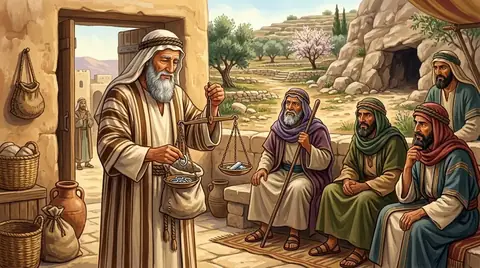 Person · NationHethA son of Canaan in the table of nations and the ancestor of the Hittites, the "children of Heth" who lived around…
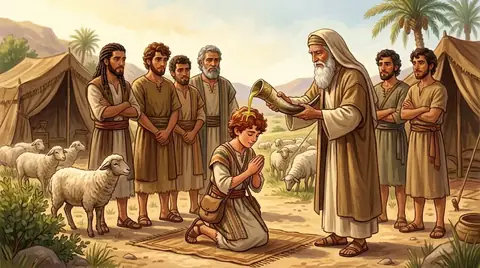 Person · KingDavidThe shepherd boy who killed Goliath and became Israel's greatest king, "a man after God's own heart". He wrote many…
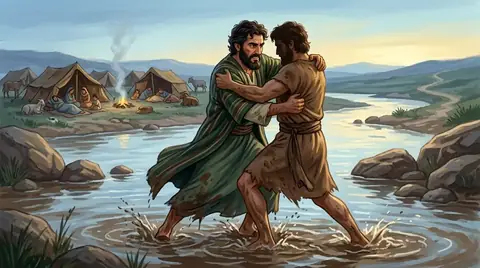 Person · NationIsraelThe new name God gave Jacob after he wrestled all night at Peniel, and from him the name of the whole nation of the…
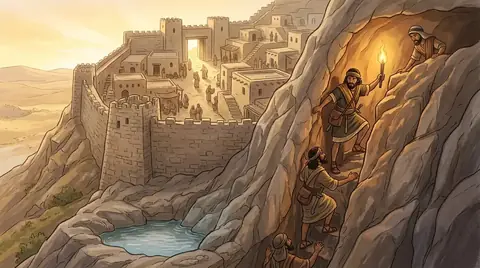 PlaceJerusalemThe city David made his capital and where Solomon built the temple. Jesus died and rose there and the church began…
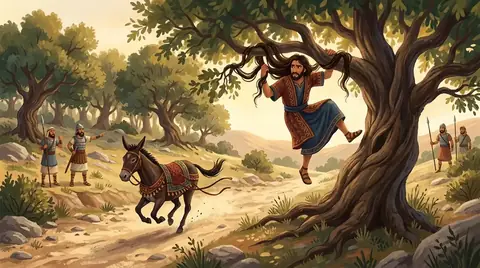 PersonJoabDavid's nephew, who commanded his army for forty years: brave, loyal to the throne, and ruthless. He murdered Abner and…
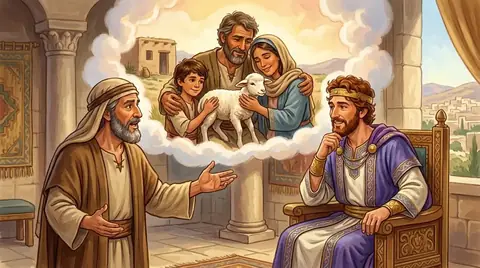 PersonNathanThe prophet who told David that his son, not he, would build the temple, who confronted him over Bathsheba with the…
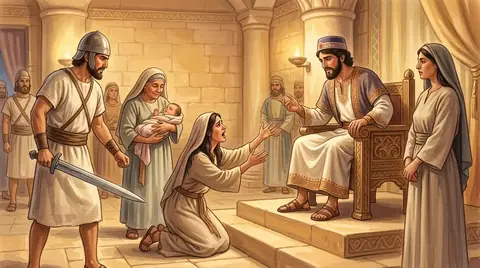 Person · KingSolomonDavid's son and Israel's third king, who asked God for wisdom and received riches and fame as well. He built the temple…
Written for this app in its own words, from the Bible, with the facts checked against Bible dictionaries and encyclopedias: Easton's, Smith's, Fausset's, ISBE, Holman, the New Bible Dictionary, Vine's and the Thompson Chain topics. People and places: STEPBible.org (TIPNR), CC BY 4.0; where a place is today and its photo: OpenBible.info, CC BY 4.0.
