
Saying
Unto this day
A Bible writer's way of saying "you can still see it"
A phrase Bible writers use to point to something readers could still see or find: a heap of stones, a place-name, a custom. It says the story left its mark, and the mark is still there.
- Where
- Genesis 26:33; Genesis 32:32; Joshua 4:9; Joshua 7:26; 1 Samuel 30:25; Matthew 27:8; Matthew 28:15
What it means
When a writer says that something is so "unto this day", he means up to the time he is writing. It is his way of giving evidence. The story he has told was not a tale: the stones are still in the river, the town still has that name, people still keep that rule. Readers could check.
Examples
The well Isaac dug is why the town is called Beersheba "unto this day" (Genesis 26:33). Because the angel touched Jacob's hip, "the children of Israel eat not of the sinew which shrank... unto this day" (Genesis 32:32). Joshua set up twelve stones in the middle of the Jordan, "and they are there unto this day" (Joshua 4:9); the heap of stones over Achan in the valley of Achor was still there too (Joshua 7:26). The Jebusites still lived among the Benjamites in Jerusalem (Judges 1:21). David's rule that the men who guarded the baggage share the spoil equally was still Israel's law "unto this day" (1 Samuel 30:25). The book of Kings says that the peoples settled in Samaria "fear the LORD, and serve their graven images... unto this day" (2 Kings 17:41).
Matthew uses the phrase twice. The field bought with Judas's silver "was called, The field of blood, unto this day" (Matthew 27:8), and the soldiers' story that the disciples stole Jesus' body was still going round among the Jews when he wrote (Matthew 28:15). The Gospel was written while the people who knew both facts were still alive.
For us
The phrase is a small reminder that the Bible's writers wrote about real places and real events, and expected their readers to look.
Key verses
- Genesis 32:32
Therefore the children of Israel eat not of the sinew which shrank, which is upon the hollow of the thigh, unto this day: because he touched the hollow of Jacob’s thigh in the sinew that shrank.
- Joshua 4:9
And Joshua set up twelve stones in the midst of Jordan, in the place where the feet of the priests which bare the ark of the covenant stood: and they are there unto this day.
- 1 Samuel 30:25
And it was so from that day forward, that he made it a statute and an ordinance for Israel unto this day.
- Matthew 27:8
Wherefore that field was called, The field of blood, unto this day.
- Matthew 28:15
So they took the money, and did as they were taught: and this saying is commonly reported among the Jews until this day.
Read next
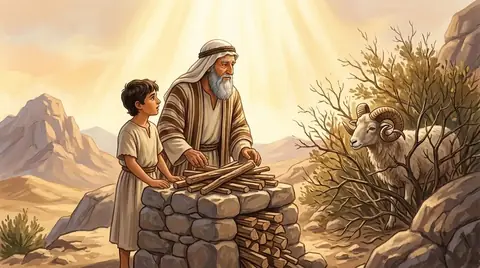 PersonIsaacThe son God promised to Abraham and Sarah when they were far too old for children, offered on Mount Moriah and spared.…
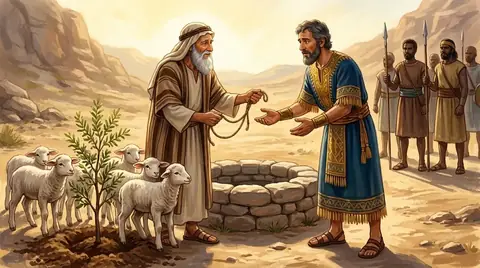 Place · TownBeershebaThe well where Abraham swore a treaty, and the home of all three patriarchs. As the last town before the desert, "from…
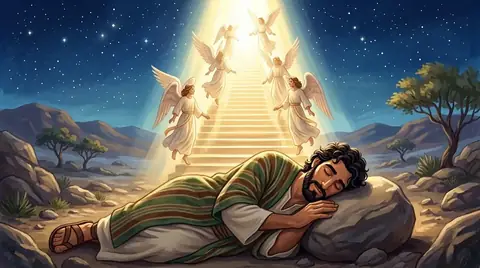 PersonJacobIsaac's younger twin son, who won his brother's birthright and blessing by cunning, was changed by God, and was renamed…
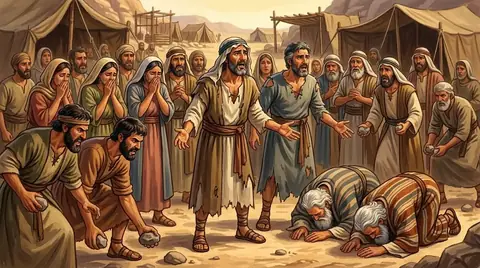 PersonJoshuaMoses' helper who took over from him and led Israel across the Jordan into the Promised Land. He fought the wars of…
Written for this app in its own words, from the Bible, with the facts checked against Bible dictionaries and encyclopedias: Easton's, Smith's, Fausset's, ISBE, Holman, the New Bible Dictionary, Vine's and the Thompson Chain topics.
