
Place · Town
Beersheba
beer-SHEE-baSouthern Israel · "well of the oath" · today Be'er Sheva
The well where Abraham swore a treaty, and the home of all three patriarchs. As the last town before the desert, "from Dan to Beersheba" meant the whole land.
- Where
- On the edge of the Negev desert, about 45 miles (72 km) south-west of Jerusalem
- Known for
- Abraham's well and tamarisk tree; the southern limit of Israel
- Given to
- The tribe of Simeon, within Judah (Joshua 19:2)
Where
Beersheba stands where the farmland of Judah gives way to the dry Negev. South of it lay only desert, so it marked the southern end of the settled land. "From Dan to Beersheba" became the way to say "all Israel", from one end to the other (Judges 20:1; 2 Samuel 24:2), a distance of about 150 miles (240 km).
In the Old Testament
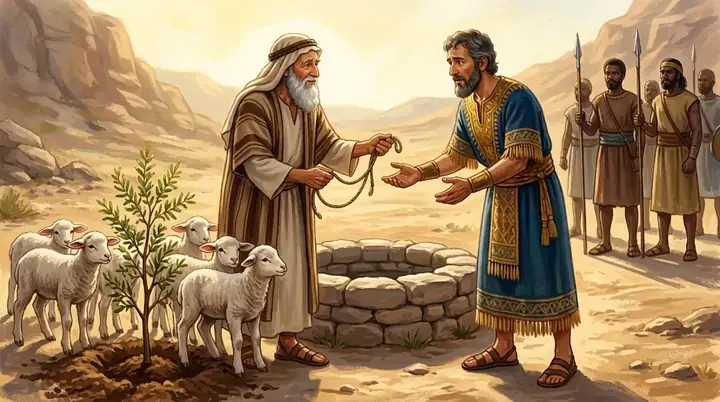
Abraham dug a well here, and when King Abimelech of Gerar's men seized it, the two made a treaty. Abraham gave seven ewe lambs as a witness, and they swore an oath, which is how the place got its name; he planted a tamarisk tree and called on the name of the everlasting God (Genesis 21:22–33). It was from Beersheba that he set out to offer Isaac (Genesis 22:19). Isaac later reopened the wells and built an altar here after God appeared to him (Genesis 26:23–33). Jacob left Beersheba to flee to Haran (Genesis 28:10), and years later stopped here on his way down to Egypt, where God spoke to him in the night (Genesis 46:1–5).
Samuel's sons judged at Beersheba and took bribes (1 Samuel 8:2). Elijah fled this far from Jezebel before going on into the wilderness (1 Kings 19:3). In later years the town became a centre of false worship, and Amos warned the people not to go there on pilgrimage (Amos 5:5; 8:14).
Today
Be'er Sheva is now a large modern city in Israel. The mound of the ancient town lies just outside it, with a deep well at the gate.
Key verses
- Genesis 21:31–33
Wherefore he called that place Beer–sheba; because there they sware both of them. Thus they made a covenant at Beer–sheba: then Abimelech rose up, and Phichol the chief captain of his host, and they returned into the land of the Philistines. And Abraham planted a grove in Beer–sheba, and called there on the name of the Lord, the everlasting God.
- Genesis 26:23–25
And he went up from thence to Beer–sheba. And the Lord appeared unto him the same night, and said, I am the God of Abraham thy father: fear not, for I am with thee, and will bless thee, and multiply thy seed for my servant Abraham’s sake. And he builded an altar there, and called upon the name of the Lord, and pitched his tent there: and there Isaac’s servants digged a well.
- Genesis 46:1
And Israel took his journey with all that he had, and came to Beer–sheba, and offered sacrifices unto the God of his father Isaac.
- Judges 20:1
Then all the children of Israel went out, and the congregation was gathered together as one man, from Dan even to Beer–sheba, with the land of Gilead, unto the Lord in Mizpeh.
- Amos 5:5
But seek not Beth–el, nor enter into Gilgal, and pass not to Beer–sheba: for Gilgal shall surely go into captivity, and Beth–el shall come to nought.
On the map
Mentioned in 33 verses
- Genesis 10
- Joshua 2
- Judges 1
- 1 Samuel 2
- 2 Samuel 5
- 1 Kings 2
- 2 Kings 2
- 1 Chronicles 2
- 2 Chronicles 3
- Nehemiah 2
- Amos 2
Read next
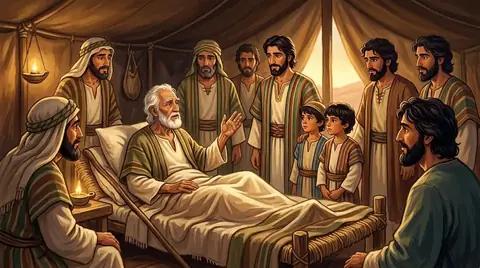 Person · PatriarchSimeonJacob's second son, by Leah. With Levi he massacred the men of Shechem to avenge their sister Dinah, and for that his…
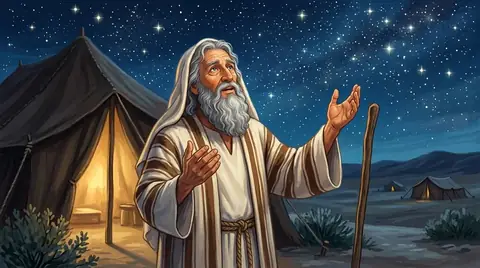 PersonAbrahamThe man God called out of Ur to a land he had never seen, promising him a people and a blessing for the whole world. He…
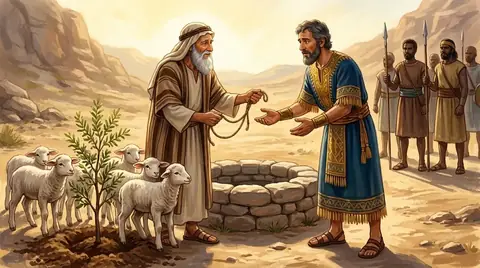 PersonAbimelechThe name of the kings of Gerar who dealt with Abraham and Isaac over their wives, and of Gideon's ruthless son who…
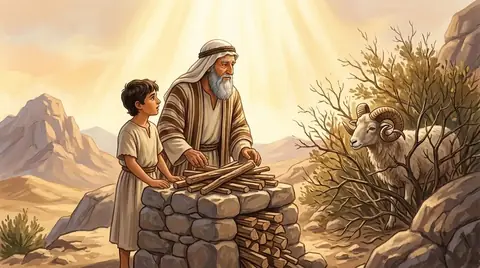 PersonIsaacThe son God promised to Abraham and Sarah when they were far too old for children, offered on Mount Moriah and spared.…
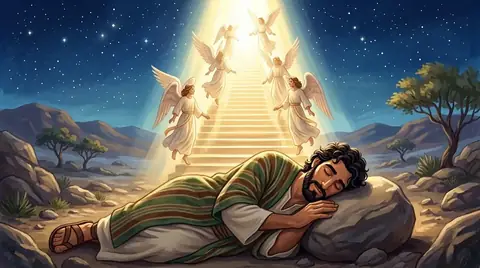 PersonJacobIsaac's younger twin son, who won his brother's birthright and blessing by cunning, was changed by God, and was renamed…
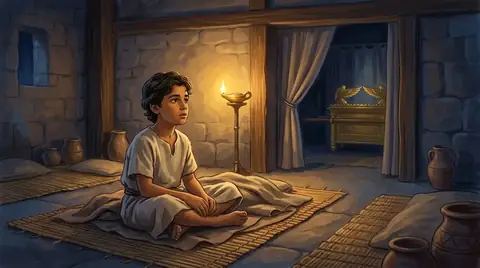 Person · Prophet and judgeSamuelThe prophet who led Israel from the time of the judges into the time of the kings. Given to God by his mother Hannah…
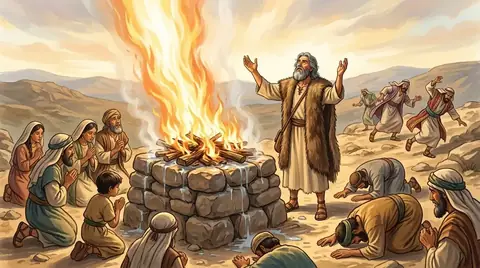 PersonElijahThe fiery prophet who stood alone against King Ahab and the prophets of Baal, called down fire on Mount Carmel, and was…
Written for this app in its own words, from the Bible, with the facts checked against Bible dictionaries and encyclopedias: Easton's, Smith's, Fausset's, ISBE, Holman, the New Bible Dictionary, Vine's and the Thompson Chain topics. People and places: STEPBible.org (TIPNR), CC BY 4.0; where a place is today and its photo: OpenBible.info, CC BY 4.0.
