
Custom · Worship
Tithes
A tenth, given to God
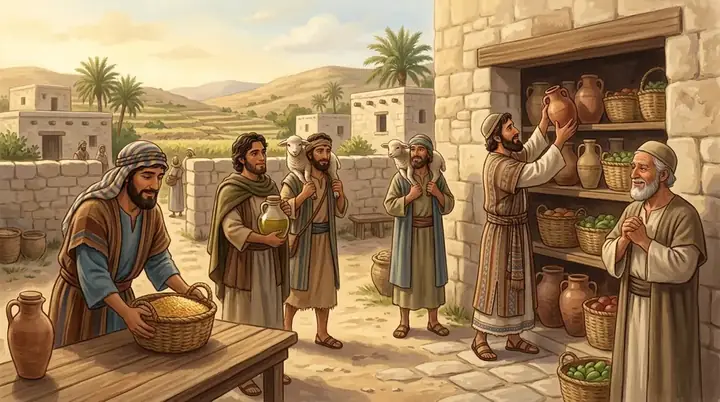
A tenth of the harvest and the herds, given to God. Under the Law the tithe supported the Levites and the priests, paid for family feasts before God, and in every third year fed the poor.
- Meaning
- A tenth part
- Who received it
- The Levites, who handed a tenth of their share on to the priests (Numbers 18:21–28)
- Before the Law
- Abraham to Melchizedek (Genesis 14:20); Jacob's vow (Genesis 28:22)
- Key verse
- "Bring ye all the tithes into the storehouse" (Malachi 3:10)
Before the Law
Giving God a tenth is older than Moses. When Abraham came back from rescuing Lot, he gave Melchizedek, the priest-king of Salem, a tenth of everything he had taken (Genesis 14:20). At Bethel Jacob promised that if God brought him home safely, "of all that thou shalt give me I will surely give the tenth unto thee" (Genesis 28:22).
Under the Law
The Law said that a tenth of all the land produced, grain, fruit and wine, and every tenth animal of the herds and flocks, was "holy unto the LORD" (Leviticus 27:30–32). The farmer counted his animals out under the shepherd's rod and every tenth one was God's, good or bad. This tithe went to the Levites, who had no land of their own, and they in turn gave a tenth of what they received to the priests (Numbers 18:21–28).
Deuteronomy adds more. The people were to bring a tithe to the sanctuary and eat it there with their families and the Levites, as a feast before God; those who lived far away could turn it into money first (Deuteronomy 14:22–27). Every third year the tithe stayed at home and was shared with the Levite, the stranger, the fatherless and the widow (Deuteronomy 14:28–29; Deuteronomy 26:12–15). Jewish teachers later counted these as three separate tithes.
Kept and neglected
When Hezekiah restored true worship, the people brought so much that it lay in heaps (2 Chronicles 31:5–10). Under Nehemiah the Levites had gone back to their fields because nobody was paying them, until he put things right (Nehemiah 13:10–12). Malachi's charge is the sharpest: by withholding tithes the nation had robbed God, and he promised that if they brought them all in he would open "the windows of heaven" (Malachi 3:8–10).
In the New Testament
The Pharisees tithed even the herbs in their gardens, and Jesus did not fault them for it; what he faulted was neglecting "judgment, mercy, and faith" while they did it (Matthew 23:23). The self-satisfied Pharisee in his parable boasted, "I give tithes of all that I possess" (Luke 18:12). Hebrews uses Abraham's tithe to show that Melchizedek, and so Christ, is greater than the Levitical priests (Hebrews 7:2–9).
The New Testament gives Christians no rule of a tenth. It asks for something harder: giving that is regular, in proportion to what God has given, and cheerful, "not grudgingly, or of necessity" (1 Corinthians 16:2; 2 Corinthians 9:7). Many believers keep the tenth as a good starting point.
Key verses
- Genesis 14:20
And blessed be the most high God, which hath delivered thine enemies into thy hand. And he gave him tithes of all.
- Leviticus 27:30
And all the tithe of the land, whether of the seed of the land, or of the fruit of the tree, is the Lord’s: it is holy unto the Lord.
- Numbers 18:21
And, behold, I have given the children of Levi all the tenth in Israel for an inheritance, for their service which they serve, even the service of the tabernacle of the congregation.
- Malachi 3:10
Bring ye all the tithes into the storehouse, that there may be meat in mine house, and prove me now herewith, saith the Lord of hosts, if I will not open you the windows of heaven, and pour you out a blessing, that there shall not be room enough to receive it.
- Matthew 23:23
Woe unto you, scribes and Pharisees, hypocrites! for ye pay tithe of mint and anise and cummin, and have omitted the weightier matters of the law, judgment, mercy, and faith: these ought ye to have done, and not to leave the other undone.
- 2 Corinthians 9:7
Every man according as he purposeth in his heart, so let him give; not grudgingly, or of necessity: for God loveth a cheerful giver.
Read next
 Group · WorshipThe LevitesThe men of the tribe of Levi, chosen to serve God instead of Israel's firstborn sons. They carried the tabernacle…
 PersonAbrahamThe man God called out of Ur to a land he had never seen, promising him a people and a blessing for the whole world. He…
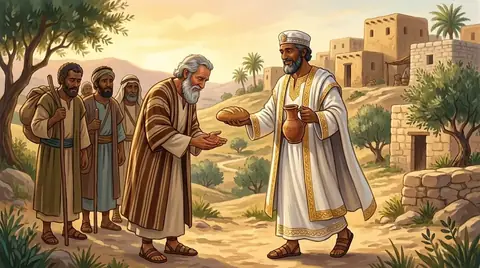 PersonMelchizedekThe mysterious king-priest of Salem who blessed Abraham and received his tithes. Psalm 110 and Hebrews make him a…
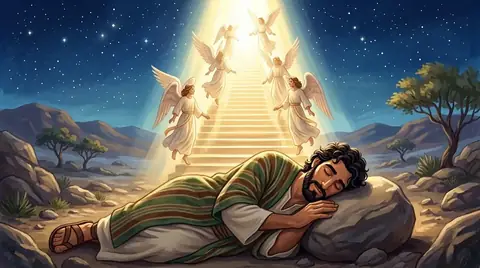 PersonJacobIsaac's younger twin son, who won his brother's birthright and blessing by cunning, was changed by God, and was renamed…
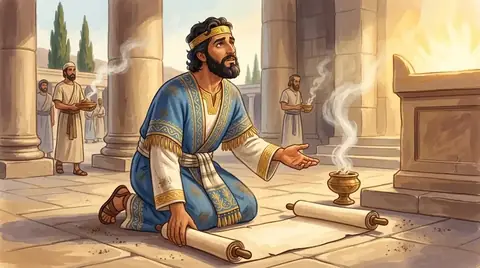 Person · KingHezekiahOne of Judah's best kings. He cleansed the temple, smashed the idols, trusted God when Assyria besieged Jerusalem, and…
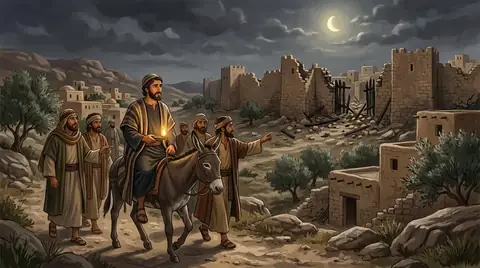 PersonNehemiahThe king of Persia's cupbearer who got leave to go to Jerusalem and rebuilt its broken walls in fifty-two days, despite…
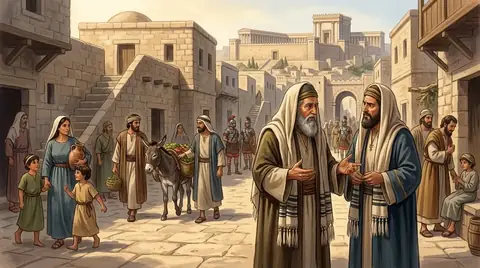 GroupPhariseesThe most exacting of the Jewish religious parties in Jesus' day, devoted to keeping the Law and the traditions added to…
Written for this app in its own words, from the Bible, with the facts checked against Bible dictionaries and encyclopedias: Easton's, Smith's, Fausset's, ISBE, Holman, the New Bible Dictionary, Vine's and the Thompson Chain topics.
