
Place
Shephelah
shef-ay-LAHHebrew for "lowland" · the KJV says "the vale", "the valley" or "the plain"
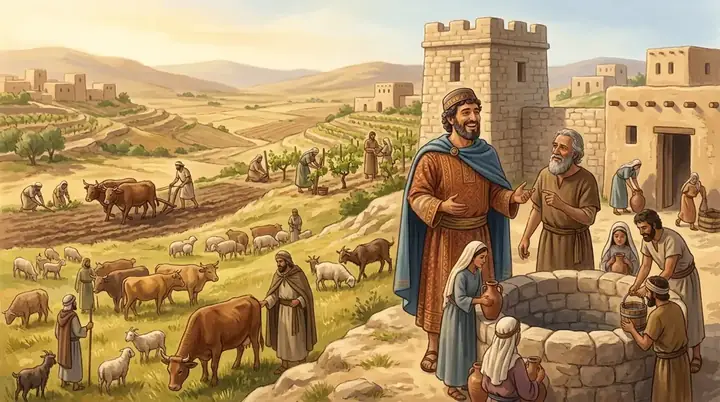
The rolling foothills between the mountains of Judah and the Philistine coast: good farmland and a battleground. Joshua, Samson and David all fought there; its sycamore trees were a byword for plenty.
- Where
- A strip about 10 miles (16 km) wide between the hills and the coastal plain, west of Jerusalem and Hebron
- Towns
- Lachish, Azekah, Beth-shemesh, Gezer, Libnah, Adullam
- Known for
- Sycamores, olives, grain; the valley of Elah where David fought Goliath
- Today
- the Shephelah, in Israel.
Where
West of Judah's mountains the land steps down to the sea in a belt of low limestone hills cut by broad valleys. This is the Shephelah, "the lowland". It is lower than the hill country, higher than the coastal plain, and it is the way from one to the other. Whoever held its valleys held the doors into Judah: the Aijalon valley near Gezer, the Sorek valley past Beth-shemesh, the valley of Elah, and the valley of Lachish. In the KJV the word appears as "the vale", "the valley" or "the plain" (Deuteronomy 1:7; Joshua 10:40; 1 Kings 10:27).
Why it mattered
The soil was good. Grain grew in the valleys, olives and vines on the slopes, and the fig-like sycamore tree flourished there as it did not in the hills; David had an officer over his olive and sycamore trees in the lowland (1 Chronicles 27:28), and Uzziah, who loved farming, kept herds there (2 Chronicles 26:10). Solomon made silver as common in Jerusalem as stones, and cedars "as the sycomore trees that are in the vale for abundance" (1 Kings 10:27).
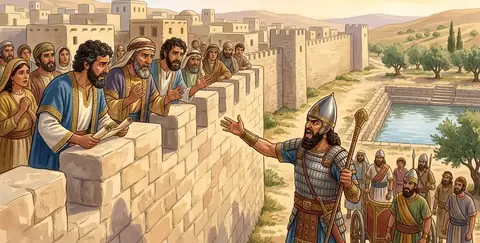
But it was also the frontier with the Philistines. Joshua conquered its kings and towns (Joshua 10). Samson's story is set in the Sorek valley. David killed Goliath in the valley of Elah and hid in the cave of Adullam. In the days of Ahaz the Philistines took its towns back (2 Chronicles 28:18), and Sennacherib's armies had to capture Lachish and Libnah before they could threaten Jerusalem (2 Kings 18:14–17). Jeremiah promised that after the exile people from "the plain" would again bring offerings to the temple (Jeremiah 17:26; Jeremiah 32:44), and Obadiah that they would possess the Philistine land (Obadiah 1:19).
Today
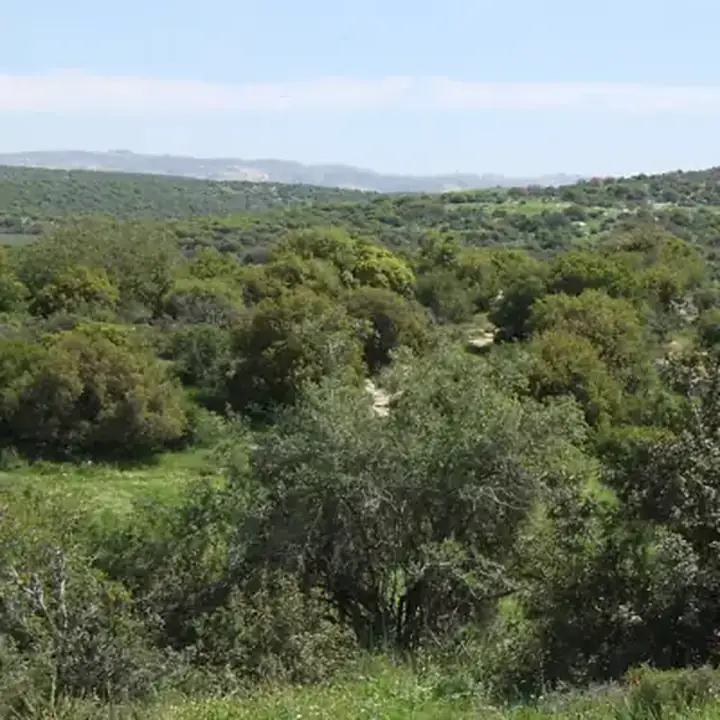
The Shephelah is still farmland, dotted with the mounds of its old cities. Lachish and Azekah, Beth-shemesh and Gezer have all been excavated, and the valley of Elah still has its brook with smooth stones.
Key verses
- Deuteronomy 1:7
Turn you, and take your journey, and go to the mount of the Amorites, and unto all the places nigh thereunto, in the plain, in the hills, and in the vale, and in the south, and by the sea side, to the land of the Canaanites, and unto Lebanon, unto the great river, the river Euphrates.
- Joshua 10:40
So Joshua smote all the country of the hills, and of the south, and of the vale, and of the springs, and all their kings: he left none remaining, but utterly destroyed all that breathed, as the Lord God of Israel commanded.
- 1 Kings 10:27
And the king made silver to be in Jerusalem as stones, and cedars made he to be as the sycomore trees that are in the vale, for abundance.
- 2 Chronicles 26:10
Also he built towers in the desert, and digged many wells: for he had much cattle, both in the low country, and in the plains: husbandmen also, and vine dressers in the mountains, and in Carmel: for he loved husbandry.
- Jeremiah 32:44
Men shall buy fields for money, and subscribe evidences, and seal them, and take witnesses in the land of Benjamin, and in the places about Jerusalem, and in the cities of Judah, and in the cities of the mountains, and in the cities of the valley, and in the cities of the south: for I will cause their captivity to return, saith the Lord.
On the map
Mentioned in 19 verses
- Deuteronomy 1
- Joshua 6
- Judges 1
- 1 Kings 1
- 1 Chronicles 1
- 2 Chronicles 4
- Jeremiah 3
- Obadiah 1
- Zechariah 1
Read next
 Place · CityLachishA great walled city in the lowlands of Judah, taken by Joshua, made a fortress by Rehoboam, and besieged by…Place · TownAzekahA hill town in the lowlands west of Jerusalem. Joshua chased the five kings as far as Azekah, the Philistines camped…
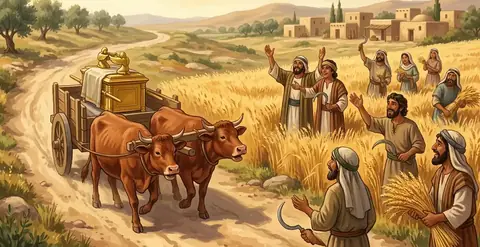 PlaceBeth-shemeshA town of Judah in the western foothills, given to the priests. The ark came home there on a cart pulled by two cows…PersonElahThe son of King Baasha, who ruled Israel for under two years. Zimri, one of his officers, murdered him at a drinking…
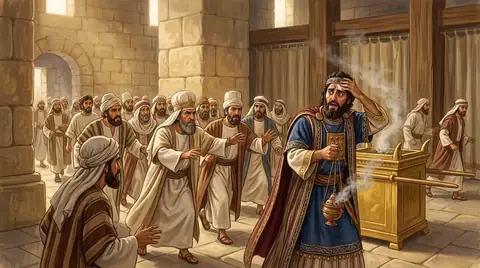 PersonUzziahKing of Judah for fifty-two years, a strong and godly ruler until pride led him into the temple to burn incense. God…NationThe PhilistinesA warlike people from over the sea, settled in five cities on the coastal plain to the south-west of Israel. With iron…
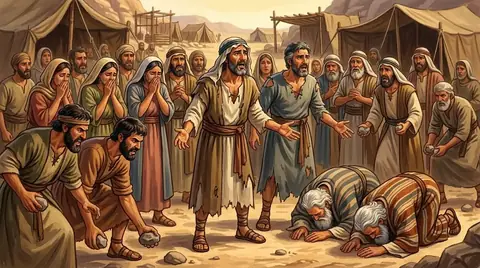 PersonJoshuaMoses' helper who took over from him and led Israel across the Jordan into the Promised Land. He fought the wars of…
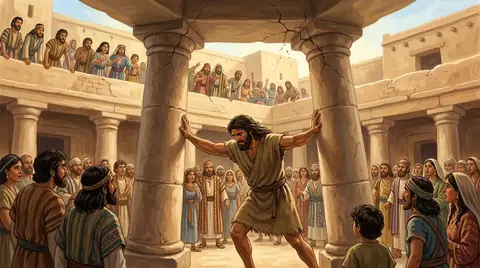 Person · JudgeSamsonThe judge of Israel with superhuman strength from God, a Nazirite from birth. He fought the Philistines single-handed…
Written for this app in its own words, from the Bible, with the facts checked against Bible dictionaries and encyclopedias: Easton's, Smith's, Fausset's, ISBE, Holman, the New Bible Dictionary, Vine's and the Thompson Chain topics. People and places: STEPBible.org (TIPNR), CC BY 4.0; where a place is today and its photo: OpenBible.info, CC BY 4.0.
