
Person
Sarah
Genesis 11–25 · about 2156–2029 BC · first called Sarai · "princess"
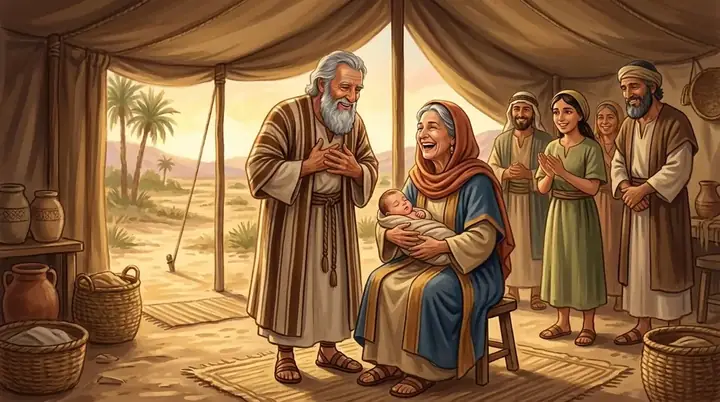
Abraham's wife and the mother of Isaac. She waited past ninety for the son God had promised, laughed when she heard it, and then laughed for joy when he came. The New Testament calls her a model of faith.
- Family
- Abraham's wife and half-sister (Genesis 20:12); mother of Isaac
- Known for
- Her beauty; giving Hagar to Abraham; laughing at the promise; Isaac's birth at ninety
- Died
- Aged 127 at Hebron, buried in the cave of Machpelah (Genesis 23)
Her story
Sarai left Ur and then Haran with her husband Abram when God called him, and she shared every step of his wandering life in Canaan (Genesis 12:5). She was so beautiful that Abram twice passed her off as his sister to save his own skin, first to Pharaoh and later to Abimelech, and God had to step in both times to protect her (Genesis 12:10–20; Genesis 20).
The great sorrow of her life was that she had no child, and God had promised Abram descendants like the stars. After ten years in Canaan she took matters into her own hands and gave her Egyptian maid Hagar to her husband; Hagar's son was Ishmael, and the arrangement brought nothing but bitterness (Genesis 16). When Sarai was eighty-nine God renamed her Sarah, "princess", and said she herself would bear a son and be the mother of nations (Genesis 17:15–16). Listening at the tent door as the three visitors repeated the promise, she laughed to herself, and was gently caught out: "Is any thing too hard for the LORD?" (Genesis 18:9–15).
A year later Isaac was born, and his name means "he laughs". "God hath made me to laugh", said Sarah, "so that all that hear will laugh with me" (Genesis 21:6). Fiercely protective of her boy, she had Hagar and Ishmael sent away, and God told Abraham to do as she said (Genesis 21:9–12). She died at Hebron at 127, the only woman whose age the Bible records, and Abraham bought his first piece of the promised land to bury her (Genesis 23).
What to learn
Sarah was impatient, sharp with Hagar, and quick to laugh at what seemed impossible. Yet Hebrews says that "through faith also Sara herself received strength to conceive seed ... because she judged him faithful who had promised" (Hebrews 11:11). Faith does not mean never doubting; it means in the end taking God at his word. Peter holds her up to Christian wives as an example of quiet trust (1 Peter 3:5–6), and Isaiah tells Israel to look back to "Sarah that bare you" (Isaiah 51:2).
Points to Christ
Paul reads Sarah and Hagar as a picture of two covenants: Hagar the slave stands for the law, and Sarah the free woman for the promise, "Jerusalem which is above", the mother of all who are born again by grace (Galatians 4:22–31). Isaac, the child born by promise when it was humanly impossible, points to the greater Son.
Key verses
- Genesis 17:15–16
And God said unto Abraham, As for Sarai thy wife, thou shalt not call her name Sarai, but Sarah shall her name be. And I will bless her, and give thee a son also of her: yea, I will bless her, and she shall be a mother of nations; kings of people shall be of her.
- Genesis 18:12–14
Therefore Sarah laughed within herself, saying, After I am waxed old shall I have pleasure, my lord being old also? And the Lord said unto Abraham, Wherefore did Sarah laugh, saying, Shall I of a surety bear a child, which am old? Is any thing too hard for the Lord? At the time appointed I will return unto thee, according to the time of life, and Sarah shall have a son.
- Genesis 21:1–7
And the Lord visited Sarah as he had said, and the Lord did unto Sarah as he had spoken. For Sarah conceived, and bare Abraham a son in his old age, at the set time of which God had spoken to him. And Abraham called the name of his son that was born unto him, whom Sarah bare to him, Isaac. …
- Hebrews 11:11
Through faith also Sara herself received strength to conceive seed, and was delivered of a child when she was past age, because she judged him faithful who had promised.
- 1 Peter 3:6
Even as Sara obeyed Abraham, calling him lord: whose daughters ye are, as long as ye do well, and are not afraid with any amazement.
On the map
Family
- Parents
- Terah
- Brothers and sisters
- Abraham, Nahor, Haran
- Married to
- Abraham
- Children
- Isaac
Mentioned in 48 verses
- Genesis 43
- Isaiah 1
- Romans 2
- Hebrews 1
- 1 Peter 1
Read next
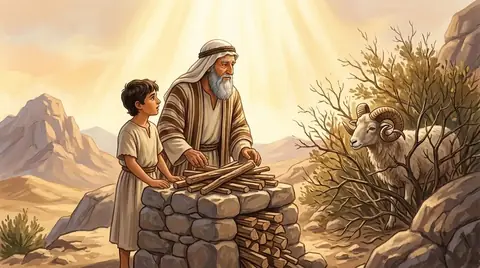 PersonIsaacThe son God promised to Abraham and Sarah when they were far too old for children, offered on Mount Moriah and spared.…
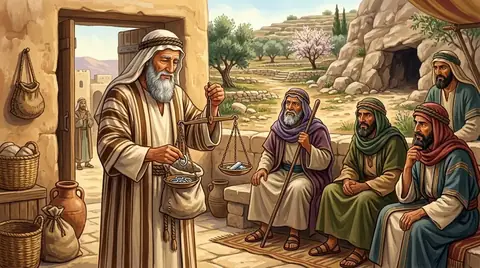 Place · CityHebronAn ancient city in the hills of Judah where Abraham lived and the patriarchs were buried in the cave of Machpelah.…PlaceMachpelahThe cave near Hebron that Abraham bought as a grave for Sarah. Abraham, Isaac, Rebekah, Jacob and Leah were all buried…
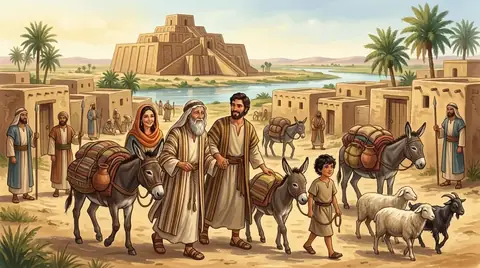 Place · CityUrThe great city in southern Mesopotamia where Abraham grew up. God called him out of Ur, away from its idols, to go to…
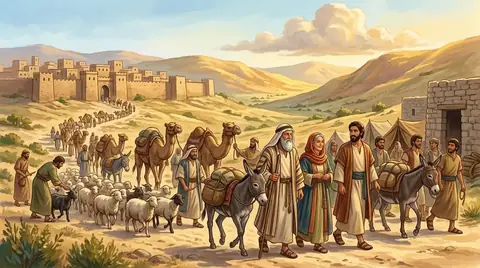 PlaceHaranThe city in northern Mesopotamia where Abraham's family stopped on the way from Ur to Canaan, where Terah died, and…
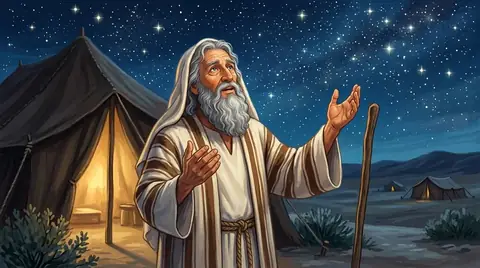 PersonAbrahamThe man God called out of Ur to a land he had never seen, promising him a people and a blessing for the whole world. He…PlaceCanaanThe land between the Jordan and the Mediterranean that God promised to Abraham and gave to Israel under Joshua. It took…
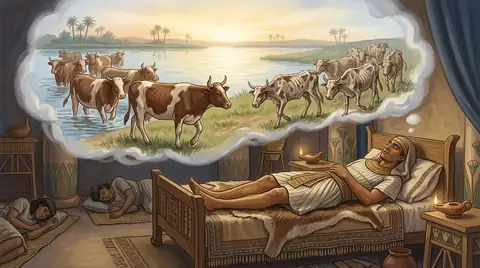 Title · RulerPharaohNot a personal name but the title borne by every king of Egypt, like "Caesar". The Bible names several, the best known…
Written for this app in its own words, from the Bible, with the facts checked against Bible dictionaries and encyclopedias: Easton's, Smith's, Fausset's, ISBE, Holman, the New Bible Dictionary, Vine's and the Thompson Chain topics. People and places: STEPBible.org (TIPNR), CC BY 4.0; where a place is today and its photo: OpenBible.info, CC BY 4.0.
