
Person
Hagar
HAY-garOld Testament · about 2080 BC
Sarah's Egyptian servant, given to Abraham to bear a child, and the mother of Ishmael. Twice she was driven out into the desert, and twice God met her there.
- Family
- Egyptian servant of Sarah; mother of Ishmael by Abraham
- Known for
- The God who sees me (Genesis 16:13); the well in the desert
- Called
- Agar in Galatians (Galatians 4:24–25)
Her story
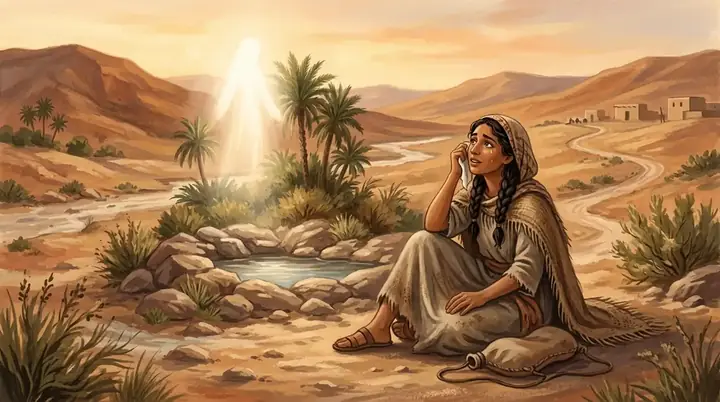
Ten years after God promised Abraham a son, Sarah was still childless. Following the custom of the day, she gave her Egyptian maid Hagar to Abraham so that a child born to Hagar could count as hers (Genesis 16:1–3). As soon as Hagar was expecting she looked down on her mistress, Sarah treated her harshly, and Hagar ran away towards Egypt.
By a spring in the desert the angel of the LORD found her. He told her to go back and submit to Sarah, promised her more descendants than could be counted, and named her son Ishmael, "God hears". Hagar gave God a name of her own: "Thou God seest me" (Genesis 16:7–13). Ishmael was born when Abraham was eighty-six.
Fourteen years later Isaac was born. At the feast for his weaning Ishmael mocked, and Sarah demanded that the slave woman and her son be sent away. It grieved Abraham, but God told him to do as Sarah said, for the promise would run through Isaac. Early next morning he sent Hagar off with bread and a skin of water. When the water was gone she laid the boy under a bush and sat down to cry at a distance, unable to watch him die. God heard the boy, showed Hagar a well, and promised again to make Ishmael a great nation (Genesis 21:9–21). Ishmael grew up in the wilderness of Paran, and Hagar found him an Egyptian wife.
What it means
Paul used Hagar and Sarah as a picture: Hagar stands for Mount Sinai and the covenant of law, which bears children for slavery; Sarah for the free Jerusalem above, whose children we are through God's promise (Galatians 4:22–31). Hagar's own story is a tender one: a foreign slave girl, twice cast out, was twice visited and provided for by the God who sees.
Key verses
- Genesis 16:7–13
And the angel of the Lord found her by a fountain of water in the wilderness, by the fountain in the way to Shur. And he said, Hagar, Sarai’s maid, whence camest thou? and whither wilt thou go? And she said, I flee from the face of my mistress Sarai. And the angel of the Lord said unto her, Return to thy mistress, and submit thyself under her hands. …
- Genesis 21:14–19
And Abraham rose up early in the morning, and took bread, and a bottle of water, and gave it unto Hagar, putting it on her shoulder, and the child, and sent her away: and she departed, and wandered in the wilderness of Beer–sheba. And the water was spent in the bottle, and she cast the child under one of the shrubs. And she went, and sat her down over against him a good way off, as it were a bowshot: for she said, Let me not see the death of the child. And she sat over against him, and lift up her voice, and wept. …
- Galatians 4:24–26
Which things are an allegory: for these are the two covenants; the one from the mount Sinai, which gendereth to bondage, which is Agar. For this Agar is mount Sinai in Arabia, and answereth to Jerusalem which now is, and is in bondage with her children. But Jerusalem which is above is free, which is the mother of us all.
On the map
Family
- Married to
- Abraham
- Children
- Ishmael
Mentioned in 12 verses
- Genesis 10
- Galatians 2
Read next
 PersonSarahAbraham's wife and the mother of Isaac. She waited past ninety for the son God had promised, laughed when she heard it…
 PersonIshmaelAbraham's first son, born to Hagar, Sarah's Egyptian maid. Sent away into the desert as a boy, he became a great archer…
 PersonAbrahamThe man God called out of Ur to a land he had never seen, promising him a people and a blessing for the whole world. He…
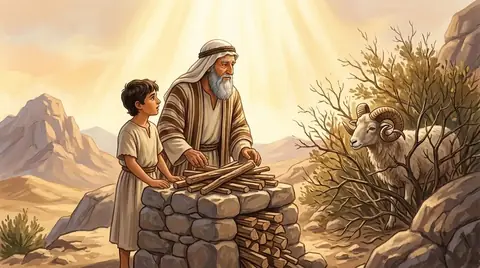 PersonIsaacThe son God promised to Abraham and Sarah when they were far too old for children, offered on Mount Moriah and spared.…
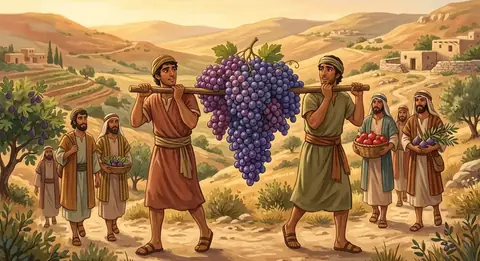 PlaceParanA large, dry wilderness south of Canaan, in the north-east of the Sinai peninsula. Ishmael grew up there, Israel camped…
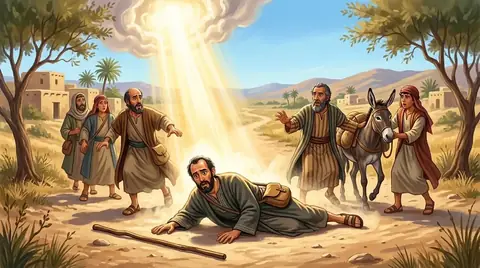 PersonPaulA Pharisee who hated the church until the risen Jesus met him on the road to Damascus. He became the apostle to the…
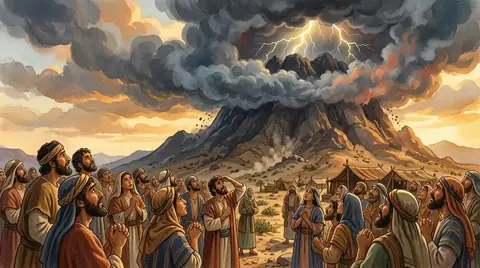 Place · MountainSinaiThe mountain where God came down in fire and smoke, spoke the Ten Commandments, and made his covenant with Israel. The…
Written for this app in its own words, from the Bible, with the facts checked against Bible dictionaries and encyclopedias: Easton's, Smith's, Fausset's, ISBE, Holman, the New Bible Dictionary, Vine's and the Thompson Chain topics. People and places: STEPBible.org (TIPNR), CC BY 4.0; where a place is today and its photo: OpenBible.info, CC BY 4.0.
