
Feast
Purim
POOR-imThe 14th and 15th of Adar (February or March) · "lots"
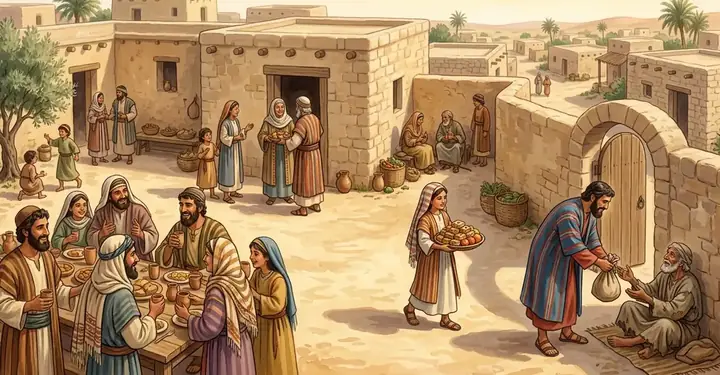
The feast that remembers how the Jews of Persia escaped Haman's plot, the story the book of Esther tells. Named after the lots Haman cast to pick the day, it is kept with feasting and gifts.
- When
- 14th and 15th of Adar, the last month, in late winter
- Why
- Haman's plot to kill every Jew was turned back on him (Esther 3; Esther 7; Esther 9)
- How
- Feasting, gladness, food sent to friends and presents to the poor; the book of Esther read aloud (Esther 9:22)
Why it began
Haman, the chief minister of the Persian king Ahasuerus, hated Mordecai the Jew and got a decree passed to kill all the Jews in the empire on one day. He chose the day by casting the lot, called pur, and it fell on the 13th of Adar (Esther 3:7). Queen Esther, Mordecai's cousin, risked her life to go in to the king, exposed Haman, and he was hanged on the gallows he had built for Mordecai (Esther 7). A second decree let the Jews defend themselves, and on the 13th of Adar they overcame their enemies; in Susa the fighting went on a second day (Esther 9:1–19).
The feast
Mordecai and Esther wrote to all the Jews to keep the 14th and 15th of Adar every year as days of feasting and joy, sending food to one another and presents to the poor, because their sorrow had been turned to gladness (Esther 9:20–32). They called the days Purim after the lot. Jews have kept it ever since: the book of Esther is read aloud, the crowd drowns out Haman's name, food is exchanged and the poor remembered.
What it means
God is never named in Esther, yet Purim says that he was at work in every turn of the story, ruling even the fall of the dice. "The lot is cast into the lap; but the whole disposing thereof is of the LORD" (Proverbs 16:33).
Key verses
- Esther 3:7
In the first month, that is, the month Nisan, in the twelfth year of king Ahasuerus, they cast Pur, that is, the lot, before Haman from day to day, and from month to month, to the twelfth month, that is, the month Adar.
- Esther 9:20–22
And Mordecai wrote these things, and sent letters unto all the Jews that were in all the provinces of the king Ahasuerus, both nigh and far, To stablish this among them, that they should keep the fourteenth day of the month Adar, and the fifteenth day of the same, yearly, As the days wherein the Jews rested from their enemies, and the month which was turned unto them from sorrow to joy, and from mourning into a good day: that they should make them days of feasting and joy, and of sending portions one to another, and gifts to the poor.
- Esther 9:26–28
Wherefore they called these days Purim after the name of Pur. Therefore for all the words of this letter, and of that which they had seen concerning this matter, and which had come unto them, The Jews ordained, and took upon them, and upon their seed, and upon all such as joined themselves unto them, so as it should not fail, that they would keep these two days according to their writing, and according to their appointed time every year; And that these days should be remembered and kept throughout every generation, every family, every province, and every city; and that these days of Purim should not fail from among the Jews, nor the memorial of them perish from their seed.
- Proverbs 16:33
The lot is cast into the lap; but the whole disposing thereof is of the Lord.
Read next
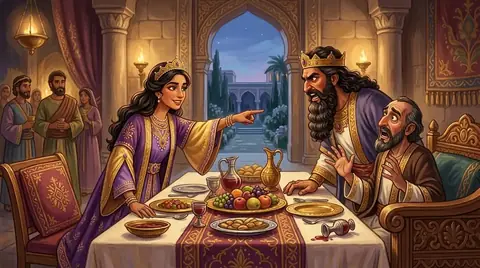 PersonHamanThe proud prime minister of King Ahasuerus of Persia, who plotted to kill every Jew in the empire because Mordecai…
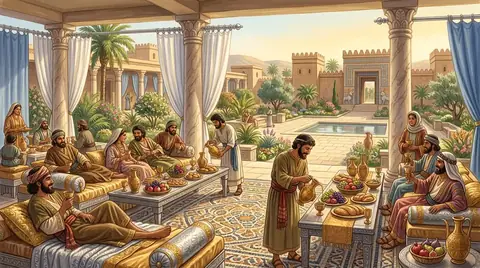 Person · KingAhasuerusThe king of Persia in the book of Esther, who put away Queen Vashti, made Esther his queen, and was tricked by Haman…
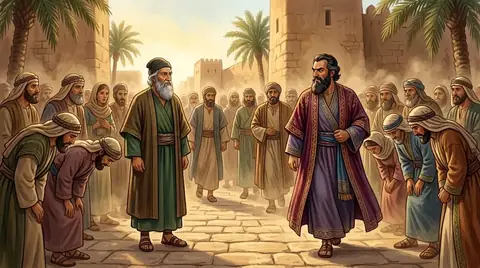 PersonMordecaiThe Jew who raised his cousin Esther, refused to bow to Haman, and with Esther saved the Jews of Persia from being…
 PersonEstherA Jewish orphan who became queen of Persia and risked her life to stop Haman's plan to kill every Jew in the empire.…
 Place · CitySusaThe winter capital of the Persian kings, east of Babylon. The story of Esther is set in its palace, Nehemiah served the…
Written for this app in its own words, from the Bible, with the facts checked against Bible dictionaries and encyclopedias: Easton's, Smith's, Fausset's, ISBE, Holman, the New Bible Dictionary, Vine's and the Thompson Chain topics.
