
Custom · Worship
The priests
Also the chief priests and the high priest
Aaron's descendants, set apart to offer the sacrifices, burn the incense, pronounce the blessing and teach the law. Jesus is our great High Priest now, and every believer belongs to a royal priesthood.
- Who
- Aaron and his sons, of the tribe of Levi (Exodus 28:1); the Levites helped them
- Work
- Sacrifices, incense, the lamps, blessing the people, teaching the law, judging hard cases, examining lepers
- Clothing
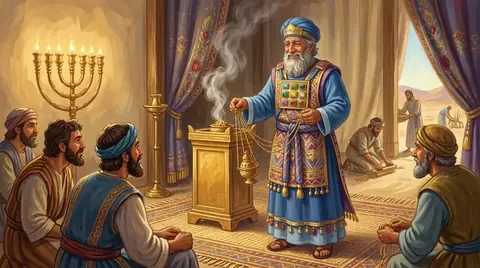
- Linen tunic, sash and cap; the high priest added the ephod, breastplate, robe and golden plate (Exodus 28)
- Later
- Twenty-four courses serving by turn (1 Chronicles 24; Luke 1:8); the high priest and chief priests led the Sanhedrin
What they were
A priest stands between God and the people, bringing the people's gifts to God and God's blessing to the people. Before the law, the head of the family did this: Noah, Abraham and Job offered their own sacrifices, and Melchizedek, king of Salem, was "priest of the most high God" (Genesis 14:18). At Sinai God chose Aaron and his sons to be Israel's priests for ever, with the rest of the tribe of Levi to help them (Exodus 28:1; Numbers 18). A priest had to be of Aaron's line, free of bodily defect, careful in marriage and clean in life (Leviticus 21). He was set apart by washing, anointing and sacrifice over seven days (Leviticus 8).
Their work
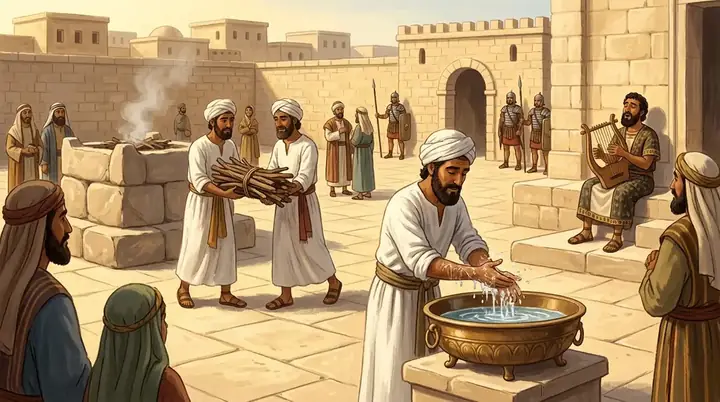
The priests offered the daily and festival sacrifices, sprinkled the blood and burned the fat (Leviticus 1–7). They kept the lamps burning and the fire on the altar alive (Leviticus 6:13), set out the showbread, burned incense morning and evening, and blew the silver trumpets (Numbers 10). They pronounced the blessing, "The LORD bless thee, and keep thee" (Numbers 6:24–26). They taught the law, since "the priest's lips should keep knowledge" (Malachi 2:7), judged hard cases, examined skin disease, and declared the unclean clean. Once a year the high priest alone entered the Most Holy Place on the Day of Atonement (Leviticus 16). The priests had no land of their own but lived in thirteen towns and were fed from the offerings and tithes (Numbers 18; Joshua 21).
Through the centuries
David divided the priests into twenty-four courses, each serving a week in turn (1 Chronicles 24), and this was still the custom when Zacharias burned incense and saw the angel (Luke 1:5–9). Many priests failed: Eli's sons stole from the offerings, and Jeroboam appointed priests who were not Levites at all (1 Kings 12:31). By Jesus' day the high priests were political appointees, and the chief priests, with Caiaphas at their head, led the plot to kill him. Yet after Pentecost "a great company of the priests were obedient to the faith" (Acts 6:7).
Points to Christ
The letter to the Hebrews shows that the whole priesthood was a shadow of Christ. He is the great High Priest who knows our weakness, who offered himself once for all, and who lives for ever to intercede (Hebrews 4:14–16; Hebrews 7:23–27). Because of him there is no longer a special class of priests: every believer is part of "a royal priesthood", with free access to God and the sacrifice of praise to bring (1 Peter 2:5–9; Hebrews 13:15; Revelation 1:6).
Key verses
- Exodus 28:1
And take thou unto thee Aaron thy brother, and his sons with him, from among the children of Israel, that he may minister unto me in the priest’s office, even Aaron, Nadab and Abihu, Eleazar and Ithamar, Aaron’s sons.
- Numbers 6:24–26
The Lord bless thee, and keep thee: The Lord make his face shine upon thee, and be gracious unto thee: The Lord lift up his countenance upon thee, and give thee peace.
- Malachi 2:7
For the priest’s lips should keep knowledge, and they should seek the law at his mouth: for he is the messenger of the Lord of hosts.
- Hebrews 7:23–27
And they truly were many priests, because they were not suffered to continue by reason of death: But this man, because he continueth ever, hath an unchangeable priesthood. Wherefore he is able also to save them to the uttermost that come unto God by him, seeing he ever liveth to make intercession for them. …
- 1 Peter 2:9
But ye are a chosen generation, a royal priesthood, an holy nation, a peculiar people; that ye should shew forth the praises of him who hath called you out of darkness into his marvellous light:
Read next
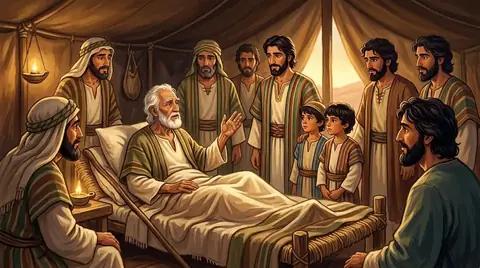
 PersonAaronMoses' older brother and Israel's first high priest. He spoke for Moses before Pharaoh and served God at the tabernacle…
 PersonLeviJacob's third son by Leah, and father of the tribe of priests and Levites. With Simeon he massacred the men of Shechem…
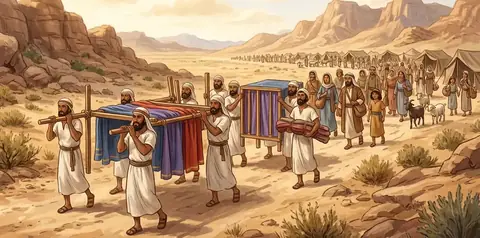 Group · WorshipThe LevitesThe men of the tribe of Levi, chosen to serve God instead of Israel's firstborn sons. They carried the tabernacle…Thing · WorshipEphodA sleeveless vest worn by priests. The high priest's ephod was richly woven with gold and colours; other priests wore a…
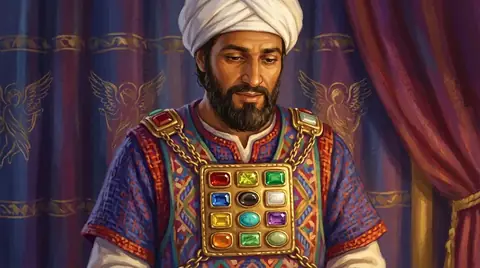 ThingBreastplateArmour that covered a soldier's chest, and the KJV's name for the high priest's jewelled breastpiece. Paul tells…
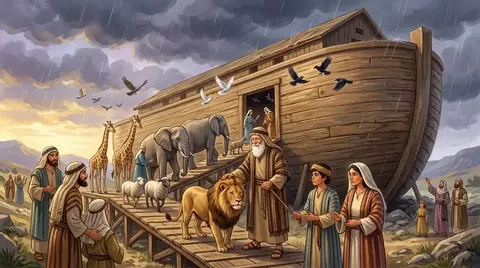 PersonNoahThe one righteous man of his age. God told him to build an ark, and through it saved him, his family and the animals…
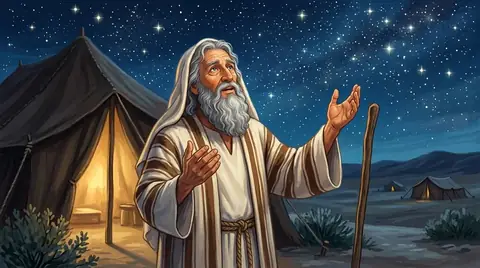 PersonAbrahamThe man God called out of Ur to a land he had never seen, promising him a people and a blessing for the whole world. He…
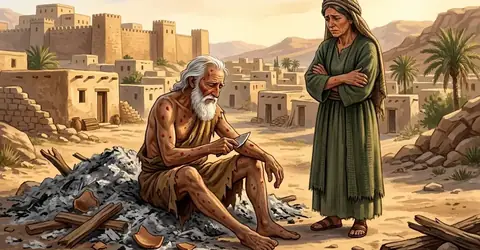 PersonJobA rich and godly man who lost his children, his wealth and his health in a single stroke, and would not curse God. His…
Written for this app in its own words, from the Bible, with the facts checked against Bible dictionaries and encyclopedias: Easton's, Smith's, Fausset's, ISBE, Holman, the New Bible Dictionary, Vine's and the Thompson Chain topics.
