
Place · Land
Palestine
Also called Canaan, the land of Israel, the Promised Land, the Holy Land
The land God promised to Abraham, where Israel lived and where Jesus was born, lived, died and rose again. A small country between the Mediterranean Sea and the desert, with hills, plains and the Jordan valley.
- Where
- Between the Mediterranean Sea and the desert east of the Jordan
- Size
- From Dan to Beersheba, about 150 miles (240 km); about 60 miles (100 km) across on average
- Other names
- Land of Canaan, land of Israel, land of promise, the holy land (Zechariah 2:12)
The name
The name comes from the Philistines, who lived on the southern coast. In the KJV, "Palestina" and "Palestine" mean only their strip of coast (Exodus 15:14; Joel 3:4). Later, the Greeks and Romans used the name for the whole land, and it became the usual name for it in English. The Bible more often calls it Canaan (Genesis 12:5), or Israel's land (1 Samuel 13:19), or the land promised to Abraham and his children (Genesis 12:7; Hebrews 11:9).
A small land
It is a small country. Israel measured it "from Dan even to Beersheba" (Judges 20:1), about 150 miles (240 km) from north to south. From the sea to the Jordan it is only about 25 to 50 miles (40 to 80 km) wide. Under David and Solomon Israel's rule reached much further, as God had promised (Genesis 15:18; 1 Kings 4:21).
Its regions
Seen from west to east, the land lies in strips. Along the sea is a flat coastal plain. Next come low foothills (the Shephelah), then a backbone of limestone hills where Jerusalem, Bethlehem and Hebron stand. To the east the land drops steeply into the deep valley of the Jordan, which runs from the Sea of Galilee down to the Dead Sea, the lowest place on earth. Beyond the Jordan rise the high tablelands of Gilead and Bashan. In Jesus' day the west was divided into Galilee in the north, Samaria in the middle and Judea in the south.
Its climate
Summers are long, hot and dry. Rain falls only in the winter half of the year, from the "first rain" in autumn to the "latter rain" in spring (Deuteronomy 11:14), so the people depended on God for each harvest. Snow can fall on the hills and on Mount Hermon, while the Jordan valley stays warm. Moses called it "a good land", with streams and springs, wheat and barley, vines, figs, pomegranates, olives and honey (Deuteronomy 8:7–9).
Why it matters
God chose this small land, set between great empires, to be the stage of his dealings with Israel and of the life of his Son. Here the prophets spoke, and here Jesus walked, taught, died and rose again.
Key verses
- Genesis 12:7
And the Lord appeared unto Abram, and said, Unto thy seed will I give this land: and there builded he an altar unto the Lord, who appeared unto him.
- Genesis 15:18
In the same day the Lord made a covenant with Abram, saying, Unto thy seed have I given this land, from the river of Egypt unto the great river, the river Euphrates:
- Deuteronomy 8:7–9
For the Lord thy God bringeth thee into a good land, a land of brooks of water, of fountains and depths that spring out of valleys and hills; A land of wheat, and barley, and vines, and fig trees, and pomegranates; a land of oil olive, and honey; A land wherein thou shalt eat bread without scarceness, thou shalt not lack any thing in it; a land whose stones are iron, and out of whose hills thou mayest dig brass.
- Deuteronomy 11:14
That I will give you the rain of your land in his due season, the first rain and the latter rain, that thou mayest gather in thy corn, and thy wine, and thine oil.
- Judges 20:1
Then all the children of Israel went out, and the congregation was gathered together as one man, from Dan even to Beer–sheba, with the land of Gilead, unto the Lord in Mizpeh.
- Hebrews 11:9
By faith he sojourned in the land of promise, as in a strange country, dwelling in tabernacles with Isaac and Jacob, the heirs with him of the same promise:
On the map
Read next
 PlaceCanaanThe land between the Jordan and the Mediterranean that God promised to Abraham and gave to Israel under Joshua. It took…NationThe PhilistinesA warlike people from over the sea, settled in five cities on the coastal plain to the south-west of Israel. With iron…
 PersonAbrahamThe man God called out of Ur to a land he had never seen, promising him a people and a blessing for the whole world. He…
 Person · KingDavidThe shepherd boy who killed Goliath and became Israel's greatest king, "a man after God's own heart". He wrote many…
 Person · KingSolomonDavid's son and Israel's third king, who asked God for wisdom and received riches and fame as well. He built the temple…
 PlaceJerusalemThe city David made his capital and where Solomon built the temple. Jesus died and rose there and the church began…
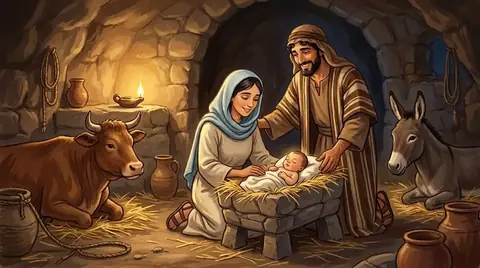 PlaceBethlehemA small town in the hills of Judah, five miles south of Jerusalem. It was the home of Ruth and Boaz, the birthplace of…
Written for this app in its own words, from the Bible, with the facts checked against Bible dictionaries and encyclopedias: Easton's, Smith's, Fausset's, ISBE, Holman, the New Bible Dictionary, Vine's and the Thompson Chain topics.
