
Thing · Building
Palace
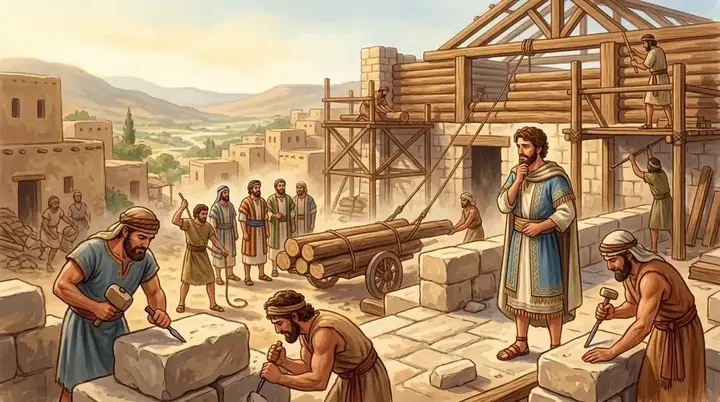
The house of a king, usually a cluster of great buildings with courts, halls and a fortress. David's was of cedar, Solomon's took thirteen years, and Ahab's was famous for its ivory.
- Famous ones
- David's (2 Samuel 7:2), Solomon's (1 Kings 7:1–12), Ahab's ivory house (1 Kings 22:39), Shushan (Esther 1:2), Babylon (Daniel 4:29–30)
- New Testament
- The high priest's house and Pilate's praetorium (Matthew 26:3; John 18:28)
- Also
- The temple is called a palace too (1 Chronicles 29:1)
What it was
A palace in the Bible is more than one grand house. It was a walled compound holding the king's private rooms, halls for judgment and feasting, barracks, stores and the harem, and often the strongest tower of the city. The King James Bible uses "palace" for several different Hebrew and Greek words, from a citadel to a large house.
In the Bible
King Hiram of Tyre sent cedar and craftsmen to build David a house in Jerusalem, and David was troubled that he lived in cedar while the ark lived in a tent (2 Samuel 5:11; 2 Samuel 7:2). Solomon spent thirteen years on his own palace, longer than on the temple: the House of the Forest of Lebanon with its rows of cedar pillars, a hall of pillars, a throne hall where he judged, his own quarters and a house for Pharaoh's daughter (1 Kings 7:1–12). Ahab built a palace decked with ivory at Samaria, and Amos condemned the ivory houses of the rich (1 Kings 22:39; Amos 3:15). Nebuchadnezzar was walking on the roof of his palace at Babylon, boasting of what he had built, when he lost his mind (Daniel 4:29–33), and Belshazzar's last feast was held in the same palace (Daniel 5). Esther was queen in the palace at Shushan, and Nehemiah served there as cupbearer (Esther 1:2; Nehemiah 1:1).
On the night Jesus was arrested he was taken to the palace of the high priest, where Peter warmed himself in the courtyard and denied him (Matthew 26:58, 69). Then he was tried in the palace of Pilate, the praetorium, where the soldiers mocked him (Matthew 27:27; John 18:28). Paul, a prisoner in Rome, wrote that his chains had made Christ known "in all the palace", meaning the emperor's guard (Philippians 1:13).
As a picture
The psalms say God is known in the palaces of Jerusalem as her refuge (Psalms 48:3), and the prophets threaten the palaces of the proud nations with fire (Amos 1:4–14). Jesus said that the kingdom's great ones wear soft clothing "in kings' houses", unlike John in the desert (Matthew 11:8). The believer's true home is not a palace but the house of the Father, with its many rooms (John 14:2).
Key verses
- 2 Samuel 7:2
That the king said unto Nathan the prophet, See now, I dwell in an house of cedar, but the ark of God dwelleth within curtains.
- 1 Kings 7:1
But Solomon was building his own house thirteen years, and he finished all his house.
- Daniel 4:29–30
At the end of twelve months he walked in the palace of the kingdom of Babylon. The king spake, and said, Is not this great Babylon, that I have built for the house of the kingdom by the might of my power, and for the honour of my majesty?
- Matthew 26:58
But Peter followed him afar off unto the high priest’s palace, and went in, and sat with the servants, to see the end.
- Philippians 1:13
So that my bonds in Christ are manifest in all the palace, and in all other places;
Read next
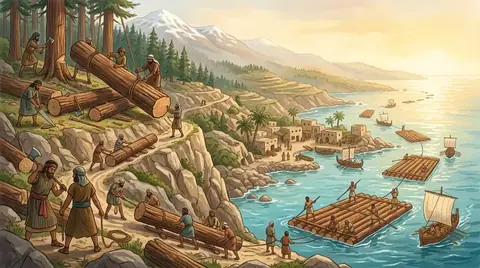 Person · KingHiramThe king of Tyre who was a friend to David and Solomon, sending cedar from Lebanon and skilled workmen for David's…
 Person · KingDavidThe shepherd boy who killed Goliath and became Israel's greatest king, "a man after God's own heart". He wrote many…
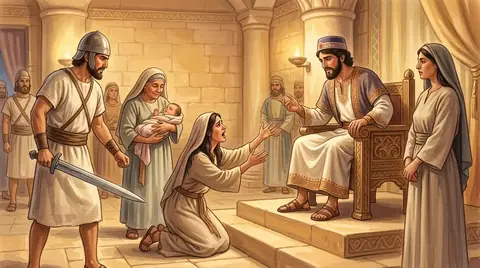 Person · KingSolomonDavid's son and Israel's third king, who asked God for wisdom and received riches and fame as well. He built the temple…
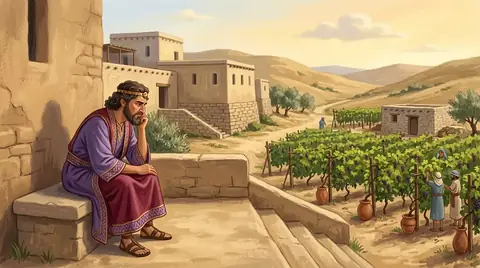 Person · KingAhabThe seventh king of the northern kingdom of Israel, who married Jezebel and led the nation into Baal worship. He…
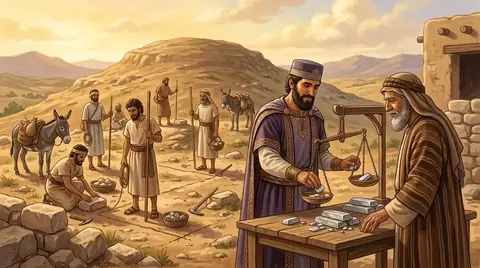 Place · City and regionSamariaThe hill city Omri built as capital of the northern kingdom of Israel. It saw Ahab and Jezebel, Elijah and Elisha…
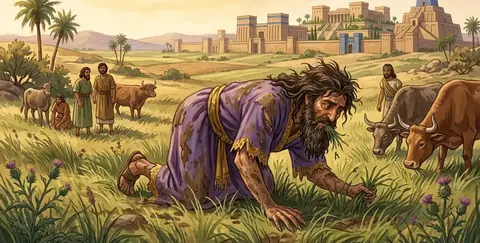 Person · KingNebuchadnezzarThe great king of Babylon who destroyed Jerusalem and its temple and carried Judah into exile. In Daniel he dreams of a…
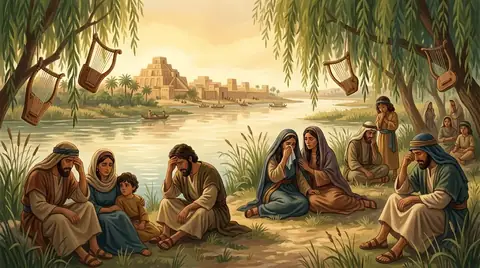 Place · CityBabylonThe great city on the Euphrates where the tower of Babel was built. Under Nebuchadnezzar it ruled the world, destroyed…
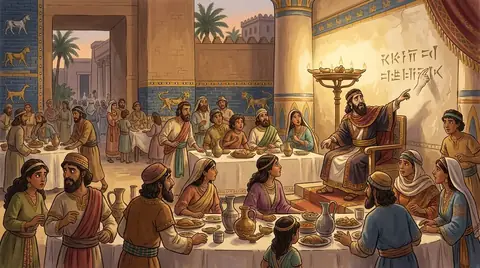 PersonBelshazzarThe ruler of Babylon who drank from the temple's holy cups at a great feast and saw a hand write on the wall. Daniel…
Written for this app in its own words, from the Bible, with the facts checked against Bible dictionaries and encyclopedias: Easton's, Smith's, Fausset's, ISBE, Holman, the New Bible Dictionary, Vine's and the Thompson Chain topics.
