
Custom · Worship
Offering
A gift brought to God. Under the law of Moses there were several kinds of offering, each with its own rule and meaning: animals burnt on the altar, grain and oil, wine poured out, and the first and best of the harvest.
- Kinds
- Burnt, grain, peace, sin and guilt offerings (Leviticus 1–7), with drink offerings of wine
- Where
- At the door of the tabernacle, later the temple (Leviticus 17:8–9)
- Rule
- Without blemish, and never a human being (Leviticus 22:20; Deuteronomy 12:31)
- Fulfilled in
- Christ, who "offered up himself" (Hebrews 7:27)
What it was
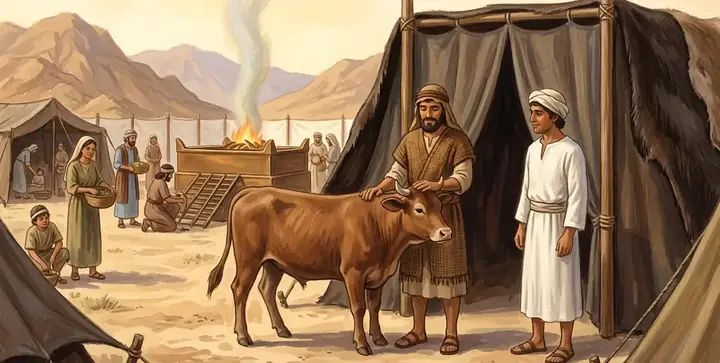
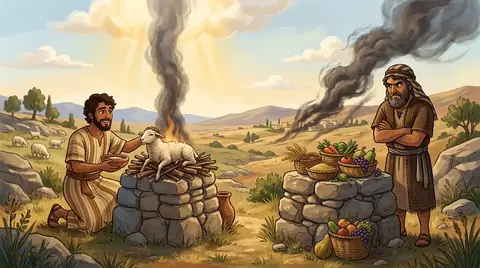
From the very beginning people brought gifts to God. Cain brought produce from his fields and Abel the firstborn of his flock (Genesis 4:3–4). Noah built an altar when he came out of the ark, and Abraham built them wherever he camped. At Mount Sinai God set out exactly what Israel was to bring, how and why. Every offering was a way of saying something to God: thank you, I am sorry, I belong to you, or I need to be made clean.
The kinds of offering
The burnt offering was an animal burned whole on the altar, nothing kept back, a picture of a life given entirely to God, and it made atonement for the one who brought it (Leviticus 1). The grain offering was fine flour, or cakes baked from it, with oil and frankincense but never leaven or honey, and always with salt (Leviticus 2). The peace offering was shared: part went up in smoke, part to the priest and part was eaten by the worshipper and his family as a meal in God's presence. It was brought in thanksgiving, to fulfil a vow or simply from a glad heart (Leviticus 3; Leviticus 7:11–16). The sin offering and the guilt offering dealt with particular sins and with wrongs that had to be put right, and the guilty person first laid his hand on the animal's head (Leviticus 4; Leviticus 5–6). With many of these went a drink offering, wine poured out at the altar (Numbers 15:5–10). A "heave offering" or "wave offering" was the portion lifted up before the LORD and then given to the priests for their food (Exodus 29:27–28; Numbers 18:8–19).
Every morning and evening a lamb was burnt for the whole nation, and more were added on sabbaths, new moons and feasts (Exodus 29:38–42; Numbers 28–29). The firstfruits of the harvest and the tithe were offerings too.
What it meant
God did not need the meat (Psalms 50:12–13). The offerings taught that sin costs a life, that God is to be approached on his terms, and that fellowship with him is a joy to be shared. The prophets attacked anyone who brought the sacrifice without the heart: "to obey is better than sacrifice" (1 Samuel 15:22; Isaiah 1:11–17; Micah 6:6–8). Child sacrifice, practised by the nations around, was an abomination (Deuteronomy 12:31; Jeremiah 7:31).
Points to Christ
Hebrews explains that the animals could never really take sin away; they were a shadow of what was coming (Hebrews 10:1–4). Jesus is the true Lamb of God, the burnt offering wholly given, the sin offering that cleanses, the peace offering that brings us to God's table. His one offering has done what thousands of years of sacrifice could not (Hebrews 10:10–14). What remains for believers is to bring themselves, their praise and their gifts to others as "a living sacrifice" (Romans 12:1; Hebrews 13:15–16; Philippians 4:18).
Key verses
- Genesis 4:3–4
And in process of time it came to pass, that Cain brought of the fruit of the ground an offering unto the Lord. And Abel, he also brought of the firstlings of his flock and of the fat thereof. And the Lord had respect unto Abel and to his offering:
- Leviticus 1:3–4
If his offering be a burnt sacrifice of the herd, let him offer a male without blemish: he shall offer it of his own voluntary will at the door of the tabernacle of the congregation before the Lord. And he shall put his hand upon the head of the burnt offering; and it shall be accepted for him to make atonement for him.
- Leviticus 17:11
For the life of the flesh is in the blood: and I have given it to you upon the altar to make an atonement for your souls: for it is the blood that maketh an atonement for the soul.
- Psalms 51:16–17
For thou desirest not sacrifice; else would I give it: thou delightest not in burnt offering. The sacrifices of God are a broken spirit: a broken and a contrite heart, O God, thou wilt not despise.
- Romans 12:1
I beseech you therefore, brethren, by the mercies of God, that ye present your bodies a living sacrifice, holy, acceptable unto God, which is your reasonable service.
- Hebrews 10:10–14
By the which will we are sanctified through the offering of the body of Jesus Christ once for all. And every priest standeth daily ministering and offering oftentimes the same sacrifices, which can never take away sins: But this man, after he had offered one sacrifice for sins for ever, sat down on the right hand of God; …
Read next
 PersonCainThe first child born into the world, and the first murderer. Jealous because God accepted his brother Abel's offering…PersonAbelThe second son of Adam and Eve, a shepherd whose offering God accepted. His jealous brother Cain murdered him, making…
 PersonNoahThe one righteous man of his age. God told him to build an ark, and through it saved him, his family and the animals…
 PersonAbrahamThe man God called out of Ur to a land he had never seen, promising him a people and a blessing for the whole world. He…
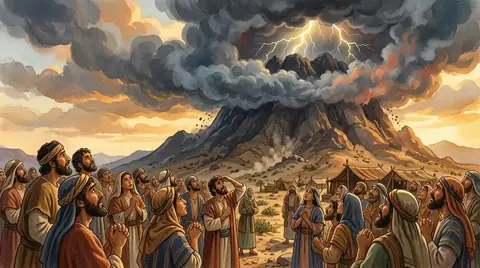 Place · MountainSinaiThe mountain where God came down in fire and smoke, spoke the Ten Commandments, and made his covenant with Israel. The…
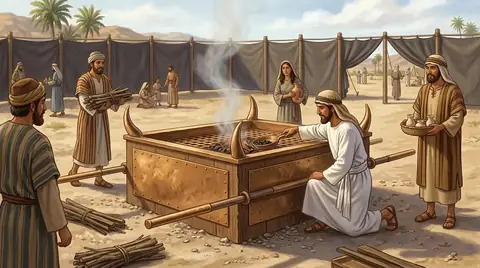 Thing · WorshipThe altarA raised structure of earth, stone or bronze on which sacrifices were offered to God. The big bronze altar stood in the…
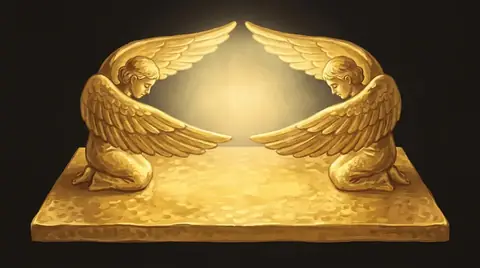 TeachingAtonementHow a sinner is made right with God: sin is covered by a sacrifice offered in the sinner's place. In the Old Testament…
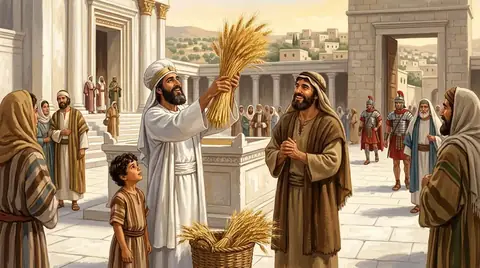 Custom · FeastFirstfruitsThe first and best of each harvest, brought to God before the rest was touched, as thanks that the whole of it came…
Written for this app in its own words, from the Bible, with the facts checked against Bible dictionaries and encyclopedias: Easton's, Smith's, Fausset's, ISBE, Holman, the New Bible Dictionary, Vine's and the Thompson Chain topics.
