
Person
Micah
MY-kaOld Testament · "who is like the LORD?"
A prophet of Judah in the days of Isaiah, from the country town of Moresheth, who denounced injustice and foretold that the ruler of Israel would be born in Bethlehem. Several other men share the name.
- Where
- Moresheth, near Gath, in the lowlands of Judah
- When
- Under kings Jotham, Ahaz and Hezekiah, about 740-700 BC
- Known for
- "Do justly, love mercy, walk humbly" (Micah 6:8); the Bethlehem prophecy (Micah 5:2)
- Book
- Micah, the sixth of the Minor Prophets
His life
Micah was a countryman, from a small town in the hills between Jerusalem and the Philistine coast, and he spoke up for country people ground down by the rich of the capital. He preached at the same time as Isaiah, when Assyria was swallowing the northern kingdom and threatening Judah. He saw Samaria fall, as he had foretold (Micah 1:6).
His message
Micah attacked those who lay awake planning to seize fields and houses (Micah 2:1–2), rulers who hated good and loved evil, priests who taught for pay and prophets who prophesied for money (Micah 3:1–11). Because of them, he said, Zion would be ploughed like a field and Jerusalem become heaps of ruins (Micah 3:12). Yet he also promised a glorious future: the mountain of the LORD's house raised above the hills, swords beaten into ploughshares (Micah 4:1–4), and a ruler for Israel coming out of little Bethlehem, "whose goings forth have been from of old, from everlasting" (Micah 5:2). His best-known words tell what God really wants: not thousands of rams but "to do justly, and to love mercy, and to walk humbly with thy God" (Micah 6:8).
Remembered later
A century on, when Jeremiah was on trial for preaching against the temple, the elders recalled that Micah had said the same under Hezekiah, and that the king had not killed him but repented and sought the LORD. The memory saved Jeremiah's life (Jeremiah 26:18–19). The priests quoted Micah 5:2 to Herod when the wise men asked where the Christ was to be born (Matthew 2:4–6).
Others with this name
Micah of Ephraim, in the days of the judges, stole silver from his mother, had it made into an idol, and hired a wandering Levite as his private priest; the tribe of Dan carried off both idol and priest (Judges 17–18). A Micah was the son of Mephibosheth, Jonathan's lame son (2 Samuel 9:12). Another was a Levite, head of the family of Uzziel in David's day (1 Chronicles 23:20). A Reubenite Micah is listed in a family record (1 Chronicles 5:5), and the father of Abdon, one of King Josiah's messengers, is called Micah in Chronicles (2 Chronicles 34:20).
Key verses
- Micah 1:1
The word of the Lord that came to Micah the Morasthite in the days of Jotham, Ahaz, and Hezekiah, kings of Judah, which he saw concerning Samaria and Jerusalem.
- Micah 5:2
But thou, Beth–lehem Ephratah, though thou be little among the thousands of Judah, yet out of thee shall he come forth unto me that is to be ruler in Israel; whose goings forth have been from of old, from everlasting.
- Micah 6:8
He hath shewed thee, O man, what is good; and what doth the Lord require of thee, but to do justly, and to love mercy, and to walk humbly with thy God?
- Jeremiah 26:18
Micah the Morasthite prophesied in the days of Hezekiah king of Judah, and spake to all the people of Judah, saying, Thus saith the Lord of hosts; Zion shall be plowed like a field, and Jerusalem shall become heaps, and the mountain of the house as the high places of a forest.
- Judges 17:5
And the man Micah had an house of gods, and made an ephod, and teraphim, and consecrated one of his sons, who became his priest.
On the map
Mentioned in 19 verses
- Judges 19
Read next
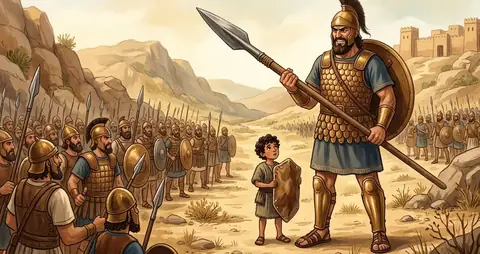 Place · CityGathA chief city of the Philistines on the border of Judah, home of Goliath and of the last of the giants. David twice took…
 PersonJudahJacob's fourth son, who became leader among his brothers and the father of Israel's royal tribe. David, the kings of…
 PersonJothamA good king of Judah who ruled for his leprous father Uzziah and then in his own right. He built the temple's upper…
 Person · KingAhazA wicked king of Judah who sacrificed his own son, shut the temple, and paid Assyria for help instead of trusting God.…
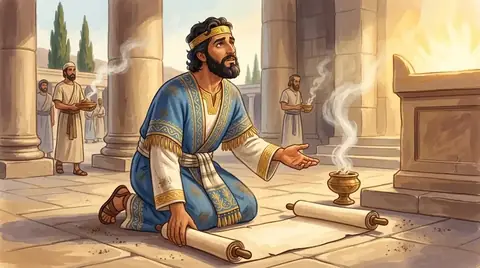 Person · KingHezekiahOne of Judah's best kings. He cleansed the temple, smashed the idols, trusted God when Assyria besieged Jerusalem, and…
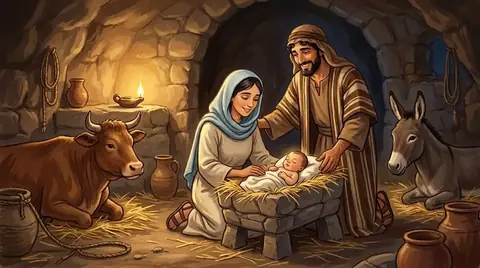 PlaceBethlehemA small town in the hills of Judah, five miles south of Jerusalem. It was the home of Ruth and Boaz, the birthplace of…Person · ProphetIsaiahThe prophet of Jerusalem who served four kings, saw the LORD on his throne, and foretold the virgin's son, the…
Written for this app in its own words, from the Bible, with the facts checked against Bible dictionaries and encyclopedias: Easton's, Smith's, Fausset's, ISBE, Holman, the New Bible Dictionary, Vine's and the Thompson Chain topics. People and places: STEPBible.org (TIPNR), CC BY 4.0; where a place is today and its photo: OpenBible.info, CC BY 4.0.
