
Custom · Rome
Cross
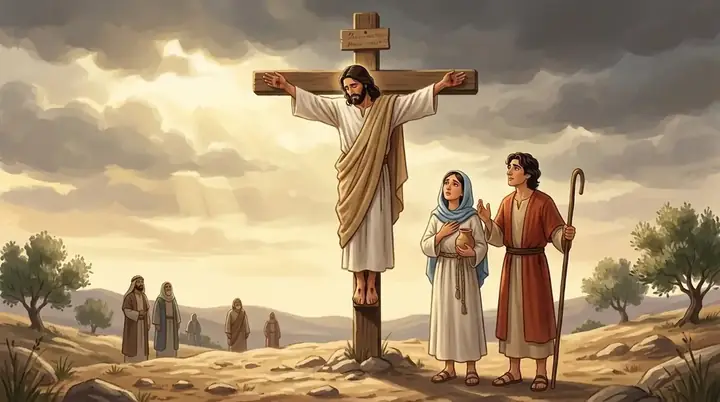
The wooden post and crossbeam on which the Romans executed criminals, and on which Jesus died. In the New Testament "the cross" also means his death itself, and the self-denial of those who follow him.
- Jesus' cross
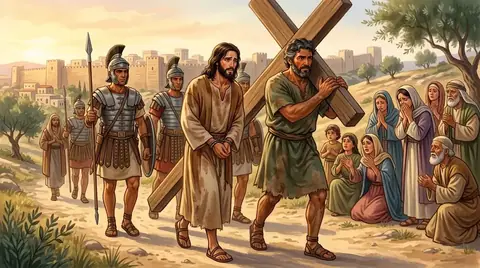
- Carried first by him, then by Simon of Cyrene (John 19:17; Mark 15:21)
- Means
- His death for sinners (1 Corinthians 1:18; Colossians 1:20), and the believer's way (Luke 9:23)
- The sign over it
- "Jesus of Nazareth the King of the Jews", in Hebrew, Greek and Latin (John 19:19–20)
What it was
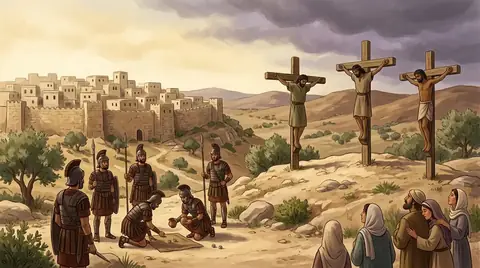
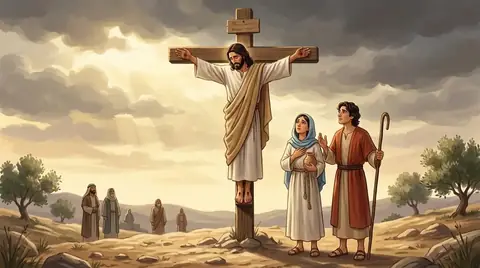
A cross was an upright post with a beam across it, set up outside a city where everyone could see. The condemned man carried the beam to the place, was fixed to it with ropes or nails, and was lifted up to die slowly (see Crucifixion). Roman writers called it the cruellest and most shameful of punishments, kept for slaves and rebels. Jesus' cross was the kind with the upright rising above the beam, since the notice naming his crime was fixed over his head (Matthew 27:37). He carried it himself until he could not, and the soldiers made a passer-by, Simon from Cyrene, carry it the rest of the way to Golgotha (John 19:17; Mark 15:21).
What it means
The apostles made the word stand for everything that happened there. Jesus made peace "through the blood of his cross" (Colossians 1:20); he took away the law that condemned us, "nailing it to his cross" (Colossians 2:14); he endured the cross, despising its shame, for the joy set before him (Hebrews 12:2). Paul says the preaching of the cross is foolishness to those who are perishing but the power of God to those being saved (1 Corinthians 1:18), and that he will boast in nothing but the cross of Christ (Galatians 6:14). The Jewish law counted anyone hanged on a tree as cursed, and Paul says Christ became a curse for us in just that way (Deuteronomy 21:23; Galatians 3:13).
Taking up the cross
Before he died, Jesus told his followers that whoever would come after him must deny himself, take up his cross daily and follow him (Luke 9:23; Matthew 16:24). His hearers had seen condemned men walking to execution under their beams. To take up the cross is to go the way Jesus went, with death to self and no turning back, trusting that whoever loses his life for his sake will find it.
Later
The first Christians did not use the cross as a sign; they preached it. It became the emblem of the church after the emperor Constantine in the fourth century.
Key verses
- Luke 9:23
And he said to them all, If any man will come after me, let him deny himself, and take up his cross daily, and follow me.
- John 19:17
And he bearing his cross went forth into a place called the place of a skull, which is called in the Hebrew Golgotha:
- 1 Corinthians 1:18
For the preaching of the cross is to them that perish foolishness; but unto us which are saved it is the power of God.
- Galatians 3:13
Christ hath redeemed us from the curse of the law, being made a curse for us: for it is written, Cursed is every one that hangeth on a tree:
- Colossians 1:20
And, having made peace through the blood of his cross, by him to reconcile all things unto himself; by him, I say, whether they be things in earth, or things in heaven.
- Hebrews 12:2
Looking unto Jesus the author and finisher of our faith; who for the joy that was set before him endured the cross, despising the shame, and is set down at the right hand of the throne of God.
Read next
 PersonSimonA very common name in New Testament times. Besides Simon Peter, the Bible names a second apostle, a brother of Jesus…
 Custom · RomeCrucifixionThe Roman way of executing slaves, rebels and the worst criminals: flogged, nailed or tied to a cross outside the city…
 PlaceGolgothaThe place just outside Jerusalem where Jesus was crucified. Its Aramaic name means "the place of a skull"; Calvary is…
 PersonPaulA Pharisee who hated the church until the risen Jesus met him on the road to Damascus. He became the apostle to the…
Written for this app in its own words, from the Bible, with the facts checked against Bible dictionaries and encyclopedias: Easton's, Smith's, Fausset's, ISBE, Holman, the New Bible Dictionary, Vine's and the Thompson Chain topics.
