
Person
Korah
KOR-uhOld Testament · about 1440 BC · "baldness" or "ice"
A Levite, Moses' cousin, who led a revolt in the wilderness against Moses and Aaron, demanding the priesthood. The earth opened and swallowed him; his sons lived to write psalms.
- Family
- Son of Izhar, grandson of Kohath; cousin of Moses and Aaron (Exodus 6:18–21)
- Known for
- The rebellion of Korah, Dathan and Abiram (Numbers 16)
- Descendants
- The sons of Korah, temple singers and gatekeepers, named in the titles of eleven psalms
His life
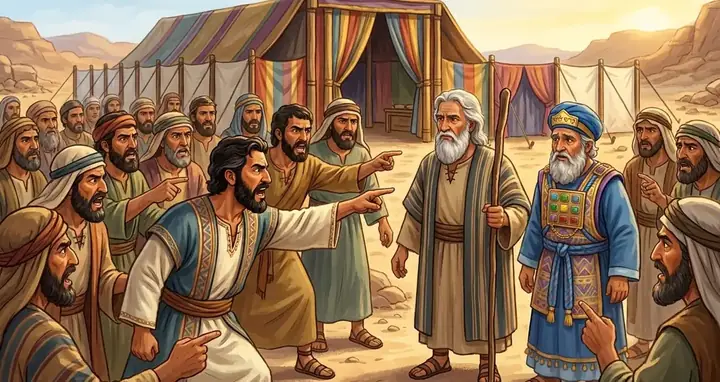
Korah was a Kohathite, one of the clan that carried the holy things of the tabernacle. That was not enough for him. He gathered Dathan and Abiram of the tribe of Reuben and 250 leading men and confronted Moses and Aaron: the whole congregation was holy, so why did these two set themselves above everyone else? (Numbers 16:3). Behind the fine words lay a wish for Aaron's priesthood, and Moses told him so: "seek ye the priesthood also?" (Numbers 16:10).
Moses left the matter to God. The next morning Korah and his 250 men stood at the door of the tabernacle with censers of burning incense, as if they were priests. Moses warned the people to get away from the tents of the rebels. Then the ground split open and swallowed Korah, Dathan, Abiram and all they had, and fire from the LORD burned up the 250 men with their censers (Numbers 16:31–35). A plague the next day killed thousands more who blamed Moses for the deaths, until Aaron ran among them with incense and stood "between the dead and the living" (Numbers 16:46–48).
The bronze censers were hammered into a covering for the altar, so that everyone who came to it would remember that no one but Aaron's family may offer incense (Numbers 16:38–40). Then God made Aaron's staff bud, to settle the question for good (Numbers 17).
His sons
"Notwithstanding the children of Korah died not" (Numbers 26:11). They must have refused to join their father. Their descendants became gatekeepers of the temple and one of its great choirs, and Psalms 42 to 49, 84, 85, 87 and 88 bear their name, including "As the hart panteth after the water brooks" and "How amiable are thy tabernacles". The sons of a man who grasped at the altar were content to be doorkeepers in the house of God (Psalms 84:10).
What to learn
Jude warns of false teachers who have "perished in the gainsaying of Core" (Jude 1:11): Korah stands for rebellion against the leaders God has chosen, dressed up as a plea for equality. God has given each his place to serve, and it is enough.
Others with this name
A son of Esau who became a chief of Edom (Genesis 36:5, 18); another Edomite chief descended from Eliphaz (Genesis 36:16); and a son of Hebron in the family of Caleb (1 Chronicles 2:43).
Key verses
- Numbers 16:1–3
Now Korah, the son of Izhar, the son of Kohath, the son of Levi, and Dathan and Abiram, the sons of Eliab, and On, the son of Peleth, sons of Reuben, took men: And they rose up before Moses, with certain of the children of Israel, two hundred and fifty princes of the assembly, famous in the congregation, men of renown: And they gathered themselves together against Moses and against Aaron, and said unto them, Ye take too much upon you, seeing all the congregation are holy, every one of them, and the Lord is among them: wherefore then lift ye up yourselves above the congregation of the Lord?
- Numbers 16:31–33
And it came to pass, as he had made an end of speaking all these words, that the ground clave asunder that was under them: And the earth opened her mouth, and swallowed them up, and their houses, and all the men that appertained unto Korah, and all their goods. They, and all that appertained to them, went down alive into the pit, and the earth closed upon them: and they perished from among the congregation.
- Numbers 26:10–11
And the earth opened her mouth, and swallowed them up together with Korah, when that company died, what time the fire devoured two hundred and fifty men: and they became a sign. Notwithstanding the children of Korah died not.
- Psalms 84:10
For a day in thy courts is better than a thousand. I had rather be a doorkeeper in the house of my God, than to dwell in the tents of wickedness.
- Jude 1:11
Woe unto them! for they have gone in the way of Cain, and ran greedily after the error of Balaam for reward, and perished in the gainsaying of Core.
On the map
Family
- Parents
- Izhar
- Brothers and sisters
- Nepheg, Zichri, Shelomith
- Children
- Assir, Elkanah, Ebiasaph
Mentioned in 38 verses
- Exodus 2
- Numbers 16
- 1 Chronicles 7
- 2 Chronicles 1
- Psalms 11
- Jude 1
Read next
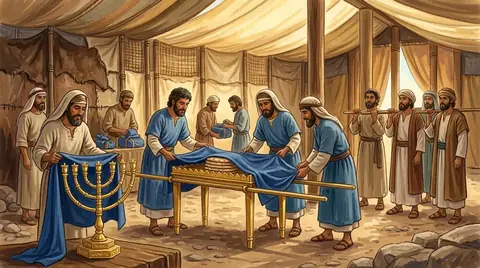 PersonKohathThe second son of Levi and the grandfather of Moses and Aaron. His clan, the Kohathites, carried the ark and the holy…
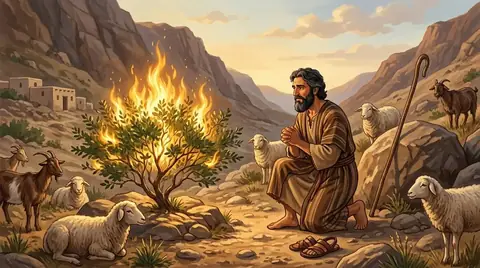 PersonMosesThe man God used to bring Israel out of Egypt, give them his Law at Sinai, and lead them for forty years in the…
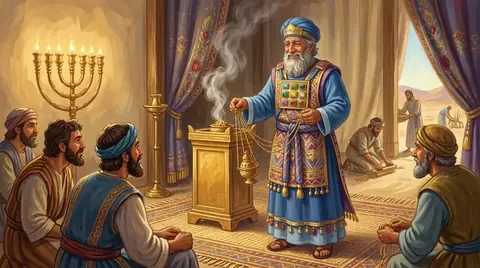 PersonAaronMoses' older brother and Israel's first high priest. He spoke for Moses before Pharaoh and served God at the tabernacle…
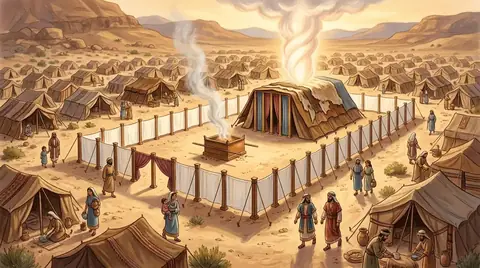 Thing · WorshipThe tabernacleThe holy tent Israel built in the wilderness, by God's own pattern, so that he could dwell in the middle of his people.…
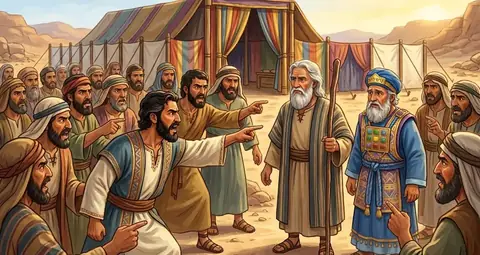 PersonDathanA leader of the tribe of Reuben who, with his brother Abiram, joined Korah's revolt against Moses. The ground opened…
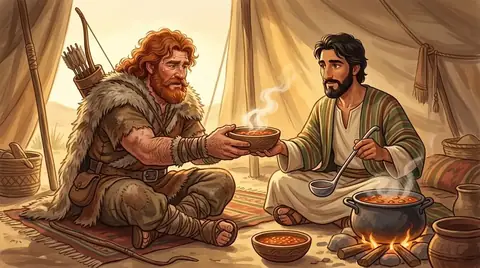 PersonEsauIsaac's elder twin, a hunter who traded away his birthright for a meal and lost his father's blessing to Jacob's trick.…
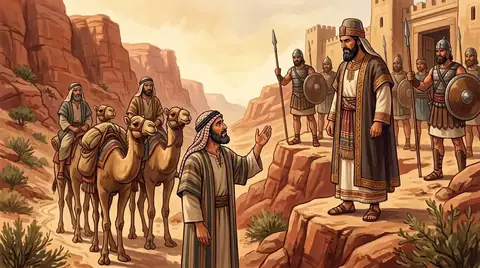 Place · NationEdomThe rugged land south of the Dead Sea where Esau's descendants lived. Edom was Israel's unfriendly brother nation, and…
 PersonCalebOne of the twelve spies Moses sent into Canaan, and with Joshua the only one who trusted God to give them the land.…
Written for this app in its own words, from the Bible, with the facts checked against Bible dictionaries and encyclopedias: Easton's, Smith's, Fausset's, ISBE, Holman, the New Bible Dictionary, Vine's and the Thompson Chain topics. People and places: STEPBible.org (TIPNR), CC BY 4.0; where a place is today and its photo: OpenBible.info, CC BY 4.0.
