
Custom · Symbol
Harvest
The gathering of grain and fruit, from the barley cut at Passover to the grapes picked in autumn: a time of hard work and great joy. Jesus used it for people gathered into God's kingdom, and for the judgment at the end of the age.
- When
- Barley in April, wheat in May and June, grapes and olives in autumn
- Feasts
- First fruits at Passover, Pentecost when the wheat was in, Feast of tabernacles after the fruit
- Law
- Corners and gleanings left for the poor (Leviticus 19:9–10); no work on the Sabbath (Exodus 34:21)
The custom
In the land of Israel the barley ripened first, around Passover, and a sheaf of the first ripe grain was waved before the LORD before anyone ate of the new crop (Leviticus 23:10–14). Seven weeks later came the wheat and the feast of Pentecost, with two loaves from the new flour (Leviticus 23:15–17). Reapers cut the stalks with sickles, women and the poor gleaned behind them, as Ruth did in the field of Boaz (Ruth 2), and the grain was threshed and winnowed on the threshing floor. Grapes, figs and olives came in late summer and autumn, and the year's harvest closed with the Feast of Tabernacles. Harvest was the happiest time of the year; Isaiah speaks of "the joy in harvest" (Isaiah 9:3), and a failed harvest meant hunger: "The harvest is past, the summer is ended, and we are not saved" (Jeremiah 8:20).
In Jesus' teaching
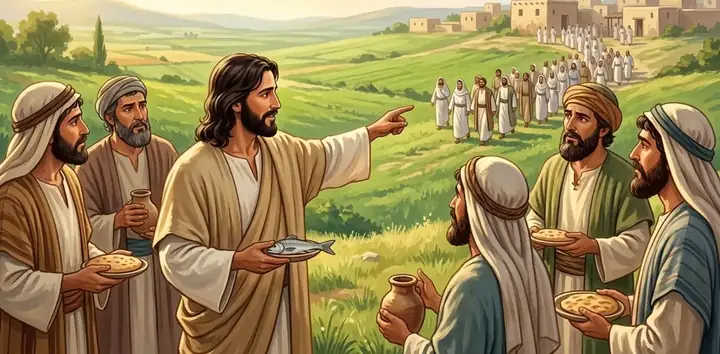
Jesus looked at the crowds and said, "The harvest truly is plenteous, but the labourers are few"; pray the Lord of the harvest to send workers (Matthew 9:37–38; Luke 10:2). At Sychar he told the disciples to lift their eyes and see the fields already white for harvest, as the Samaritans came out to him (John 4:35). But the harvest is also the end of the age, when the angels will separate the wheat from the tares (Matthew 13:30, 39), and in Revelation the Son of man swings his sickle over the earth (Revelation 14:14–16).
For us
Paul draws the lesson for the believer's own life: "Whatsoever a man soweth, that shall he also reap"; sow to the flesh and reap ruin, sow to the Spirit and reap life, and "in due season we shall reap, if we faint not" (Galatians 6:7–9).
Key verses
- Leviticus 23:10
Speak unto the children of Israel, and say unto them, When ye be come into the land which I give unto you, and shall reap the harvest thereof, then ye shall bring a sheaf of the firstfruits of your harvest unto the priest:
- Matthew 9:37–38
Then saith he unto his disciples, The harvest truly is plenteous, but the labourers are few; Pray ye therefore the Lord of the harvest, that he will send forth labourers into his harvest.
- John 4:35
Say not ye, There are yet four months, and then cometh harvest? behold, I say unto you, Lift up your eyes, and look on the fields; for they are white already to harvest.
- Matthew 13:39
The enemy that sowed them is the devil; the harvest is the end of the world; and the reapers are the angels.
- Galatians 6:7–9
Be not deceived; God is not mocked: for whatsoever a man soweth, that shall he also reap. For he that soweth to his flesh shall of the flesh reap corruption; but he that soweth to the Spirit shall of the Spirit reap life everlasting. And let us not be weary in well doing: for in due season we shall reap, if we faint not.
Read next
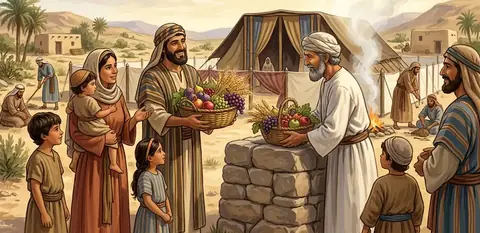 Custom · WorshipFirst-fruitsThe first ripe grain, fruit, oil and wine of each year, offered to God before any of the rest was used, as a…
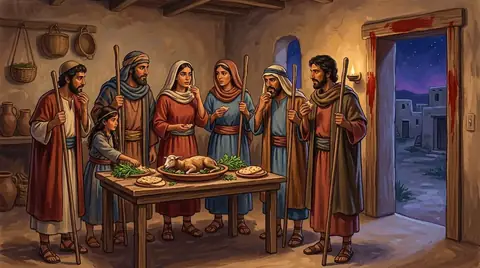 FeastPassoverThe yearly feast remembering the night God rescued Israel from Egypt, when death passed over every house marked with a…
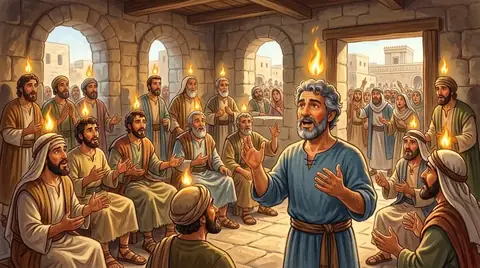 FeastPentecost (the Feast of Weeks)The harvest feast kept fifty days after Passover, when two loaves baked from the new wheat were offered to God. On the…
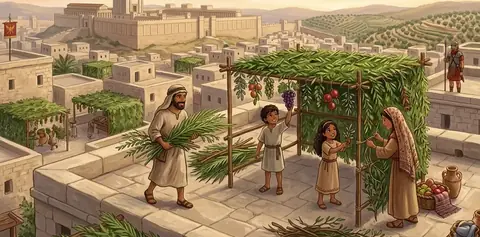 FeastThe Feast of Tabernacles (Booths)Israel's joyful autumn harvest feast, seven days of living in leafy shelters to remember the years in the wilderness…
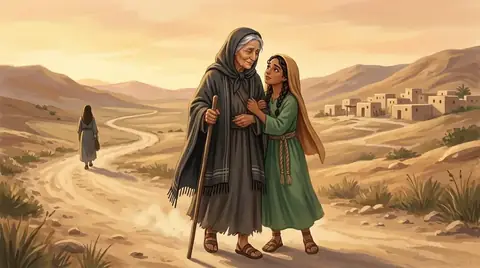 PersonRuthA young widow from Moab who left her own land to stay with her mother-in-law Naomi and trust Israel's God. She married…
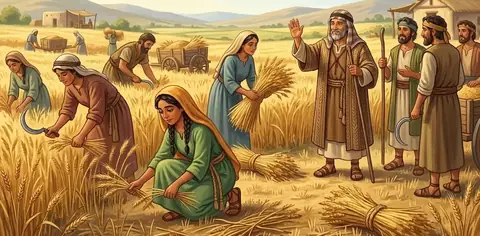 PersonBoazA wealthy farmer of Bethlehem who married Ruth, the Moabite widow, as her kinsman-redeemer. Their great-grandson was…
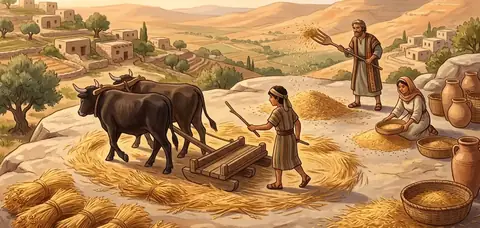 Custom · Daily lifeThe threshing floorA flat open space of beaten earth or rock, usually on a breezy hilltop, where cut grain was trodden out by oxen and…
 PersonPaulA Pharisee who hated the church until the risen Jesus met him on the road to Damascus. He became the apostle to the…
Written for this app in its own words, from the Bible, with the facts checked against Bible dictionaries and encyclopedias: Easton's, Smith's, Fausset's, ISBE, Holman, the New Bible Dictionary, Vine's and the Thompson Chain topics.
