
Custom · Worship
First-fruits
The first and best of the harvest, given to God
The first ripe grain, fruit, oil and wine of each year, offered to God before any of the rest was used, as a thank-offering and a confession that the whole harvest was his. Christ rose as the first-fruits of the dead.
- The sheaf
- The first barley, waved before the LORD during Unleavened Bread (Leviticus 23:10–11)
- Two loaves
- From the new wheat, at Pentecost (Leviticus 23:17)
- Every farmer
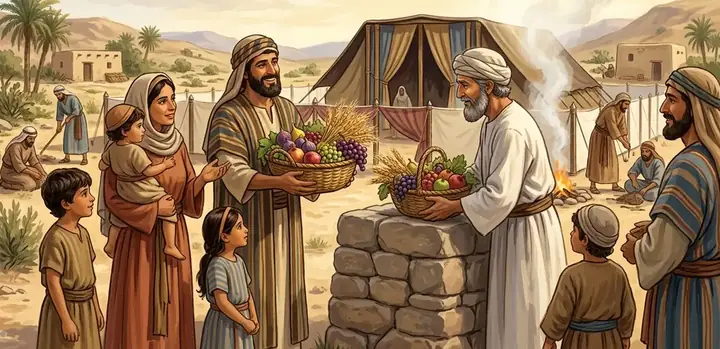
- A basket of first-fruits brought to the sanctuary with a confession of God's goodness (Deuteronomy 26:1–11)
- Went to
- The priests (Numbers 18:12–13)
What the law required
Nothing from the new harvest was to be eaten until its first portion had been given to God. On the day after the sabbath of the Passover week the priest waved a sheaf of the first barley before the LORD (Leviticus 23:10–14). Seven weeks later, at Pentecost, two loaves baked from the new wheat were waved in the same way (Leviticus 23:15–17). Each family also brought the first of its grain, wine, oil, fruit and fleece to the sanctuary (Exodus 23:19; Deuteronomy 18:4), and the first lump of dough from each batch (Numbers 15:20–21). The gifts went to the priests for their living (Numbers 18:12–13). Fruit trees were left unpicked for three years, and the crop of the fourth year belonged to God (Leviticus 19:23–25). Deuteronomy gives the words the worshipper spoke as he set down his basket: a short history of God's rescue of his people, ending "and now, behold, I have brought the firstfruits of the land, which thou, O LORD, hast given me" (Deuteronomy 26:5–10). It was a thank-offering, with a feast to follow (Deuteronomy 26:11).
What it meant
Giving the first portion said that the whole harvest was God's gift and belonged to him; the rest could then be used with a clear conscience. "Honour the LORD with thy substance, and with the firstfruits of all thine increase" (Proverbs 3:9). Hezekiah's reform brought first-fruits pouring in (2 Chronicles 31:5), and the returned exiles promised to bring them again (Nehemiah 10:35–37). A man once brought his first-fruits to Elisha, who fed a hundred men with them (2 Kings 4:42). God called Israel itself "the firstfruits of his increase" (Jeremiah 2:3).
Points to Christ
Paul says that "Christ the firstfruits" has risen from the dead; his resurrection is the first sheaf, and the harvest of all who belong to him will follow (1 Corinthians 15:20–23). He rose on the very morning the sheaf was waved. Believers have "the firstfruits of the Spirit" now, a foretaste of the whole (Romans 8:23), and are themselves "a kind of firstfruits" of God's new creation (James 1:18; Revelation 14:4).
Key verses
- Leviticus 23:10–11
Speak unto the children of Israel, and say unto them, When ye be come into the land which I give unto you, and shall reap the harvest thereof, then ye shall bring a sheaf of the firstfruits of your harvest unto the priest: And he shall wave the sheaf before the Lord, to be accepted for you: on the morrow after the sabbath the priest shall wave it.
- Deuteronomy 26:10
And now, behold, I have brought the firstfruits of the land, which thou, O Lord, hast given me. And thou shalt set it before the Lord thy God, and worship before the Lord thy God:
- Proverbs 3:9
Honour the Lord with thy substance, and with the firstfruits of all thine increase:
- 1 Corinthians 15:20–23
But now is Christ risen from the dead, and become the firstfruits of them that slept. For since by man came death, by man came also the resurrection of the dead. For as in Adam all die, even so in Christ shall all be made alive. …
- James 1:18
Of his own will begat he us with the word of truth, that we should be a kind of firstfruits of his creatures.
Read next
 FeastPentecost (the Feast of Weeks)The harvest feast kept fifty days after Passover, when two loaves baked from the new wheat were offered to God. On the…
 Custom · WorshipThe priestsAaron's descendants, set apart to offer the sacrifices, burn the incense, pronounce the blessing and teach the law.…
 Person · KingHezekiahOne of Judah's best kings. He cleansed the temple, smashed the idols, trusted God when Assyria besieged Jerusalem, and…
 PersonElishaElijah's successor, a farmer's son who asked for a double share of his master's spirit and received it. His long…
 PersonPaulA Pharisee who hated the church until the risen Jesus met him on the road to Damascus. He became the apostle to the…
Written for this app in its own words, from the Bible, with the facts checked against Bible dictionaries and encyclopedias: Easton's, Smith's, Fausset's, ISBE, Holman, the New Bible Dictionary, Vine's and the Thompson Chain topics.
