
Feast
The Feast of Tabernacles (Booths)
15–22 Tishri (September–October) · Lev 23:33-43 · also called Ingathering
Israel's joyful autumn harvest feast, seven days of living in leafy shelters to remember the years in the wilderness, with an eighth day of rest. At this feast Jesus stood up and offered living water to anyone who was thirsty.
- When
- The 15th day of the seventh month, after the Day of Atonement, for seven days plus an eighth day of assembly
- Also called
- The Feast of Ingathering (Exodus 23:16); the Feast of Booths; Sukkot
- Remembers
- The tents of the wilderness (Leviticus 23:43); the end of the harvest (Deuteronomy 16:13)
- Famous occasions
- Solomon's temple dedicated (1 Kings 8:2); Ezra's revival (Nehemiah 8:14–18); Jesus in John 7
What it was
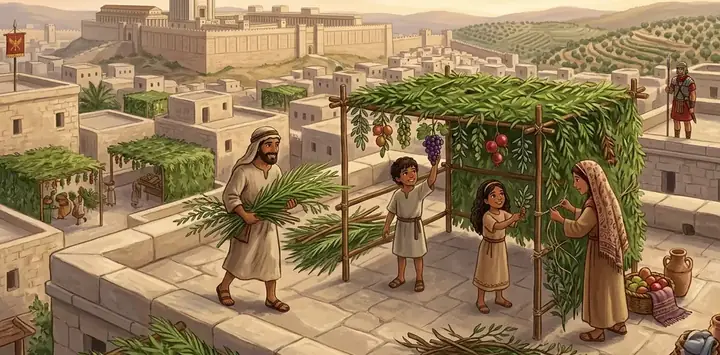
The third of the three great pilgrim feasts, when all the men of Israel went up to the sanctuary (Deuteronomy 16:16). It came five days after the Day of Atonement, when the grain was threshed and the grapes and olives were in, so it was the harvest-home of the year, a time for Israel to "rejoice before the LORD" with their families, servants, Levites, strangers, orphans and widows (Leviticus 23:40; Deuteronomy 16:14). For seven days everyone lived in booths made of palm, olive, myrtle and willow branches, on roofs and in courtyards and streets, to remember that God had made their fathers live in tents when he brought them out of Egypt (Leviticus 23:42–43; Nehemiah 8:15–16). The first day and the eighth were days of rest. More sacrifices were offered than at any other feast: seventy bulls over the week, one fewer each day (Numbers 29:12–38). Every seventh year the whole law was read aloud at it (Deuteronomy 31:10–13).
In the Old Testament
Solomon chose this feast to dedicate the temple (1 Kings 8:2). Jeroboam set up a rival feast a month later for his northern kingdom (1 Kings 12:32). When the exiles came home they kept it in the ruins (Ezra 3:4), and in Ezra's day, after the law was read, the people built booths and kept it with a joy not seen since Joshua's time (Nehemiah 8:17). Zechariah foresaw all nations coming up to Jerusalem to keep it (Zechariah 14:16).
In Jesus' day
By then two customs had been added. Each morning a priest carried water in a golden pitcher from the pool of Siloam and poured it out at the altar, remembering the water from the rock; and at night four great lamps lit the Court of the Women, remembering the pillar of fire. Against that background, "in the last day, that great day of the feast", Jesus stood and cried, "If any man thirst, let him come unto me, and drink" (John 7:37–38), and soon after, "I am the light of the world" (John 8:12). The shelter in the wilderness, the water and the light were all his.
For us
Believers are still pilgrims living in tents (2 Corinthians 5:1), and the feast looks forward to the day when "the tabernacle of God is with men" and the harvest of the world is gathered in (Revelation 21:3).
Key verses
- Leviticus 23:39–43
Also in the fifteenth day of the seventh month, when ye have gathered in the fruit of the land, ye shall keep a feast unto the Lord seven days: on the first day shall be a sabbath, and on the eighth day shall be a sabbath. And ye shall take you on the first day the boughs of goodly trees, branches of palm trees, and the boughs of thick trees, and willows of the brook; and ye shall rejoice before the Lord your God seven days. And ye shall keep it a feast unto the Lord seven days in the year. It shall be a statute for ever in your generations: ye shall celebrate it in the seventh month. …
- Deuteronomy 16:13–15
Thou shalt observe the feast of tabernacles seven days, after that thou hast gathered in thy corn and thy wine: And thou shalt rejoice in thy feast, thou, and thy son, and thy daughter, and thy manservant, and thy maidservant, and the Levite, the stranger, and the fatherless, and the widow, that are within thy gates. Seven days shalt thou keep a solemn feast unto the Lord thy God in the place which the Lord shall choose: because the Lord thy God shall bless thee in all thine increase, and in all the works of thine hands, therefore thou shalt surely rejoice.
- Nehemiah 8:14–17
And they found written in the law which the Lord had commanded by Moses, that the children of Israel should dwell in booths in the feast of the seventh month: And that they should publish and proclaim in all their cities, and in Jerusalem, saying, Go forth unto the mount, and fetch olive branches, and pine branches, and myrtle branches, and palm branches, and branches of thick trees, to make booths, as it is written. So the people went forth, and brought them, and made themselves booths, every one upon the roof of his house, and in their courts, and in the courts of the house of God, and in the street of the water gate, and in the street of the gate of Ephraim. …
- Zechariah 14:16
And it shall come to pass, that every one that is left of all the nations which came against Jerusalem shall even go up from year to year to worship the King, the Lord of hosts, and to keep the feast of tabernacles.
- John 7:37–38
In the last day, that great day of the feast, Jesus stood and cried, saying, If any man thirst, let him come unto me, and drink. He that believeth on me, as the scripture hath said, out of his belly shall flow rivers of living water.
Read next
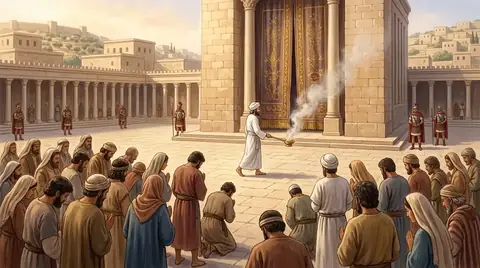 Feast · FastThe Day of AtonementThe one day in the year when the high priest went behind the veil with blood to atone for all Israel's sins, while a…
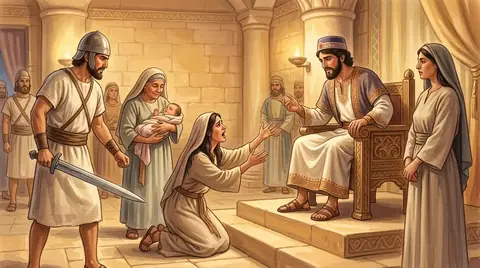 Person · KingSolomonDavid's son and Israel's third king, who asked God for wisdom and received riches and fame as well. He built the temple…
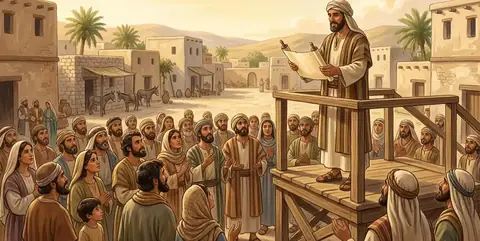 PersonEzraA priest and scribe who led a second group of exiles back from Babylon, taught the people God's law and read it to them…
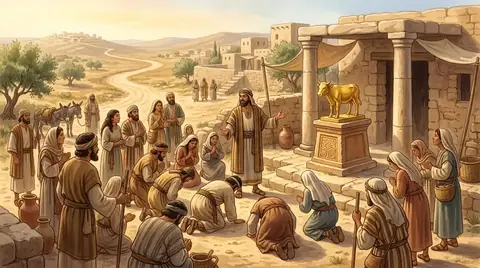 PersonJeroboamSolomon's overseer who became the first king of the breakaway northern kingdom. He set up golden calves at Bethel and…
 PersonJoshuaMoses' helper who took over from him and led Israel across the Jordan into the Promised Land. He fought the wars of…
 PersonZechariahThe prophet who, with Haggai, urged the returned exiles to rebuild the temple, and whose book foretells the humble King…
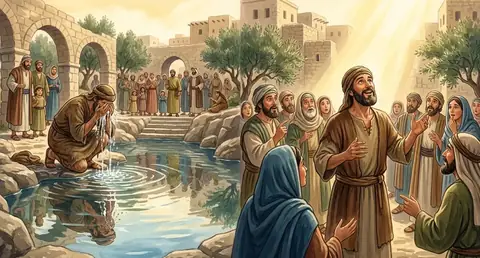 Place · JerusalemPool of SiloamA pool at the southern end of old Jerusalem, fed by a tunnel from the Gihon spring. Jesus sent a man born blind to wash…
Written for this app in its own words, from the Bible, with the facts checked against Bible dictionaries and encyclopedias: Easton's, Smith's, Fausset's, ISBE, Holman, the New Bible Dictionary, Vine's and the Thompson Chain topics. Also: Edersheim, The Temple.
