
Custom
Harem
The women's quarters of a royal palace, where a king's wives and concubines lived under the care of eunuchs. Esther was taken into the Persian king's harem before she became queen.
- See also
- Concubine, Eunuch, Esther
What it was
Eastern kings kept many wives and concubines in a separate part of the palace, the "house of the women". In Persia it was in the citadel of Shushan, under the care of the king's chamberlains, who were eunuchs (Esther 2:3).
How it was used
When King Ahasuerus sought a new queen, young women were gathered into the harem under Hegai and given a year of beauty treatments before each was brought to the king. Afterwards they passed to a second house, under Shaashgaz, and did not see him again unless he called them by name (Esther 2:8–14). Esther won favour there and was made queen (Esther 2:17).
What it meant
Israel's own kings were warned not to "multiply wives", lest their hearts turn away (Deuteronomy 17:17). Solomon ignored it, and his many wives drew him to their gods (1 Kings 11:3–4). God's pattern from the start was one man and one woman (Genesis 2:24).
Key verses
- Esther 2:3
And let the king appoint officers in all the provinces of his kingdom, that they may gather together all the fair young virgins unto Shushan the palace, to the house of the women, unto the custody of Hege the king’s chamberlain, keeper of the women; and let their things for purification be given them:
- Esther 2:12–14
Now when every maid’s turn was come to go in to king Ahasuerus, after that she had been twelve months, according to the manner of the women, (for so were the days of their purifications accomplished, to wit, six months with oil of myrrh, and six months with sweet odours, and with other things for the purifying of the women;) Then thus came every maiden unto the king; whatsoever she desired was given her to go with her out of the house of the women unto the king’s house. In the evening she went, and on the morrow she returned into the second house of the women, to the custody of Shaashgaz, the king’s chamberlain, which kept the concubines: she came in unto the king no more, except the king delighted in her, and that she were called by name.
- Deuteronomy 17:17
Neither shall he multiply wives to himself, that his heart turn not away: neither shall he greatly multiply to himself silver and gold.
- 1 Kings 11:3
And he had seven hundred wives, princesses, and three hundred concubines: and his wives turned away his heart.
Read next
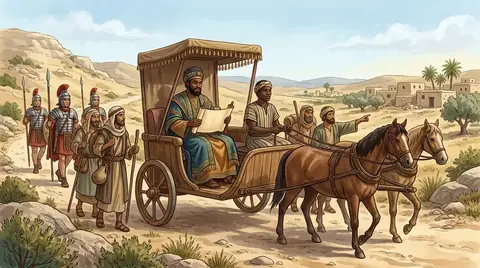 Custom · CourtEunuchsMen who had been castrated, often in boyhood, to serve in a king's palace and guard his wives; the word also came to…
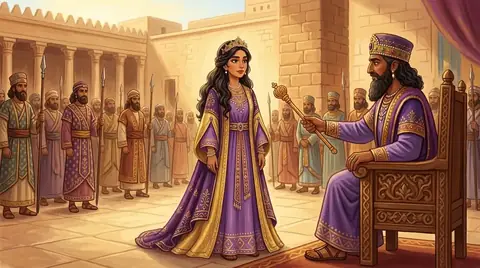 PersonEstherA Jewish orphan who became queen of Persia and risked her life to stop Haman's plan to kill every Jew in the empire.…
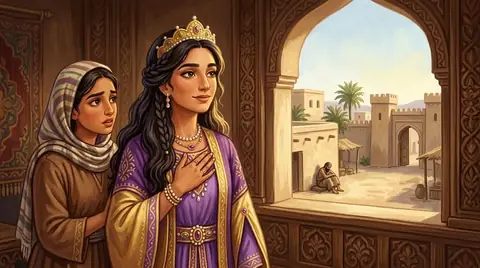 Place · CitySusaThe winter capital of the Persian kings, east of Babylon. The story of Esther is set in its palace, Nehemiah served the…
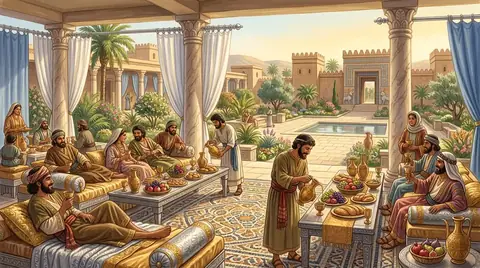 Person · KingAhasuerusThe king of Persia in the book of Esther, who put away Queen Vashti, made Esther his queen, and was tricked by Haman…PersonHegaiThe Persian king's chamberlain in charge of the young women brought to the palace. He took a liking to Esther, gave her…Person · Court officialShaashgazThe chamberlain of King Ahasuerus who had charge of the second house of women, where the king's concubines lived after…
Written for this app in its own words, from the Bible, with the facts checked against Bible dictionaries and encyclopedias: Easton's, Smith's, Fausset's, ISBE, Holman, the New Bible Dictionary, Vine's and the Thompson Chain topics.
