
Custom · Court
Eunuchs
Men who had been castrated, often in boyhood, to serve in a king's palace and guard his wives; the word also came to mean any trusted court official. God promised faithful eunuchs a name better than sons.
- Where
- 2 Kings 9:32; Esther 1:10; Esther 2:3; Daniel 1:3; Isaiah 56:3–5; Jeremiah 38:7; Matthew 19:12; Acts 8:27
- Hebrew
- saris, used also for officials who were not castrated, such as Potiphar, a married man (Genesis 37:36; Genesis 39:1)
- Under the law
- Barred from the congregation (Deuteronomy 23:1), but welcomed by Isaiah's promise
What they were
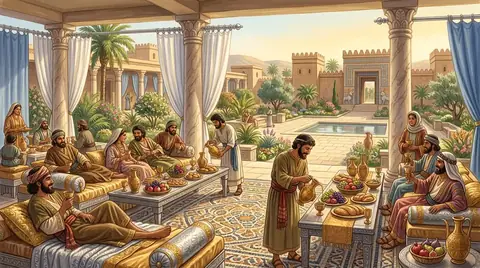
Eastern kings kept many wives and did not trust ordinary men near them, so they used eunuchs as chamberlains, guards of the harem, and keepers of the royal household. Because such men had no families of their own and depended wholly on the king, they often rose to great power. The Hebrew word simply means a court officer, so it is not always certain whether a man so called was castrated; Potiphar, who had a wife, is called by it (Genesis 39:1). Clear examples are the eunuchs who threw Jezebel from her window (2 Kings 9:32), Hegai who kept the women for Ahasuerus (Esther 2:3), and Ashpenaz, master of the eunuchs, who trained Daniel and his friends in Babylon (Daniel 1:3–7). Isaiah warned Hezekiah that his descendants would be eunuchs in the palace of Babylon (2 Kings 20:18), and the Jewish law shut such men out of the assembly of the LORD (Deuteronomy 23:1).
God's welcome
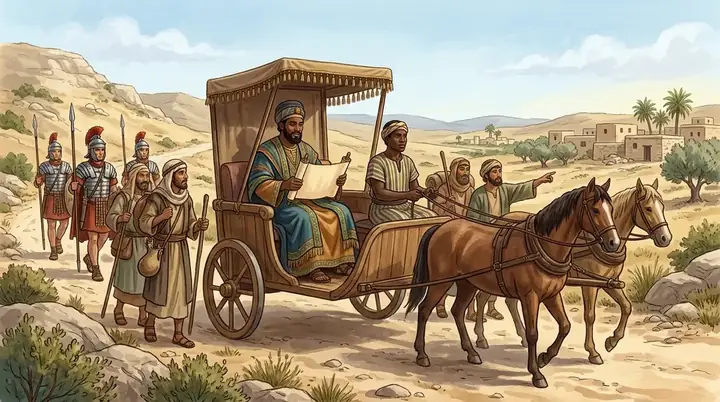
Isaiah looked ahead to a day when the eunuch need not say "I am a dry tree". Those who kept God's covenant would be given, within his house, "a name better than of sons and of daughters", one that would never be cut off (Isaiah 56:3–5). The Ethiopian treasurer whom Philip baptised was a eunuch, reading Isaiah in his chariot, and he was among the earliest of the Gentiles to come in (Acts 8:27–39). The Ethiopian Ebed-melech, who saved Jeremiah from the pit, was another (Jeremiah 38:7–13).
Jesus' saying
Jesus spoke of men who are born unable to marry, men made so by others, and men who "have made themselves eunuchs for the kingdom of heaven's sake" (Matthew 19:12). He did not mean mutilation but the choice to stay single to serve God, as Paul did (1 Corinthians 7:7).
Key verses
- Esther 2:3
And let the king appoint officers in all the provinces of his kingdom, that they may gather together all the fair young virgins unto Shushan the palace, to the house of the women, unto the custody of Hege the king’s chamberlain, keeper of the women; and let their things for purification be given them:
- Daniel 1:3
And the king spake unto Ashpenaz the master of his eunuchs, that he should bring certain of the children of Israel, and of the king’s seed, and of the princes;
- Isaiah 56:3–5
Neither let the son of the stranger, that hath joined himself to the Lord, speak, saying, The Lord hath utterly separated me from his people: neither let the eunuch say, Behold, I am a dry tree. For thus saith the Lord unto the eunuchs that keep my sabbaths, and choose the things that please me, and take hold of my covenant; Even unto them will I give in mine house and within my walls a place and a name better than of sons and of daughters: I will give them an everlasting name, that shall not be cut off.
- Matthew 19:12
For there are some eunuchs, which were so born from their mother’s womb: and there are some eunuchs, which were made eunuchs of men: and there be eunuchs, which have made themselves eunuchs for the kingdom of heaven’s sake. He that is able to receive it, let him receive it.
- Acts 8:27
And he arose and went: and, behold, a man of Ethiopia, an eunuch of great authority under Candace queen of the Ethiopians, who had the charge of all her treasure, and had come to Jerusalem for to worship,
Read next
 PersonJezebelAhab's foreign queen, who brought Baal worship to Israel, killed the LORD's prophets and had Naboth stoned for his…
 Person · KingAhasuerusThe king of Persia in the book of Esther, who put away Queen Vashti, made Esther his queen, and was tricked by Haman…
 Person · ProphetDanielA young noble of Judah carried off to Babylon, who served four kings with wisdom and never bent his faith. God gave him…
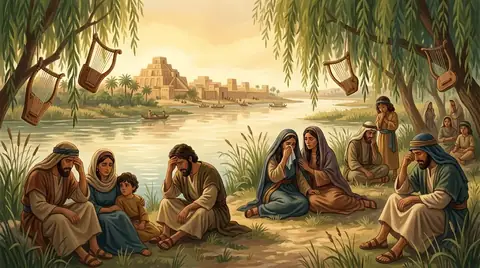 Place · CityBabylonThe great city on the Euphrates where the tower of Babel was built. Under Nebuchadnezzar it ruled the world, destroyed…
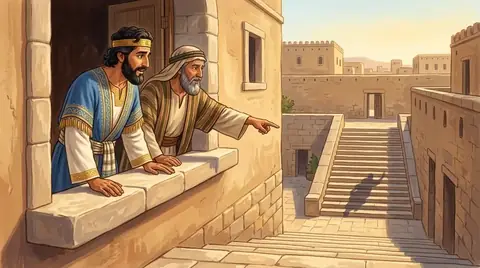 Person · ProphetIsaiahThe prophet of Jerusalem who served four kings, saw the LORD on his throne, and foretold the virgin's son, the…
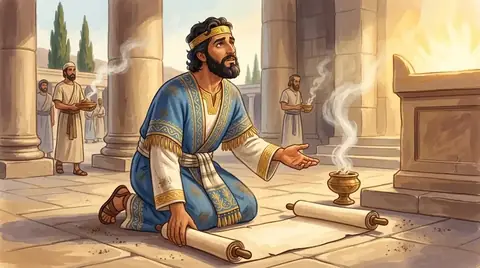 Person · KingHezekiahOne of Judah's best kings. He cleansed the temple, smashed the idols, trusted God when Assyria besieged Jerusalem, and…
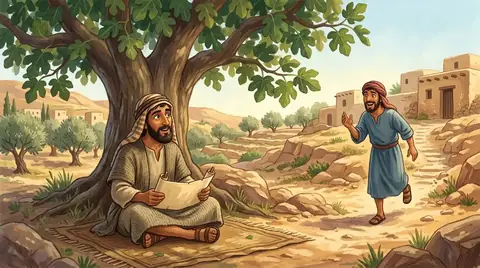 PersonPhilipOne of the twelve apostles, from Bethsaida, who brought Nathanael to Jesus. Another Philip, one of the seven, preached…
 GroupGentilesEveryone who was not a Jew. Israel was kept apart from the nations, yet God had promised to bless them all through…
Written for this app in its own words, from the Bible, with the facts checked against Bible dictionaries and encyclopedias: Easton's, Smith's, Fausset's, ISBE, Holman, the New Bible Dictionary, Vine's and the Thompson Chain topics.
