
Custom · Family
Concubines
A wife of second rank, often a slave girl, who had fewer rights than a full wife. The Bible tells these stories plainly and shows the grief the custom brought.
- Examples
- Hagar with Abraham; Bilhah and Zilpah with Jacob; the three hundred of Solomon
- Her children
- Inherited only when the father chose to give them a share (Genesis 25:6)
- God's design
- One man and one woman for life (Genesis 2:24; Mark 10:6–9)
What it was
In the ancient East a man of means might take a second woman alongside his wife. She lived in his household and bore his children, but she did not have a wife's standing. Often she had been a servant or a captive. Her sons were usually sent away with gifts, while the wife's sons received the inheritance; that is what Abraham did for the sons of Keturah and his other concubines (Genesis 25:6). The law of Moses protected such women from being simply sold on or thrown out (Exodus 21:7–11; Deuteronomy 21:10–14).
In the Bible
Sarah, unable to have children, gave her maid Hagar to Abraham, and the jealousy that followed tore the family apart (Genesis 16). Rachel and Leah did the same with their maids, and the twelve sons of Jacob grew up in a house full of rivalry (Genesis 30). Reuben lost his place as firstborn by sleeping with his father's concubine Bilhah (Genesis 35:22; Genesis 49:4). The brutal death of a Levite's concubine at Gibeah set off a civil war (Judges 19–20). Taking a king's concubines was a way of claiming his throne, which is why Absalom did it so publicly (2 Samuel 16:21–22) and why Solomon saw a threat in Adonijah's request for Abishag (1 Kings 2:22). Solomon himself had three hundred concubines, and they turned his heart from God (1 Kings 11:3).
What God intended
None of these stories is told with approval. From the beginning God made one man and one woman and joined them as "one flesh" (Genesis 2:24). Jesus pointed back to that beginning as the rule for marriage (Matthew 19:4–6), and the New Testament knows only one pattern: each man with his own wife, each woman with her own husband (1 Corinthians 7:2).
Key verses
- Genesis 16:1–3
Now Sarai Abram’s wife bare him no children: and she had an handmaid, an Egyptian, whose name was Hagar. And Sarai said unto Abram, Behold now, the Lord hath restrained me from bearing: I pray thee, go in unto my maid; it may be that I may obtain children by her. And Abram hearkened to the voice of Sarai. And Sarai Abram’s wife took Hagar her maid the Egyptian, after Abram had dwelt ten years in the land of Canaan, and gave her to her husband Abram to be his wife.
- Genesis 25:6
But unto the sons of the concubines, which Abraham had, Abraham gave gifts, and sent them away from Isaac his son, while he yet lived, eastward, unto the east country.
- Genesis 35:22
And it came to pass, when Israel dwelt in that land, that Reuben went and lay with Bilhah his father’s concubine: and Israel heard it. Now the sons of Jacob were twelve:
- Judges 19:1
And it came to pass in those days, when there was no king in Israel, that there was a certain Levite sojourning on the side of mount Ephraim, who took to him a concubine out of Beth–lehem–judah.
- 1 Kings 11:3
And he had seven hundred wives, princesses, and three hundred concubines: and his wives turned away his heart.
- Matthew 19:4–6
And he answered and said unto them, Have ye not read, that he which made them at the beginning made them male and female, And said, For this cause shall a man leave father and mother, and shall cleave to his wife: and they twain shall be one flesh? Wherefore they are no more twain, but one flesh. What therefore God hath joined together, let not man put asunder.
Read next
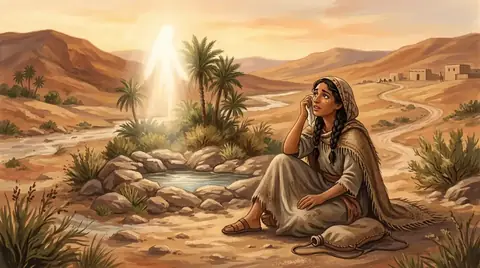 PersonHagarSarah's Egyptian servant, given to Abraham to bear a child, and the mother of Ishmael. Twice she was driven out into…
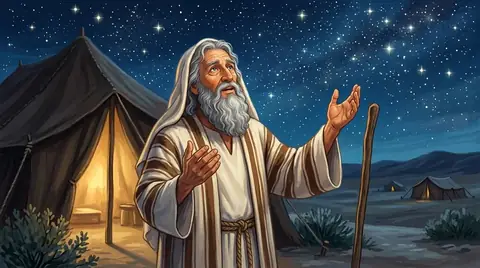 PersonAbrahamThe man God called out of Ur to a land he had never seen, promising him a people and a blessing for the whole world. He…
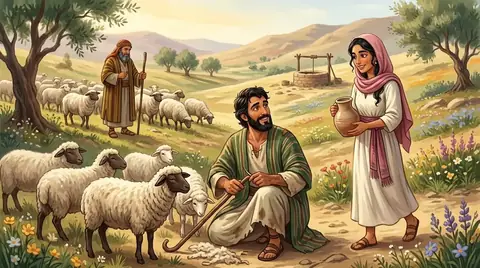 PersonBilhahRachel's maidservant, given to Jacob so that Rachel could have children through her. Her sons Dan and Naphtali became…PersonZilpahLeah's maidservant, given to Jacob as a wife. She was the mother of Gad and Asher, two of the twelve tribes of Israel.
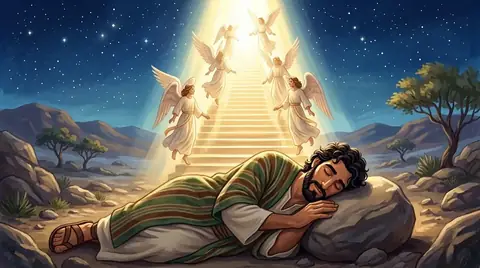 PersonJacobIsaac's younger twin son, who won his brother's birthright and blessing by cunning, was changed by God, and was renamed…
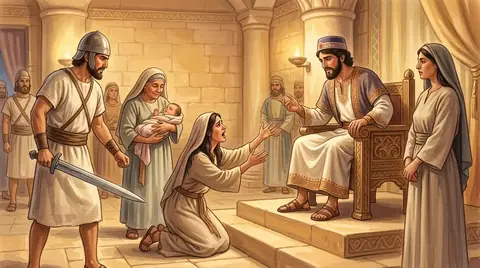 Person · KingSolomonDavid's son and Israel's third king, who asked God for wisdom and received riches and fame as well. He built the temple…PersonKeturahThe woman Abraham married after Sarah died. She bore him six sons, among them Midian, and their families became peoples…
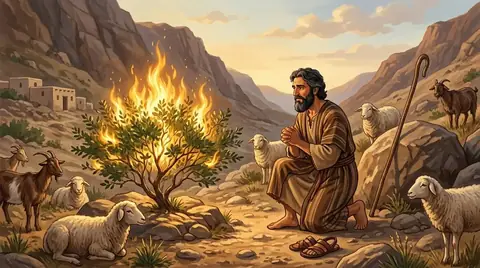 PersonMosesThe man God used to bring Israel out of Egypt, give them his Law at Sinai, and lead them for forty years in the…
Written for this app in its own words, from the Bible, with the facts checked against Bible dictionaries and encyclopedias: Easton's, Smith's, Fausset's, ISBE, Holman, the New Bible Dictionary, Vine's and the Thompson Chain topics.
