
Saying
Hail!
An old English greeting meaning "be well" or "rejoice". Gabriel said it to Mary, Judas said it to Jesus as he betrayed him, and the soldiers shouted it in mockery before the cross.
- Greek
- Chaire, "rejoice"
- Where
- Matthew 26:49; Matthew 27:29; Mark 15:18; Luke 1:28; John 19:3
The greeting
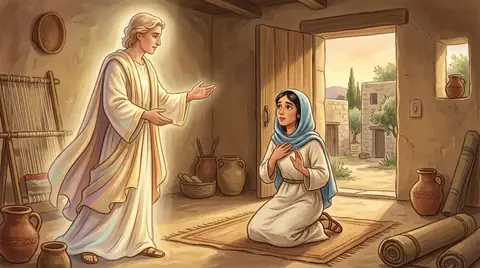
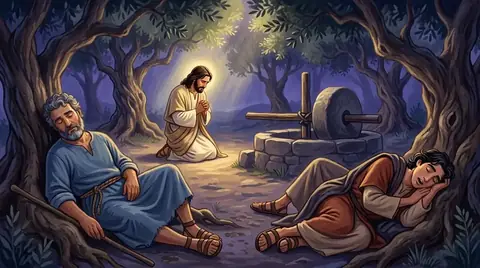
"Hail" was the ordinary Greek way of saying hello; the word itself means "rejoice" or "be glad". The angel Gabriel greeted Mary with it: "Hail, thou that art highly favoured, the Lord is with thee" (Luke 1:28). Judas used the same word with a kiss in Gethsemane, "Hail, master" (Matthew 26:49), and the Roman soldiers, having dressed Jesus in a purple robe and a crown of thorns, bowed before him and jeered, "Hail, King of the Jews!" (Matthew 27:29; John 19:3). A word of friendship was turned into a weapon; yet every word they mocked him with was true.
Hail from the sky
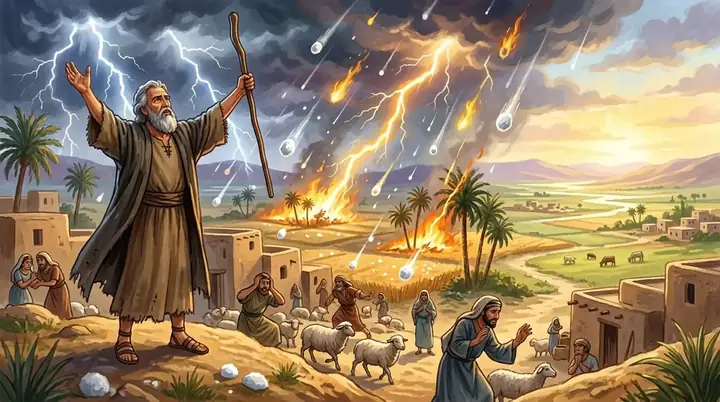
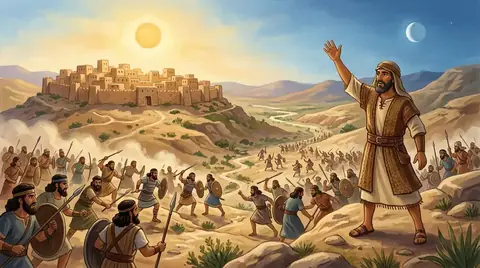
The same English word also means frozen rain. Hail was the seventh of the plagues, a storm that shattered trees and crops as nothing Egypt had seen before (Exodus 9:23–25). God threw great hailstones on the Amorites as they fled from Joshua, and more died from the hail than by the sword (Joshua 10:11). Job is asked whether he has seen the storehouses of the hail, kept for the day of battle (Job 38:22–23), and Revelation ends with hail as a sign of God's judgment (Revelation 8:7; Revelation 16:21).
Key verses
- Luke 1:28
And the angel came in unto her, and said, Hail, thou that art highly favoured, the Lord is with thee: blessed art thou among women.
- Matthew 27:29
And when they had platted a crown of thorns, they put it upon his head, and a reed in his right hand: and they bowed the knee before him, and mocked him, saying, Hail, King of the Jews!
- Exodus 9:23–25
And Moses stretched forth his rod toward heaven: and the Lord sent thunder and hail, and the fire ran along upon the ground; and the Lord rained hail upon the land of Egypt. So there was hail, and fire mingled with the hail, very grievous, such as there was none like it in all the land of Egypt since it became a nation. And the hail smote throughout all the land of Egypt all that was in the field, both man and beast; and the hail smote every herb of the field, and brake every tree of the field.
- Joshua 10:11
And it came to pass, as they fled from before Israel, and were in the going down to Beth–horon, that the Lord cast down great stones from heaven upon them unto Azekah, and they died: they were more which died with hailstones than they whom the children of Israel slew with the sword.
Read next
 AngelGabrielOne of only two angels the Bible names. He explained Daniel's visions, told Zacharias he would have a son, and told…PersonMaryThe young woman of Nazareth chosen to be the mother of Jesus. She believed the angel's word, bore God's Son, and stood…
 PersonJudasThe disciple who sold Jesus to the priests for thirty pieces of silver and pointed him out with a kiss. Full of…
 PlaceGethsemaneAn olive garden on the Mount of Olives, across the Kidron valley from Jerusalem. Jesus often went there to pray, and…
 Custom · JudgmentPlagueA blow from God: a sudden disease or disaster sent as judgment. The ten plagues of Egypt broke Pharaoh's grip; later…
 NationAmoritesOne of the chief peoples of Canaan before Israel, living in the hills on both sides of the Jordan. Their kings Sihon…
 PersonJoshuaMoses' helper who took over from him and led Israel across the Jordan into the Promised Land. He fought the wars of…
Written for this app in its own words, from the Bible, with the facts checked against Bible dictionaries and encyclopedias: Easton's, Smith's, Fausset's, ISBE, Holman, the New Bible Dictionary, Vine's and the Thompson Chain topics.
