
Book
Esther (book)
Old Testament · History · author not named (Jewish tradition: Mordecai), about 460–400 BC
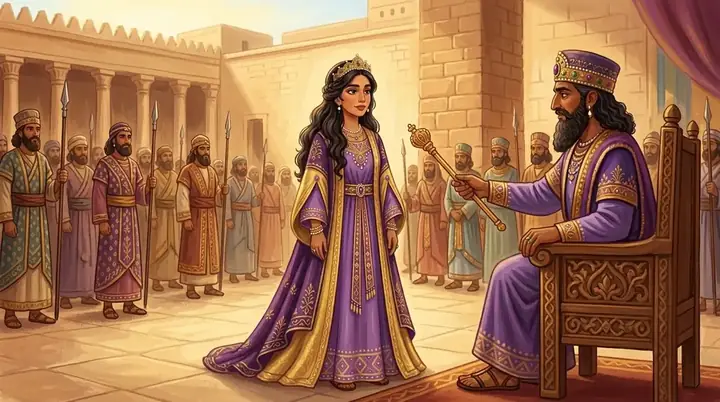
The story of Esther, a Jewish girl who became queen of Persia and risked her life to save her people from Haman's plot to destroy them. The feast of Purim remembers it.
- Author
- Not named; Jewish tradition credits Mordecai
- Written
- About 460–400 BC; events 483–473 BC
- Chapters
- 10
- Key verse
- "Who knoweth whether thou art come to the kingdom for such a time as this?" (Esther 4:14)
What it's about
King Ahasuerus of Persia put away his queen and chose a new one. The girl he chose was Esther, an orphan raised by her cousin Mordecai, who told her to keep her Jewish birth secret. Mordecai would not bow to the king's favourite, Haman, and Haman in revenge got the king to order the killing of every Jew in the empire.
Mordecai urged Esther to plead with the king. Going in unasked could mean death, but she said, "if I perish, I perish" (Esther 4:16). The king welcomed her. At her banquet she named Haman as the enemy, and he was hanged on the gallows he had built for Mordecai. The Jews were allowed to defend themselves, and the feast of Purim was set up to remember their rescue (Esther 9).
Its message
God's name is never mentioned in the book, yet his hand is everywhere: in Esther's rise, in a king's sleepless night (Esther 6:1), in perfect timing. He keeps his promises to protect his people, even when he seems hidden, and he places his servants where they can act.
Points to Christ
By saving the Jews from destruction, God kept the people from whom the Messiah would come. Esther, who put her life at risk to stand between her people and death, faintly pictures Christ, who gave his life to save his own.
Key verses
- Esther 4:14
For if thou altogether holdest thy peace at this time, then shall there enlargement and deliverance arise to the Jews from another place; but thou and thy father’s house shall be destroyed: and who knoweth whether thou art come to the kingdom for such a time as this?
- Esther 4:16
Go, gather together all the Jews that are present in Shushan, and fast ye for me, and neither eat nor drink three days, night or day: I also and my maidens will fast likewise; and so will I go in unto the king, which is not according to the law: and if I perish, I perish.
- Esther 6:1
On that night could not the king sleep, and he commanded to bring the book of records of the chronicles; and they were read before the king.
- Esther 8:17
And in every province, and in every city, whithersoever the king’s commandment and his decree came, the Jews had joy and gladness, a feast and a good day. And many of the people of the land became Jews; for the fear of the Jews fell upon them.
- Esther 9:26–28
Wherefore they called these days Purim after the name of Pur. Therefore for all the words of this letter, and of that which they had seen concerning this matter, and which had come unto them, The Jews ordained, and took upon them, and upon their seed, and upon all such as joined themselves unto them, so as it should not fail, that they would keep these two days according to their writing, and according to their appointed time every year; And that these days should be remembered and kept throughout every generation, every family, every province, and every city; and that these days of Purim should not fail from among the Jews, nor the memorial of them perish from their seed.
Read next
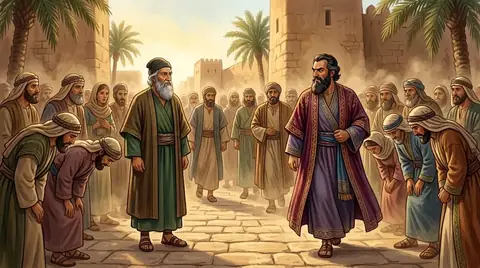 PersonMordecaiThe Jew who raised his cousin Esther, refused to bow to Haman, and with Esther saved the Jews of Persia from being…
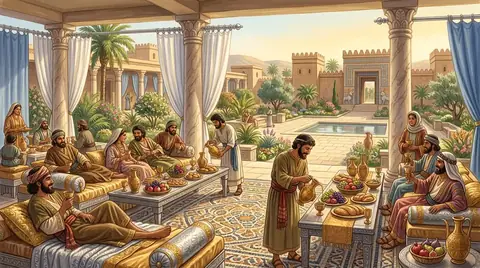 Person · KingAhasuerusThe king of Persia in the book of Esther, who put away Queen Vashti, made Esther his queen, and was tricked by Haman…
 PersonEstherA Jewish orphan who became queen of Persia and risked her life to stop Haman's plan to kill every Jew in the empire.…
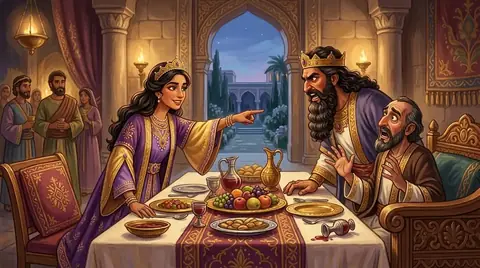 PersonHamanThe proud prime minister of King Ahasuerus of Persia, who plotted to kill every Jew in the empire because Mordecai…
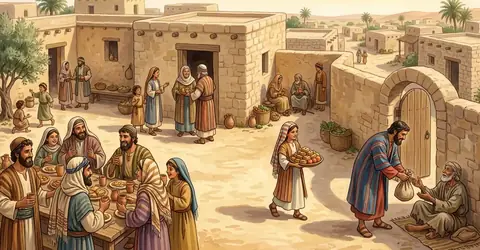 FeastPurimThe feast that remembers how the Jews of Persia escaped Haman's plot, the story the book of Esther tells. Named after…
Written for this app in its own words, from the Bible, with the facts checked against Bible dictionaries and encyclopedias: Easton's, Smith's, Fausset's, ISBE, Holman, the New Bible Dictionary, Vine's and the Thompson Chain topics.
