
Saying
Easter: the Passover
Acts 12:4
The one place the King James Bible says "Easter". The Greek word is pascha, the Passover: Herod meant to put Peter on trial once the week of unleavened bread was over.
- Where
- Acts 12:4
- Greek
- Pascha, "Passover" everywhere else in the KJV (Matthew 26:2; 1 Corinthians 5:7)
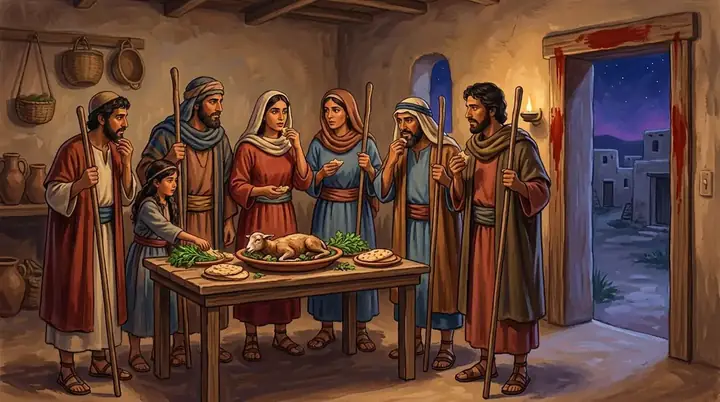
Luke tells how Herod Agrippa, to please the Jews, seized Peter "in the days of unleavened bread" and set four squads of soldiers to guard him, "intending after Easter to bring him forth to the people" (Acts 12:3–4). No Christian festival is meant. The Greek is pascha, the Passover, which ran into the seven days of the Feast of Unleavened Bread; a public execution during the holy week would have offended the very crowds Herod wanted to please. The earliest English Bibles used "Easter" for the Passover generally, and the 1611 translators let this one example stand; the Revised Version and later translations read "Passover".
The verse is a small reminder that Christ's resurrection, which Christians celebrate at Easter, happened at the Passover, when the lamb was slain; the church took the old feast's name in most languages and its meaning in all. And the story ends well: the night before the trial an angel woke Peter, his chains fell off, and the iron gate opened by itself (Acts 12:6–10).
Key verses
- Acts 12:4
And when he had apprehended him, he put him in prison, and delivered him to four quaternions of soldiers to keep him; intending after Easter to bring him forth to the people.
- Acts 12:7
And, behold, the angel of the Lord came upon him, and a light shined in the prison: and he smote Peter on the side, and raised him up, saying, Arise up quickly. And his chains fell off from his hands.
- 1 Corinthians 5:7
Purge out therefore the old leaven, that ye may be a new lump, as ye are unleavened. For even Christ our passover is sacrificed for us:
Read next
 PersonPeterA Galilean fisherman who became the leader of the twelve apostles. Bold and impulsive, he confessed Jesus as the…
 FeastPassoverThe yearly feast remembering the night God rescued Israel from Egypt, when death passed over every house marked with a…
 FeastThe Feast of Unleavened BreadThe seven days after Passover when Israel ate only bread without yeast and cleared all leaven from their homes…
Written for this app in its own words, from the Bible, with the facts checked against Bible dictionaries and encyclopedias: Easton's, Smith's, Fausset's, ISBE, Holman, the New Bible Dictionary, Vine's and the Thompson Chain topics.
