
Custom · Buildings and law
Court
In the Bible a court is usually an open yard: of the tabernacle, the temple, a house or a palace. It can also mean a court of justice, which in Israel sat at the city gate.
- Yards
- The tabernacle (Exodus 27:9), the temple (1 Kings 6:36), a house (2 Samuel 17:18), a palace (2 Kings 20:4), a prison (Jeremiah 32:2)
- Courts of law
- At the city gate (Deuteronomy 21:19; Ruth 4:1); under a palm tree (Judges 4:5); the council in Jerusalem
A yard
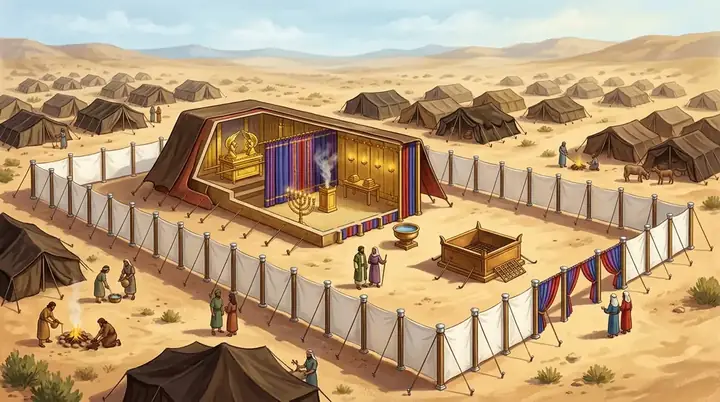
Houses in Bible lands were built round an open space, and that space was the court. The spies of David hid in a well in a courtyard at Bahurim (2 Samuel 17:18). Kings' palaces had larger ones: Esther stood in the inner court of the Persian palace to risk her life before the king (Esther 5:1), and Isaiah had got only as far as the middle court when God sent him back to Hezekiah (2 Kings 20:4). The court of the tabernacle was the curtained yard round the tent where the altar stood, and Solomon's temple had an inner court for the priests and a great court for the people (2 Chronicles 4:9). Herod's temple added the Court of the Gentiles outside them all. The psalmist longed for "the courts of the LORD" (Psalms 84:2), the place where he could come near to God.
A court of law
Justice in Israel was done in public. The elders sat at the city gate, where everyone passed, and heard cases there (Deuteronomy 21:19; Deuteronomy 22:15); Boaz settled the matter of Ruth before ten elders at the gate of Bethlehem (Ruth 4:1–11). Moses set judges over thousands, hundreds, fifties and tens, keeping the hard cases for himself (Exodus 18:21–26), and Deborah judged under a palm tree (Judges 4:5). Difficult cases went up to the priests and the judge at the sanctuary, whose verdict was final (Deuteronomy 17:8–12). Judges were told to take no bribe, show no favour to rich or poor, and never follow a crowd to do wrong (Exodus 23:2–8; Deuteronomy 16:19). The prophets' fiercest words are for courts that sold justice (Isaiah 1:23; Micah 7:3), and the trial of Jesus, with its false witnesses and night sitting, broke the law's own rules (Mark 14:55–59).
Key verses
- Exodus 27:9
And thou shalt make the court of the tabernacle: for the south side southward there shall be hangings for the court of fine twined linen of an hundred cubits long for one side:
- Deuteronomy 16:19
Thou shalt not wrest judgment; thou shalt not respect persons, neither take a gift: for a gift doth blind the eyes of the wise, and pervert the words of the righteous.
- Ruth 4:1
Then went Boaz up to the gate, and sat him down there: and, behold, the kinsman of whom Boaz spake came by; unto whom he said, Ho, such a one! turn aside, sit down here. And he turned aside, and sat down.
- Psalms 84:2
My soul longeth, yea, even fainteth for the courts of the Lord: my heart and my flesh crieth out for the living God.
- 2 Chronicles 4:9
Furthermore he made the court of the priests, and the great court, and doors for the court, and overlaid the doors of them with brass.
Read next
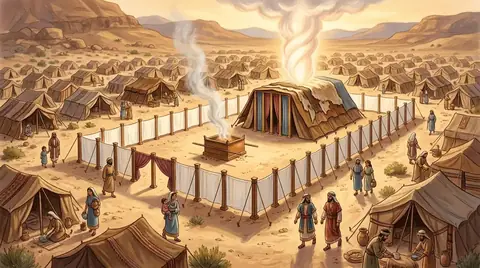 Thing · WorshipThe tabernacleThe holy tent Israel built in the wilderness, by God's own pattern, so that he could dwell in the middle of his people.…
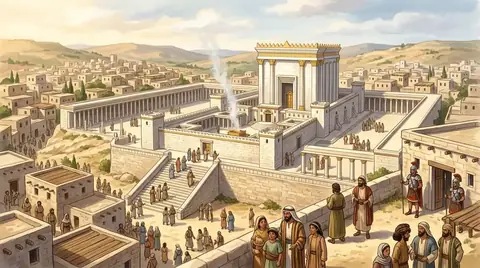 Thing · WorshipThe TempleGod's house in Jerusalem, where he was worshipped and the sacrifices offered. Solomon built it, Babylon burned it, the…
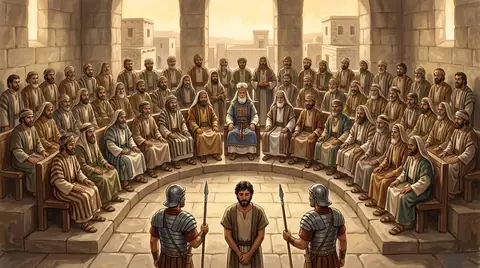 GroupThe council (Sanhedrin)The supreme Jewish court in Jerusalem, seventy-one chief priests, elders and scribes under the high priest. It…
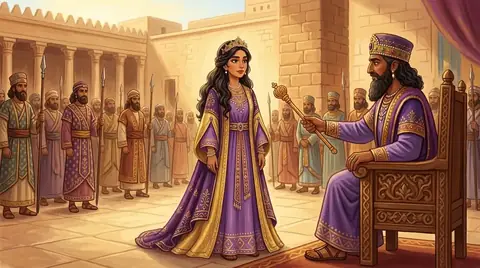 PersonEstherA Jewish orphan who became queen of Persia and risked her life to stop Haman's plan to kill every Jew in the empire.…
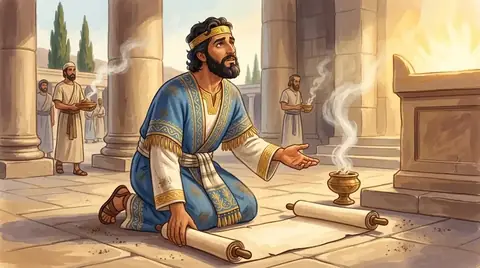 Person · KingHezekiahOne of Judah's best kings. He cleansed the temple, smashed the idols, trusted God when Assyria besieged Jerusalem, and…
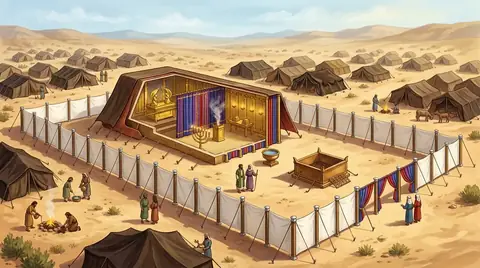 Place · WorshipThe court of the tabernacleThe open yard round the tabernacle, fenced with white linen hangings and entered by one gate on the east. The altar and…
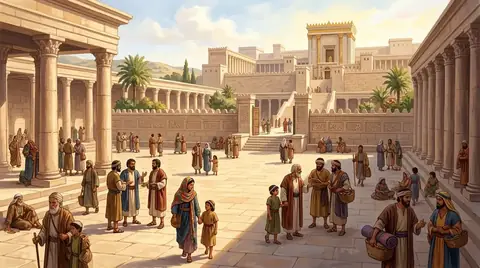 Place · WorshipThe Court of the GentilesThe huge outer court of Herod's temple, open to anyone. Jesus drove the traders out of it, and a wall with warning…
 PersonMosesThe man God used to bring Israel out of Egypt, give them his Law at Sinai, and lead them for forty years in the…
Written for this app in its own words, from the Bible, with the facts checked against Bible dictionaries and encyclopedias: Easton's, Smith's, Fausset's, ISBE, Holman, the New Bible Dictionary, Vine's and the Thompson Chain topics.
