
Person
Nadab
NAY-dab"Generous" · Aaron's eldest son; also a king of Israel
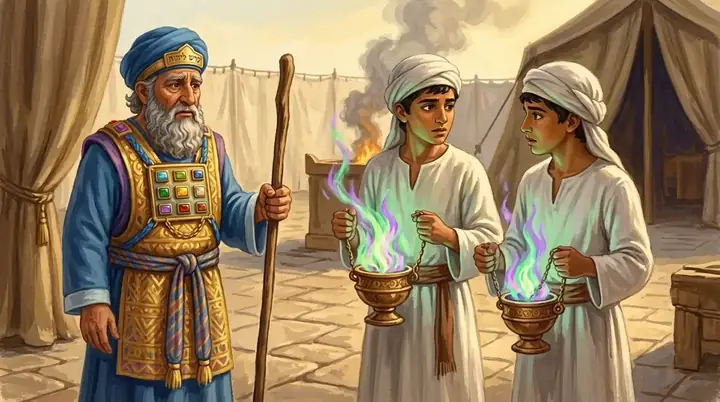
Aaron's eldest son, a priest who died by fire from God when he and his brother Abihu offered incense in a way God had not commanded. Also the name of Jeroboam's son, a king of Israel for two years.
- Family
- Eldest son of Aaron and Elisheba; brother of Abihu, Eleazar and Ithamar (Exodus 6:23)
- Known for
- The "strange fire" (Leviticus 10:1–2)
- Meaning
- Generous, willing
Aaron's son
Nadab and his brother Abihu were among the chosen few who went part-way up Mount Sinai with Moses, Aaron and seventy elders, and there "saw the God of Israel", and they ate and drank there before him (Exodus 24:1, 9–11). They were set apart as priests with their father (Exodus 28:1).
On the very day the priests began their work, Nadab and Abihu each took a censer, put fire and incense in it, and offered "strange fire before the LORD, which he commanded them not". Fire came out from the LORD and killed them. Moses told Aaron, "I will be sanctified in them that come nigh me", and Aaron said nothing. Their bodies were carried out of the camp, and their father and brothers were forbidden to mourn (Leviticus 10:1–7). They had no children, so Eleazar and Ithamar carried on the priesthood (Numbers 3:4; 1 Chronicles 24:2).
What to learn
The story stands as a warning that God is holy and that worship must be on his terms, not ours. A command that followed, forbidding priests to drink wine when on duty, has led many to think the brothers had been drinking (Leviticus 10:8–11).
King of Israel
Nadab son of Jeroboam became king of Israel about 910 BC and reigned two years. He followed his father's idolatry. While he was besieging the Philistine town of Gibbethon, Baasha of Issachar killed him and took the throne, then wiped out Jeroboam's whole family, as the prophet Ahijah had foretold (1 Kings 15:25–30).
Others with this name
A Nadab of Judah, great-grandson of Jerahmeel (1 Chronicles 2:28–30), and a Nadab of Benjamin from Gibeon, a relative of Saul (1 Chronicles 8:30; 1 Chronicles 9:36).
Key verses
- Exodus 24:9–11
Then went up Moses, and Aaron, Nadab, and Abihu, and seventy of the elders of Israel: And they saw the God of Israel: and there was under his feet as it were a paved work of a sapphire stone, and as it were the body of heaven in his clearness. And upon the nobles of the children of Israel he laid not his hand: also they saw God, and did eat and drink.
- Leviticus 10:1–3
And Nadab and Abihu, the sons of Aaron, took either of them his censer, and put fire therein, and put incense thereon, and offered strange fire before the Lord, which he commanded them not. And there went out fire from the Lord, and devoured them, and they died before the Lord. Then Moses said unto Aaron, This is it that the Lord spake, saying, I will be sanctified in them that come nigh me, and before all the people I will be glorified. And Aaron held his peace.
- Numbers 3:4
And Nadab and Abihu died before the Lord, when they offered strange fire before the Lord, in the wilderness of Sinai, and they had no children: and Eleazar and Ithamar ministered in the priest’s office in the sight of Aaron their father.
- 1 Kings 15:25–28
And Nadab the son of Jeroboam began to reign over Israel in the second year of Asa king of Judah, and reigned over Israel two years. And he did evil in the sight of the Lord, and walked in the way of his father, and in his sin wherewith he made Israel to sin. And Baasha the son of Ahijah, of the house of Issachar, conspired against him; and Baasha smote him at Gibbethon, which belonged to the Philistines; for Nadab and all Israel laid siege to Gibbethon. …
Family
- Parents
- Aaron, Elisheba
- Brothers and sisters
- Abihu, Eleazar, Ithamar
Mentioned in 12 verses
- Exodus 4
- Leviticus 1
- Numbers 4
- 1 Chronicles 3
Read next
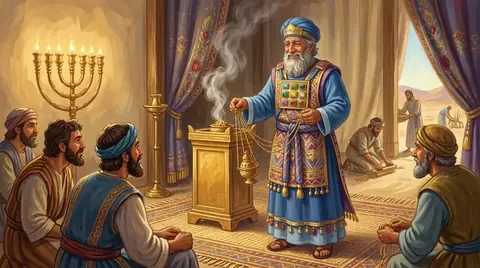 PersonAaronMoses' older brother and Israel's first high priest. He spoke for Moses before Pharaoh and served God at the tabernacle…PersonElishebaThe wife of Aaron, Israel's first high priest, and the mother of the four priests Nadab, Abihu, Eleazar and Ithamar.…
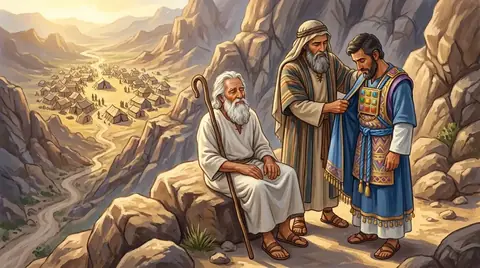 PersonEleazarAaron's third son, who became Israel's second high priest when his father died on Mount Hor. He served through the…
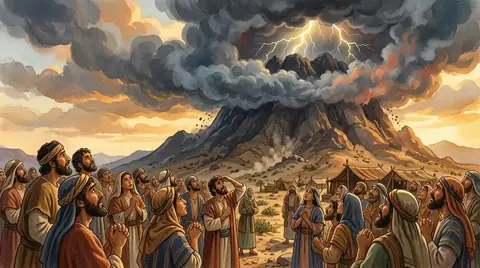 Place · MountainSinaiThe mountain where God came down in fire and smoke, spoke the Ten Commandments, and made his covenant with Israel. The…
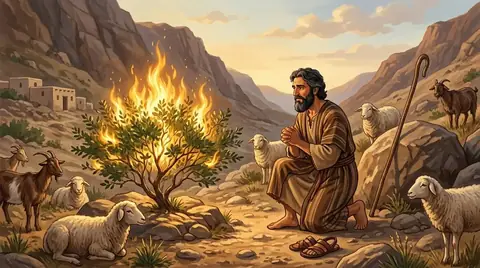 PersonMosesThe man God used to bring Israel out of Egypt, give them his Law at Sinai, and lead them for forty years in the…
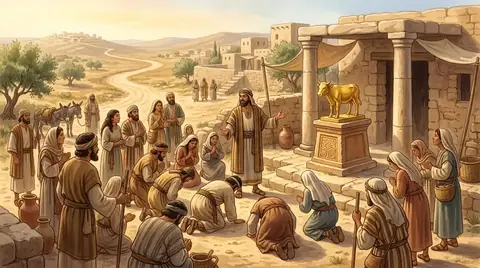 PersonJeroboamSolomon's overseer who became the first king of the breakaway northern kingdom. He set up golden calves at Bethel and…Person · King of IsraelBaashaAn army officer who murdered King Nadab and wiped out Jeroboam's family, then ruled Israel for twenty-four years from…
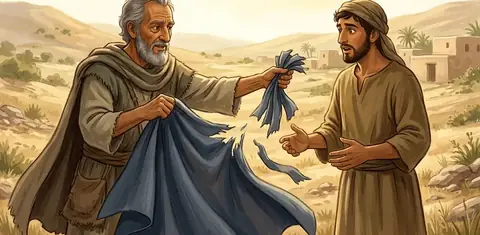 PersonAhijahA prophet from Shiloh who tore his cloak into twelve pieces and gave ten to Jeroboam, telling him he would rule ten of…
Written for this app in its own words, from the Bible, with the facts checked against Bible dictionaries and encyclopedias: Easton's, Smith's, Fausset's, ISBE, Holman, the New Bible Dictionary, Vine's and the Thompson Chain topics. People and places: STEPBible.org (TIPNR), CC BY 4.0; where a place is today and its photo: OpenBible.info, CC BY 4.0.
