
Custom · Worship
Wave and heave offerings
Parts of a sacrifice that were waved or lifted up before the LORD to show they were his, and then given to the priests as their share.
- Waved
- The breast of a peace offering (Leviticus 7:30); the first sheaf of harvest (Leviticus 23:11); the two Pentecost loaves (Leviticus 23:17)
- Heaved
- The right shoulder (Leviticus 7:32); the Levites' tithe of the tithe (Numbers 18:26–29)
- Went to
- The priests and their families (Numbers 18:11)
What they were
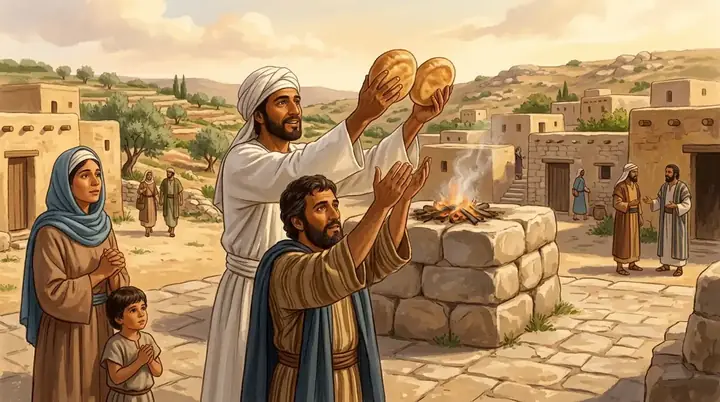
When an Israelite brought a peace offering, the fat was burned on the altar, but the breast was "waved" before the LORD and the right shoulder "heaved", that is, lifted up, and both became the priest's food (Leviticus 7:30–34). The waving, back and forth towards the altar and away again, presented the gift to God and received it back from him; the lifting said the same thing upwards. Neither was burned. These were God's way of feeding the priests, who had no land of their own: the wave breast and heave shoulder are given "by a statute for ever" (Exodus 29:28; Numbers 18:8–11).
When they were made
At the ordination of Aaron and his sons, Moses put the fat, the shoulder and a cake of bread in their hands and waved them before the LORD (Exodus 29:24; Leviticus 8:27). At the start of the barley harvest the first sheaf was waved on the day after the Sabbath, before anyone ate of the new crop (Leviticus 23:10–14). Fifty days later, at Pentecost, two loaves baked with leaven were waved as the firstfruits of the wheat (Leviticus 23:17–20). The Nazirite finishing his vow, the cleansed leper (Leviticus 14:12) and the Levites themselves, presented as a wave offering of the whole people (Numbers 8:11), all came under the same rule. The heave offering also covered the share of spoil given to God (Numbers 31:29) and the tithe the Levites passed on to the priests (Numbers 18:26–29).
What it means
The waved sheaf was lifted on the very day, the morning after the Passover Sabbath, that Jesus rose. Paul calls Christ "the firstfruits of them that slept" (1 Corinthians 15:20): the first of the harvest, presented to God and promising the rest. See Firstfruits and Offering and sacrifice.
Key verses
- Leviticus 7:30–34
His own hands shall bring the offerings of the Lord made by fire, the fat with the breast, it shall he bring, that the breast may be waved for a wave offering before the Lord. And the priest shall burn the fat upon the altar: but the breast shall be Aaron’s and his sons’. And the right shoulder shall ye give unto the priest for an heave offering of the sacrifices of your peace offerings. …
- Exodus 29:24–28
And thou shalt put all in the hands of Aaron, and in the hands of his sons; and shalt wave them for a wave offering before the Lord. And thou shalt receive them of their hands, and burn them upon the altar for a burnt offering, for a sweet savour before the Lord: it is an offering made by fire unto the Lord. And thou shalt take the breast of the ram of Aaron’s consecration, and wave it for a wave offering before the Lord: and it shall be thy part. …
- Leviticus 23:11
And he shall wave the sheaf before the Lord, to be accepted for you: on the morrow after the sabbath the priest shall wave it.
- Numbers 18:11
And this is thine; the heave offering of their gift, with all the wave offerings of the children of Israel: I have given them unto thee, and to thy sons and to thy daughters with thee, by a statute for ever: every one that is clean in thy house shall eat of it.
- 1 Corinthians 15:20
But now is Christ risen from the dead, and become the firstfruits of them that slept.
Read next
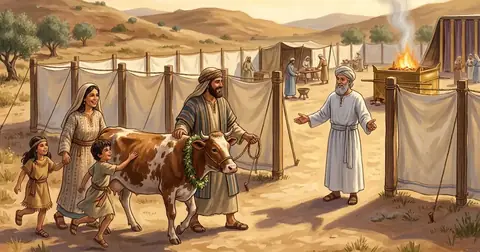 Custom · WorshipThe peace offeringA sacrifice that ended in a shared meal. The fat was burned for God, the priest took a portion, and the worshipper ate…
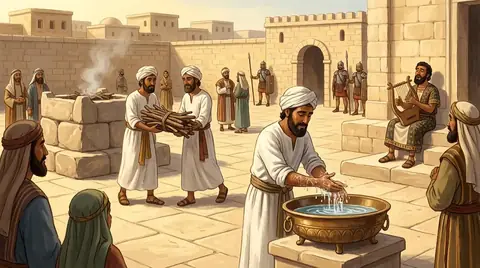 Custom · WorshipThe priestsAaron's descendants, set apart to offer the sacrifices, burn the incense, pronounce the blessing and teach the law.…
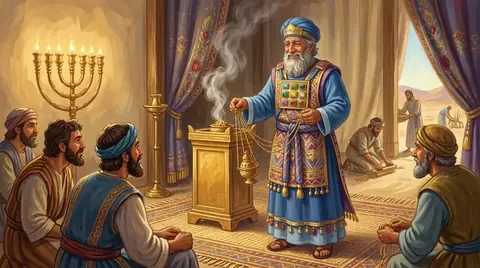 PersonAaronMoses' older brother and Israel's first high priest. He spoke for Moses before Pharaoh and served God at the tabernacle…
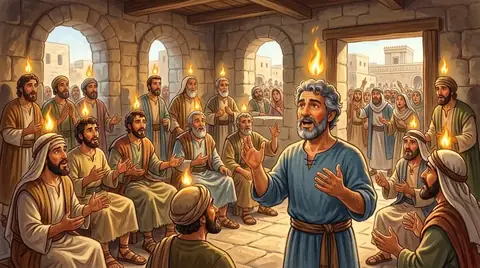 FeastPentecost (the Feast of Weeks)The harvest feast kept fifty days after Passover, when two loaves baked from the new wheat were offered to God. On the…
 Custom · VowThe NaziriteA man or woman who vowed to belong wholly to God, for a set time or for life, drinking no wine, never cutting their…
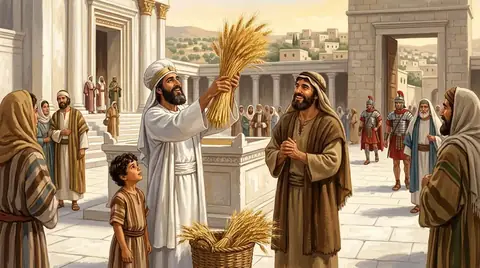 Custom · FeastFirstfruitsThe first and best of each harvest, brought to God before the rest was touched, as thanks that the whole of it came…
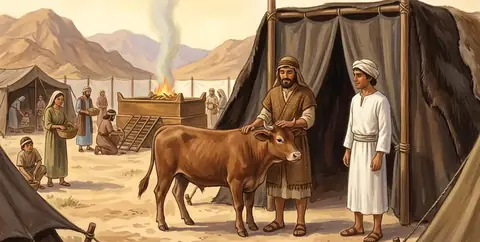 Title of ChristThe Offering and SacrificePaul says Christ "hath given himself for us an offering and a sacrifice to God" (Eph 5:2). He is at once the priest who…
Written for this app in its own words, from the Bible, with the facts checked against Bible dictionaries and encyclopedias: Easton's, Smith's, Fausset's, ISBE, Holman, the New Bible Dictionary, Vine's and the Thompson Chain topics.
