
Custom · Vow
The Nazirite
NAZ-i-rite
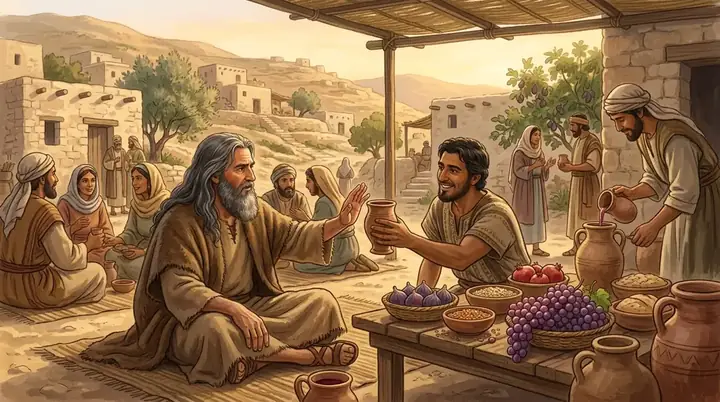
A man or woman who vowed to belong wholly to God, for a set time or for life, drinking no wine, never cutting their hair and keeping clear of the dead. Samson and Samuel were Nazirites.
- Hebrew
- nazir, one set apart
- The rules
- No wine or grapes; no razor; no contact with a dead body (Numbers 6:1–8)
- Known Nazirites
- Samson, Samuel, probably John the Baptist
- Where
- Numbers 6:1–21; Judges 13:5–7; 1 Samuel 1:11; Amos 2:11–12; Acts 21:23–26
What it was
Not every Israelite could be a priest, but anyone, man or woman, could vow to be a Nazirite. For the time of the vow three things were given up. No wine, strong drink, vinegar, grape juice, grapes or raisins, nothing from the vine at all. No razor touched the head; long hair was the open sign of the vow. And the Nazirite kept away from any dead body, even that of a parent (Numbers 6:1–8). If someone died suddenly beside them, the hair was cut off, offerings were made and the vow began again from the start (Numbers 6:9–12).
When the days were complete the Nazirite came to the tabernacle with offerings, shaved off the hair and burned it in the fire under the peace offering, and was free to drink wine again (Numbers 6:13–20).
Nazirites in the Bible
Three men were Nazirites for life, set apart before birth. The angel told Samson's mother that no razor should come on his head, and his strength went with his hair (Judges 13:5; Judges 16:17). Hannah promised that if God gave her a son no razor would touch him, and so Samuel served God from childhood (1 Samuel 1:11). John the Baptist was to drink no wine or strong drink (Luke 1:15). God counted Nazirites as a gift to Israel, and condemned those who made them drink wine (Amos 2:11–12). In Acts, Paul paid the costs of four men completing a vow, and shaved his own head at Cenchrea for a vow of his own (Acts 21:23–26; Acts 18:18).
What it meant
The Nazirite was a living picture of a life wholly given to God, visible to everyone in a head of uncut hair. Jesus was no Nazirite; he drank wine and touched the dead. Yet he was the one truly set apart for God, and he calls each of us to be holy in the ordinary things of life.
Key verses
- Numbers 6:1–8
And the Lord spake unto Moses, saying, Speak unto the children of Israel, and say unto them, When either man or woman shall separate themselves to vow a vow of a Nazarite, to separate themselves unto the Lord: He shall separate himself from wine and strong drink, and shall drink no vinegar of wine, or vinegar of strong drink, neither shall he drink any liquor of grapes, nor eat moist grapes, or dried. …
- Judges 13:5
For, lo, thou shalt conceive, and bear a son; and no razor shall come on his head: for the child shall be a Nazarite unto God from the womb: and he shall begin to deliver Israel out of the hand of the Philistines.
- 1 Samuel 1:11
And she vowed a vow, and said, O Lord of hosts, if thou wilt indeed look on the affliction of thine handmaid, and remember me, and not forget thine handmaid, but wilt give unto thine handmaid a man child, then I will give him unto the Lord all the days of his life, and there shall no razor come upon his head.
- Amos 2:11–12
And I raised up of your sons for prophets, and of your young men for Nazarites. Is it not even thus, O ye children of Israel? saith the Lord. But ye gave the Nazarites wine to drink; and commanded the prophets, saying, Prophesy not.
- Acts 21:23–26
Do therefore this that we say to thee: We have four men which have a vow on them; Them take, and purify thyself with them, and be at charges with them, that they may shave their heads: and all may know that those things, whereof they were informed concerning thee, are nothing; but that thou thyself also walkest orderly, and keepest the law. As touching the Gentiles which believe, we have written and concluded that they observe no such thing, save only that they keep themselves from things offered to idols, and from blood, and from strangled, and from fornication. …
Read next
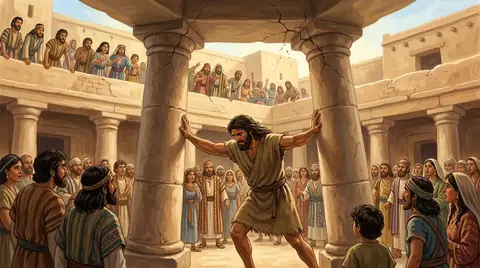 Person · JudgeSamsonThe judge of Israel with superhuman strength from God, a Nazirite from birth. He fought the Philistines single-handed…
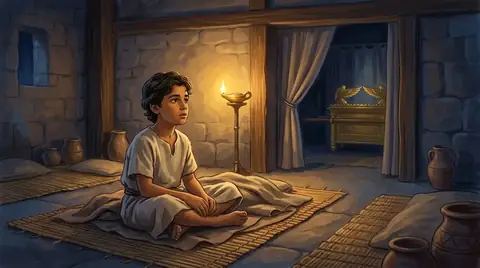 Person · Prophet and judgeSamuelThe prophet who led Israel from the time of the judges into the time of the kings. Given to God by his mother Hannah…
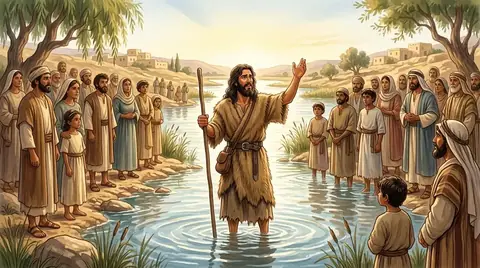 PersonJohn the BaptistThe prophet God sent to prepare the way for Jesus. He called Israel to repent, baptized in the Jordan, pointed to Jesus…
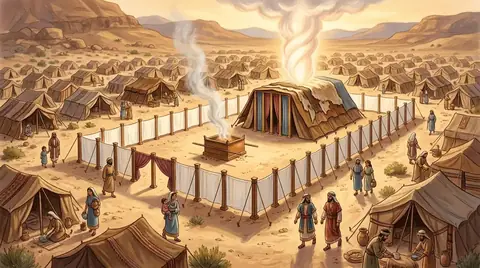 Thing · WorshipThe tabernacleThe holy tent Israel built in the wilderness, by God's own pattern, so that he could dwell in the middle of his people.…
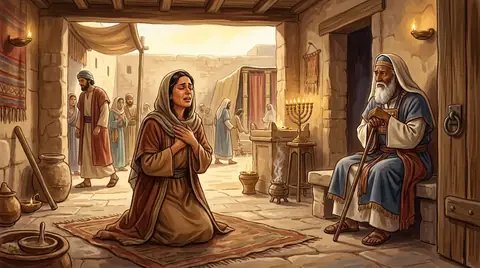 PersonHannahThe childless wife of Elkanah who prayed for a son at Shiloh, promised him to God, and became the mother of the prophet…
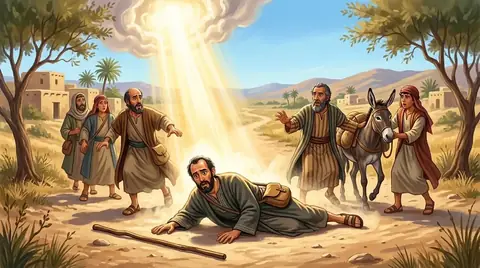 PersonPaulA Pharisee who hated the church until the risen Jesus met him on the road to Damascus. He became the apostle to the…
Written for this app in its own words, from the Bible, with the facts checked against Bible dictionaries and encyclopedias: Easton's, Smith's, Fausset's, ISBE, Holman, the New Bible Dictionary, Vine's and the Thompson Chain topics.
