
Title of Christ
The Offering and Sacrifice
Paul says Christ "hath given himself for us an offering and a sacrifice to God" (Eph 5:2). He is at once the priest who offers and the victim offered, and his one sacrifice has settled sin for ever.
- Verse
- Ephesians 5:2
- Meaning
- Jesus is both the one who brings the offering and the offering itself
- Result
- "One sacrifice for sins for ever" (Hebrews 10:12)
The problem
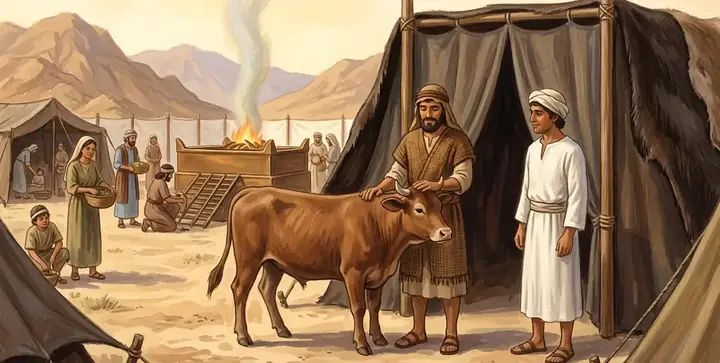
Under the law of Moses the altar never went cold. Lambs were offered every morning and evening, and on the Day of Atonement the high priest went in once more with blood for the sins of the year. The repetition itself told the truth: none of those animals could really take away sin, or the offering would have stopped (Hebrews 10:1–4). What was needed was a sacrifice that worked, and a priest who did not die.
In Jesus
When Paul describes Christ's love, he reaches for the language of the altar: he "hath given himself for us an offering and a sacrifice to God for a sweetsmelling savour" (Ephesians 5:2). Every kind of offering comes together in him. Like the burnt offering he was given wholly; like the sin offering he bore guilt that was not his; like the peace offering he brings us to God's table. And he was not dragged to the altar. He was the priest as well as the lamb: he "offered up himself" (Hebrews 7:27), once at the end of the ages "to put away sin by the sacrifice of himself" (Hebrews 9:26). Because that offering was perfect, it was final. "By one offering he hath perfected for ever them that are sanctified" (Hebrews 10:14), and he sat down, his work done (Hebrews 10:12).
For us
If the sacrifice is complete, nothing needs adding to it, and no sin is too great for it. The believer does not come to God with an offering in hand, hoping it will do; he comes trusting the offering already made. What is left for us is gratitude. Paul's very next words after "a sweetsmelling savour" are about how Christians are to live, and he calls their gifts and praise "an odour of a sweet smell" too (Philippians 4:18; Hebrews 13:15–16).
Key verses
- Ephesians 5:2
And walk in love, as Christ also hath loved us, and hath given himself for us an offering and a sacrifice to God for a sweetsmelling savour.
- Hebrews 7:27
Who needeth not daily, as those high priests, to offer up sacrifice, first for his own sins, and then for the people’s: for this he did once, when he offered up himself.
- Hebrews 9:26
For then must he often have suffered since the foundation of the world: but now once in the end of the world hath he appeared to put away sin by the sacrifice of himself.
- Hebrews 10:10–14
By the which will we are sanctified through the offering of the body of Jesus Christ once for all. And every priest standeth daily ministering and offering oftentimes the same sacrifices, which can never take away sins: But this man, after he had offered one sacrifice for sins for ever, sat down on the right hand of God; …
Read next
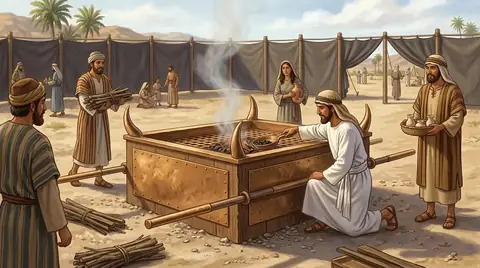 Thing · WorshipThe altarA raised structure of earth, stone or bronze on which sacrifices were offered to God. The big bronze altar stood in the…
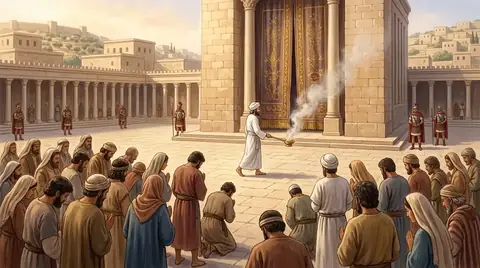 Feast · FastThe Day of AtonementThe one day in the year when the high priest went behind the veil with blood to atone for all Israel's sins, while a…
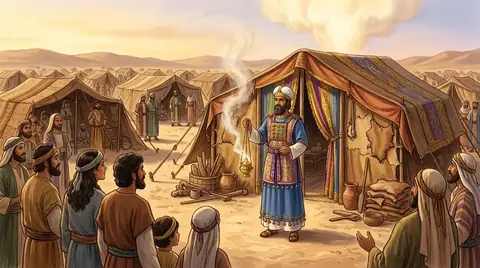 Custom · WorshipThe high priestThe head of Israel's priests, descended from Aaron, who alone went into the Most Holy Place once a year to make…
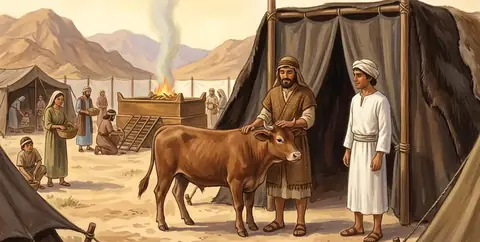 Custom · WorshipOfferingA gift brought to God. Under the law of Moses there were several kinds of offering, each with its own rule and meaning…
Written for this app in its own words, from the Bible, with the facts checked against Bible dictionaries and encyclopedias: Easton's, Smith's, Fausset's, ISBE, Holman, the New Bible Dictionary, Vine's and the Thompson Chain topics.
