
Word
Testament
In the King James Bible "testament" means covenant, God's binding promise. The "new testament" is the covenant Jesus made in his blood, and from this word the two parts of the Bible got their names.
- Greek
- Diathēkē, a covenant or a will
- Where
- Matthew 26:28; Luke 22:20; 2 Corinthians 3:6, 14; Hebrews 9:15–17
What the word means
The Greek word diathēkē meant a settlement that one party lays down, most often a will. The translators of the Old Testament into Greek chose it for the Hebrew word covenant, God's solemn promise and bond with his people. The King James Bible usually puts "covenant", but thirteen times, following the old Latin, it has "testament". The meaning is the same: not a contract between equals but a bond that God sets up and seals.
The new testament
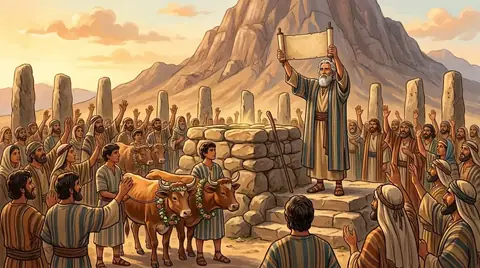
At the last supper Jesus took the cup and said, "This is my blood of the new testament, which is shed for many for the remission of sins" (Matthew 26:28; Luke 22:20). He was echoing Moses, who sprinkled the blood of the covenant at Sinai (Exodus 24:8), and Jeremiah, who promised a new covenant written on the heart (Jeremiah 31:31–34). Paul calls himself a minister of the new testament (2 Corinthians 3:6) and speaks of the reading of "the old testament", meaning the law of Moses (2 Corinthians 3:14).
Hebrews plays on both senses of the word. A will comes into force only when the one who made it dies; so Christ, the maker of the new covenant, had to die for it to take effect, and his death also pays for the sins committed under the old one (Hebrews 9:15–17).
The two Testaments
Because the first part of the Bible tells of God's covenant with Israel and the second of the covenant in Christ, Christians from early times called them the Old and New Testaments. The names are a reminder that the whole Bible is about one God binding himself to his people, first in promise, then in fulfilment.
Key verses
- Matthew 26:28
For this is my blood of the new testament, which is shed for many for the remission of sins.
- Jeremiah 31:31
Behold, the days come, saith the Lord, that I will make a new covenant with the house of Israel, and with the house of Judah:
- 2 Corinthians 3:6
Who also hath made us able ministers of the new testament; not of the letter, but of the spirit: for the letter killeth, but the spirit giveth life.
- Hebrews 9:15–17
And for this cause he is the mediator of the new testament, that by means of death, for the redemption of the transgressions that were under the first testament, they which are called might receive the promise of eternal inheritance. For where a testament is, there must also of necessity be the death of the testator. For a testament is of force after men are dead: otherwise it is of no strength at all while the testator liveth.
Read next
Written for this app in its own words, from the Bible, with the facts checked against Bible dictionaries and encyclopedias: Easton's, Smith's, Fausset's, ISBE, Holman, the New Bible Dictionary, Vine's and the Thompson Chain topics.
