
Custom · Law
Tax
Also: taxes, tribute, poll tax
What rulers took from the people, in money, grain or labour. Israel paid a small temple tax to God, then heavy taxes to its kings and to foreign empires; Jesus said to give Caesar what is Caesar's.
- Temple tax
- Half a shekel a year from every man (Exodus 30:13)
- Under the kings
- Food for the court, forced labour, and tribute to Assyria, Babylon and Persia
- Under Rome
- A poll tax, a land tax and tolls on goods, collected by tax collectors
Taxes for God
The first tax in the Bible was for God's house: when the people were counted, every man of twenty and over gave half a shekel "to make an atonement for your souls" (Exodus 30:11–16). It paid for the tabernacle, and later for the upkeep of the temple (2 Chronicles 24:6; Nehemiah 10:32); Jesus paid it with a coin from a fish's mouth (Matthew 17:24–27). Alongside it stood the tithe, a tenth of all produce for the Levites and the poor.
Taxes for kings
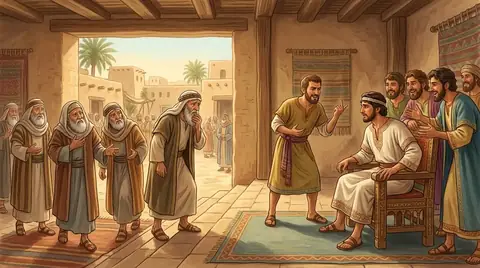
When Israel asked for a king, Samuel warned them what a king would cost: their sons for his army, their daughters for his kitchens, a tenth of their grain and flocks (1 Samuel 8:10–18). It came true. Solomon divided the land into twelve districts, each feeding the court for a month (1 Kings 4:7), and drafted men for his buildings. When his son Rehoboam refused to lighten the load, ten tribes broke away, and the officer in charge of the forced labour was stoned (1 Kings 12:4, 18).
Later kings paid tribute to stronger empires and taxed the people to find it. Menahem took fifty shekels from every wealthy man to pay the king of Assyria (2 Kings 15:19–20); Jehoiakim taxed the land for Pharaoh (2 Kings 23:35). After the exile the Jews paid the king of Persia, and Nehemiah's people mortgaged their fields to do so (Nehemiah 5:4).
Under Rome
In Jesus' day there were several Roman taxes: a poll tax on every person, a tax on land, and tolls on goods and travellers at the borders. The census under Caesar Augustus (Luke 2:1) was for taxation. Tax collectors who worked for Rome were hated as traitors and cheats.
When his enemies asked whether it was lawful to pay tribute to Caesar, hoping to trap him, Jesus asked for a coin, pointed to Caesar's image on it, and said, "Render therefore unto Caesar the things which are Caesar's; and unto God the things that are God's" (Matthew 22:21). Paul told Christians to pay their taxes to rulers as God's servants (Romans 13:6–7).
Key verses
- Exodus 30:13
This they shall give, every one that passeth among them that are numbered, half a shekel after the shekel of the sanctuary: (a shekel is twenty gerahs:) an half shekel shall be the offering of the Lord.
- 1 Samuel 8:11–18
And he said, This will be the manner of the king that shall reign over you: He will take your sons, and appoint them for himself, for his chariots, and to be his horsemen; and some shall run before his chariots. And he will appoint him captains over thousands, and captains over fifties; and will set them to ear his ground, and to reap his harvest, and to make his instruments of war, and instruments of his chariots. And he will take your daughters to be confectionaries, and to be cooks, and to be bakers. …
- 1 Kings 12:4
Thy father made our yoke grievous: now therefore make thou the grievous service of thy father, and his heavy yoke which he put upon us, lighter, and we will serve thee.
- Matthew 22:17–21
Tell us therefore, What thinkest thou? Is it lawful to give tribute unto Cesar, or not? But Jesus perceived their wickedness, and said, Why tempt ye me, ye hypocrites? Shew me the tribute money. And they brought unto him a penny. …
- Romans 13:6–7
For for this cause pay ye tribute also: for they are God’s ministers, attending continually upon this very thing. Render therefore to all their dues: tribute to whom tribute is due; custom to whom custom; fear to whom fear; honour to whom honour.
Read next
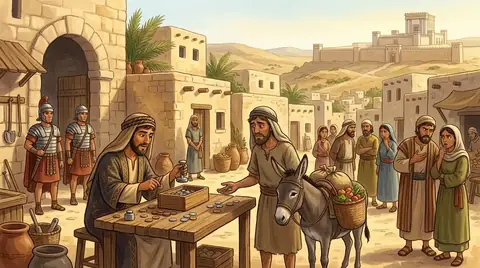 GroupTax collectorsJews who gathered taxes and tolls for Rome, often charging more than was due and keeping the difference. Everyone…
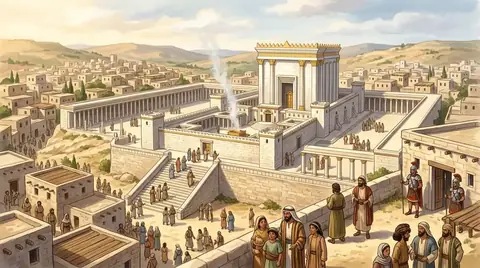 Thing · WorshipThe TempleGod's house in Jerusalem, where he was worshipped and the sacrifices offered. Solomon built it, Babylon burned it, the…
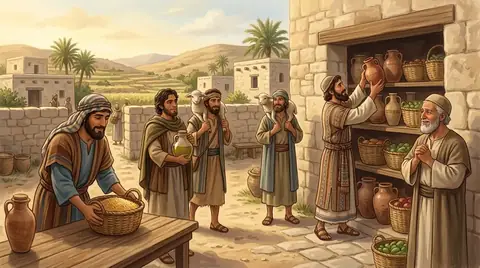 Custom · WorshipTithesA tenth of the harvest and the herds, given to God. Under the Law the tithe supported the Levites and the priests, paid…
 Person · Prophet and judgeSamuelThe prophet who led Israel from the time of the judges into the time of the kings. Given to God by his mother Hannah…
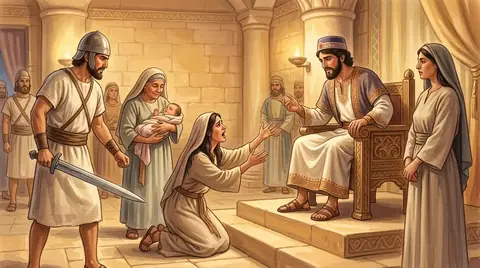 Person · KingSolomonDavid's son and Israel's third king, who asked God for wisdom and received riches and fame as well. He built the temple…
 PersonRehoboamSolomon's son, whose harsh answer to the people at Shechem split the kingdom in two. He ruled Judah and Benjamin for…PersonMenahemA violent king of Israel who seized the throne by murder, sacked a town that resisted him, and bought off the king of…
 Place · EmpireAssyriaThe land and empire on the upper Tigris whose capital was Nineveh. Assyria crushed the northern kingdom of Israel in…
Written for this app in its own words, from the Bible, with the facts checked against Bible dictionaries and encyclopedias: Easton's, Smith's, Fausset's, ISBE, Holman, the New Bible Dictionary, Vine's and the Thompson Chain topics.
