
Group
Tax collectors
"Publicans" in the KJV
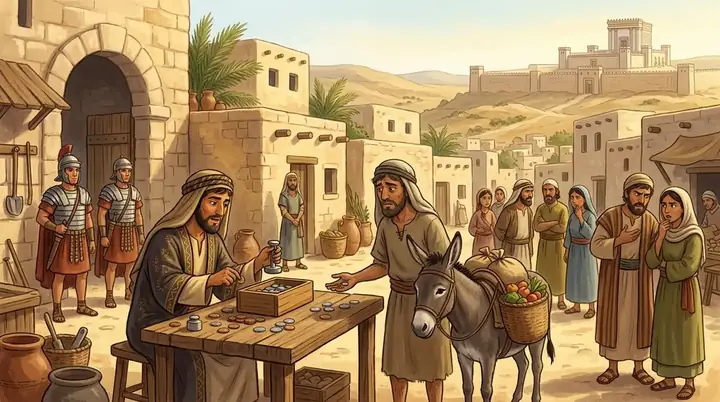
Jews who gathered taxes and tolls for Rome, often charging more than was due and keeping the difference. Everyone despised them, yet Jesus sat at their tables and made one of them an apostle.
- Known for
- Cheating, working for Rome, being lumped with "sinners"
- Named ones
- Matthew (Levi), Zacchaeus
Who they were
Rome did not collect its taxes itself. It sold the right to collect tolls in a district to the highest bidder, who then hired local men to sit at the roads, bridges and harbours and take the tax on goods passing through. The rate was vague and the collector's profit was whatever he could add on, so the system invited fraud. A Jew who took the job was working for the occupying power, handling pagan money, and growing rich on his neighbours. He was barred from the synagogue and could not be a witness in court. The phrase "publicans and sinners" shows where people ranked them (Matthew 9:11).
Jesus and the tax collectors
Jesus did not share the contempt. When crowds came to John the Baptist, tax collectors came too, and he did not tell them to quit, only to take no more than was set (Luke 3:12–13). Jesus called Levi, who became Matthew, straight from his tax booth, and then went to dinner at his house with a crowd of his fellow collectors. When the Pharisees complained, he answered that a doctor is for the sick, "I am not come to call the righteous, but sinners to repentance" (Matthew 9:9–13; Luke 5:27–32).
He told a parable of a Pharisee and a tax collector praying in the temple. The Pharisee listed his virtues; the tax collector could only say, "God be merciful to me a sinner", and it was he who went home forgiven (Luke 18:9–14). Jesus warned the religious leaders that tax collectors and prostitutes were entering God's kingdom ahead of them, because they had believed John (Matthew 21:31–32).
Zacchaeus
In Jericho a chief tax collector named Zacchaeus climbed a tree to see Jesus. Jesus invited himself to his house, and before the meal was over Zacchaeus had promised half his goods to the poor and fourfold repayment to anyone he had cheated. "This day is salvation come to this house" (Luke 19:1–10).
What it means
The people least welcome in religion were the ones Jesus went looking for. His enemies called him "a friend of publicans and sinners" (Matthew 11:19) as an insult; the Gospels record it as the truth.
Key verses
- Matthew 9:9–13
And as Jesus passed forth from thence, he saw a man, named Matthew, sitting at the receipt of custom: and he saith unto him, Follow me. And he arose, and followed him. And it came to pass, as Jesus sat at meat in the house, behold, many publicans and sinners came and sat down with him and his disciples. And when the Pharisees saw it, they said unto his disciples, Why eateth your Master with publicans and sinners? …
- Luke 3:12–13
Then came also publicans to be baptized, and said unto him, Master, what shall we do? And he said unto them, Exact no more than that which is appointed you.
- Luke 18:9–14
And he spake this parable unto certain which trusted in themselves that they were righteous, and despised others: Two men went up into the temple to pray; the one a Pharisee, and the other a publican. The Pharisee stood and prayed thus with himself, God, I thank thee, that I am not as other men are, extortioners, unjust, adulterers, or even as this publican. …
- Luke 19:1–10
And Jesus entered and passed through Jericho. And, behold, there was a man named Zaccheus, which was the chief among the publicans, and he was rich. And he sought to see Jesus who he was; and could not for the press, because he was little of stature. …
- Matthew 21:31–32
Whether of them twain did the will of his father? They say unto him, The first. Jesus saith unto them, Verily I say unto you, That the publicans and the harlots go into the kingdom of God before you. For John came unto you in the way of righteousness, and ye believed him not: but the publicans and the harlots believed him: and ye, when ye had seen it, repented not afterward, that ye might believe him.
Read next
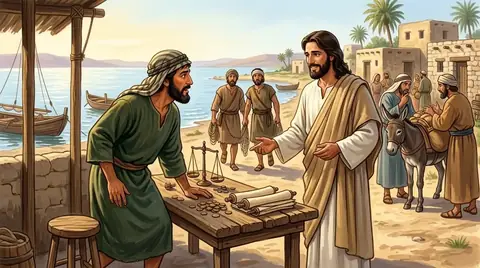 PersonMatthewA tax collector at Capernaum who left his booth the moment Jesus said "Follow me", became one of the twelve apostles…
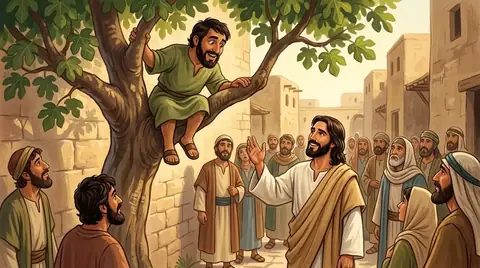 PersonZacchaeusA rich chief tax collector of Jericho who climbed a tree to see Jesus. Jesus came to his house, and Zacchaeus turned…
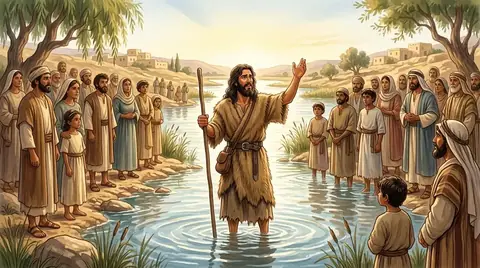 PersonJohn the BaptistThe prophet God sent to prepare the way for Jesus. He called Israel to repent, baptized in the Jordan, pointed to Jesus…
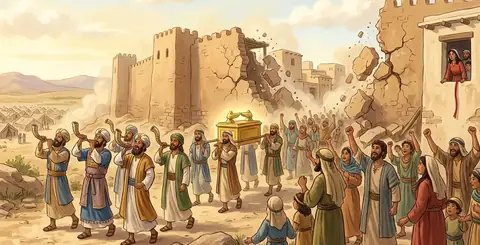 PlaceJerichoThe walled city in the Jordan valley whose walls fell flat when Israel marched round it. Called the city of palm trees…
Written for this app in its own words, from the Bible, with the facts checked against Bible dictionaries and encyclopedias: Easton's, Smith's, Fausset's, ISBE, Holman, the New Bible Dictionary, Vine's and the Thompson Chain topics.
