
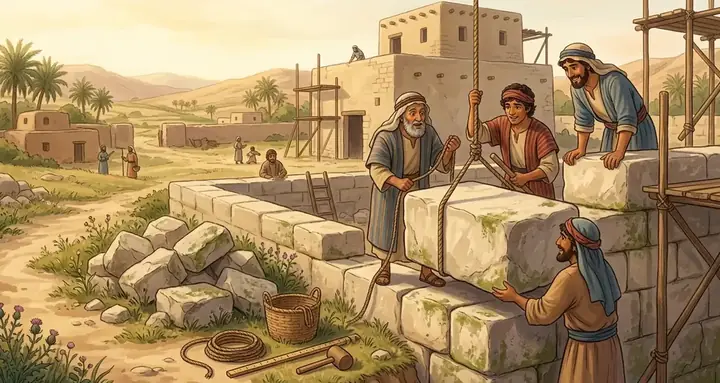
Thing · Nature
Stone
Building, memorial and metaphor · "the stone which the builders refused"
The commonest material in the land of Israel, used for walls, altars, tablets, tombs and monuments, and the Bible's favourite picture of what is firm and lasting. Christ is the rejected stone that became the cornerstone.
- Used for
- Houses, city walls and the temple; altars; the tablets of the Law; grave doors; memorial pillars
- Memorials
- Jacob at Bethel (Genesis 28:18); Joshua at Gilgal (Joshua 4:20); Samuel's Ebenezer (1 Samuel 7:12)
- Of Christ
- The rejected stone (Psalms 118:22), the sure foundation (Isaiah 28:16), the stone of stumbling (Isaiah 8:14)
- Precious stones
- Twelve in the high priest's breastplate (Exodus 28:17–21); twelve in the New Jerusalem's walls (Revelation 21:19–20)
Stone in daily life
The hills of Israel are limestone, and stones lay everywhere. Farmers cleared them from the fields and piled them into walls and towers (Isaiah 5:2). Houses, city walls and the temple were built of them: Solomon's men cut great blocks in the quarry so that no hammer was heard on the site (1 Kings 6:7), and the disciples marvelled at the huge stones of Herod's temple, which Jesus said would all be thrown down (Mark 13:1–2). Stones were rolled across the doors of tombs (Matthew 27:60). God wrote the ten commandments on two tablets of stone (Exodus 31:18), and the law said that an altar must be of stones left rough, untouched by any tool (Exodus 20:25).
A single large stone marked an event so that it would not be forgotten. Jacob set up the stone he had slept on at Bethel (Genesis 28:18). Joshua raised twelve stones from the bed of the Jordan at Gilgal, so that when children asked "What mean these stones?" their fathers could tell them how God dried up the river (Joshua 4:20–24). Samuel set up Ebenezer, "the stone of help" (1 Samuel 7:12).
Stone as a picture
Stone is hard, so a "heart of stone" is one that feels nothing; God promises to take it out and give a heart of flesh (Ezekiel 36:26). Stone is firm, so God is "the stone of Israel" (Genesis 49:24) and the rock his people stand on. Stones were the weapon of judgement, and the punishment of stoning was carried out with them.
Points to Christ
Most of all, the stone is Christ. The psalm says that the stone the builders threw away became "the head stone of the corner" (Psalms 118:22), and Jesus applied it to himself and the leaders who rejected him (Matthew 21:42). Isaiah promised a precious cornerstone, "a sure foundation", laid in Zion (Isaiah 28:16), but also said that the same Lord would be "a stone of stumbling" to those who would not trust him (Isaiah 8:14; Romans 9:33). In Daniel's vision a stone cut without hands smashes the kingdoms of the world and fills the earth (Daniel 2:34–35). And Peter says that believers, coming to Christ the living stone, are themselves "lively stones", built up into a spiritual house (1 Peter 2:4–5). See Stone of stumbling and the stone cut without hands.
Key verses
- Genesis 28:18
And Jacob rose up early in the morning, and took the stone that he had put for his pillows, and set it up for a pillar, and poured oil upon the top of it.
- Joshua 4:21–24
And he spake unto the children of Israel, saying, When your children shall ask their fathers in time to come, saying, What mean these stones? Then ye shall let your children know, saying, Israel came over this Jordan on dry land. For the Lord your God dried up the waters of Jordan from before you, until ye were passed over, as the Lord your God did to the Red sea, which he dried up from before us, until we were gone over: …
- Psalms 118:22
The stone which the builders refused is become the head stone of the corner.
- Isaiah 28:16
Therefore thus saith the Lord God, Behold, I lay in Zion for a foundation a stone, a tried stone, a precious corner stone, a sure foundation: he that believeth shall not make haste.
- 1 Peter 2:4–5
To whom coming, as unto a living stone, disallowed indeed of men, but chosen of God, and precious, Ye also, as lively stones, are built up a spiritual house, an holy priesthood, to offer up spiritual sacrifices, acceptable to God by Jesus Christ.
Read next
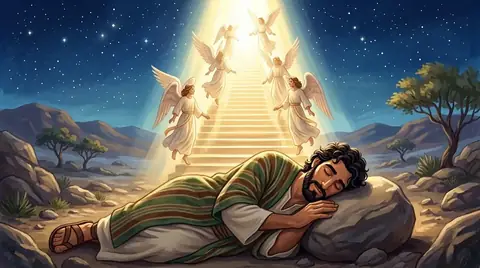 PlaceBethelA town about 10 miles north of Jerusalem where Jacob dreamed of a stairway to heaven. Later it became the home of…
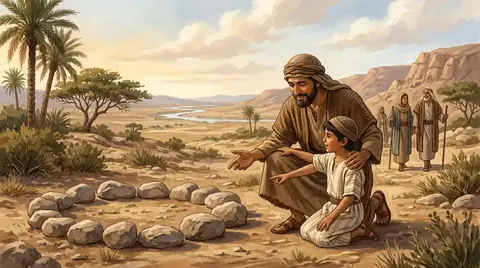 Place · CampGilgalIsrael's first camp in the promised land, where the twelve stones from the Jordan were set up and the reproach of Egypt…
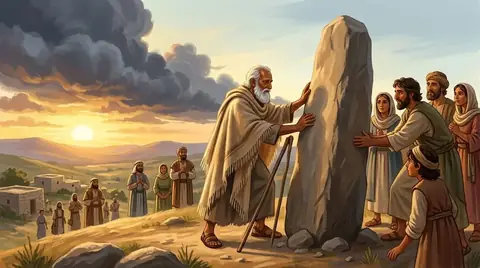 Place · Memorial stoneEbenezer"Stone of help": the stone Samuel set up after God gave Israel victory over the Philistines. Twenty years earlier…
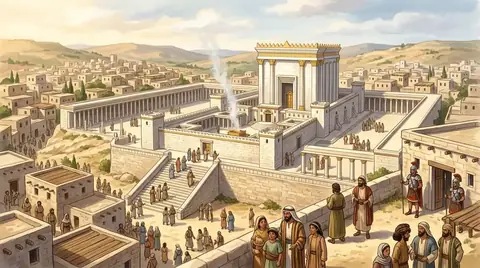 Thing · WorshipThe TempleGod's house in Jerusalem, where he was worshipped and the sacrifices offered. Solomon built it, Babylon burned it, the…
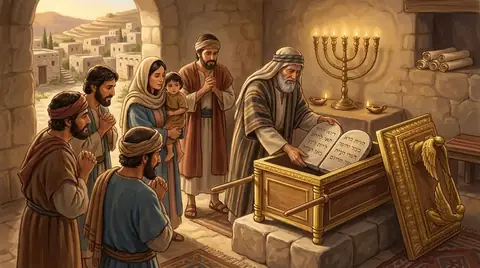 Teaching · LawDecalogueThe Ten Commandments, which God spoke from Mount Sinai and wrote with his own finger on two stone tablets. They sum up…PersonJacobIsaac's younger twin son, who won his brother's birthright and blessing by cunning, was changed by God, and was renamed…
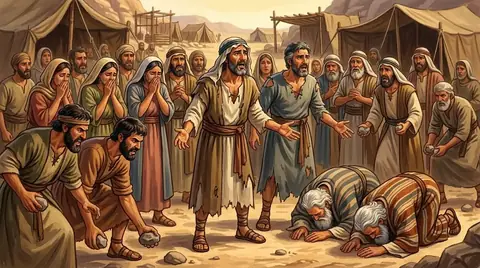 PersonJoshuaMoses' helper who took over from him and led Israel across the Jordan into the Promised Land. He fought the wars of…
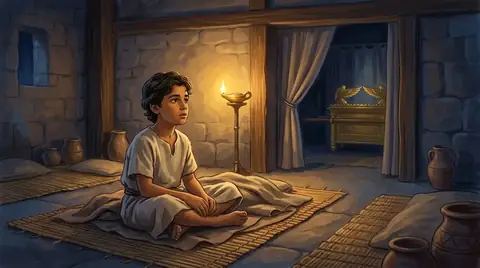 Person · Prophet and judgeSamuelThe prophet who led Israel from the time of the judges into the time of the kings. Given to God by his mother Hannah…
Written for this app in its own words, from the Bible, with the facts checked against Bible dictionaries and encyclopedias: Easton's, Smith's, Fausset's, ISBE, Holman, the New Bible Dictionary, Vine's and the Thompson Chain topics.
