
Symbol · Prophecy
The stone cut without hands
Daniel 2 · God's kingdom that no man made
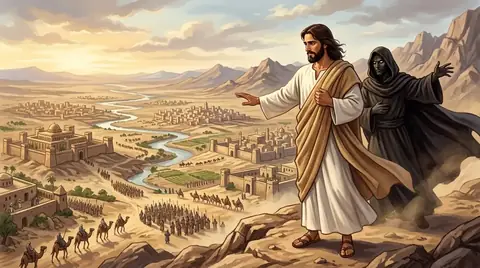
The stone in Nebuchadnezzar's dream that no human hand cut, which smashed the statue of the world's empires and became a mountain filling the earth. It stands for the kingdom God himself sets up, which traditional readers see in Christ.
- Found in
- Daniel 2:34-35, explained in Daniel 2:44-45
- Stands for
- A kingdom from God, not from men, that outlasts every empire
- The mountain
- The stone's growth: the kingdom spreading to fill the earth
The symbol
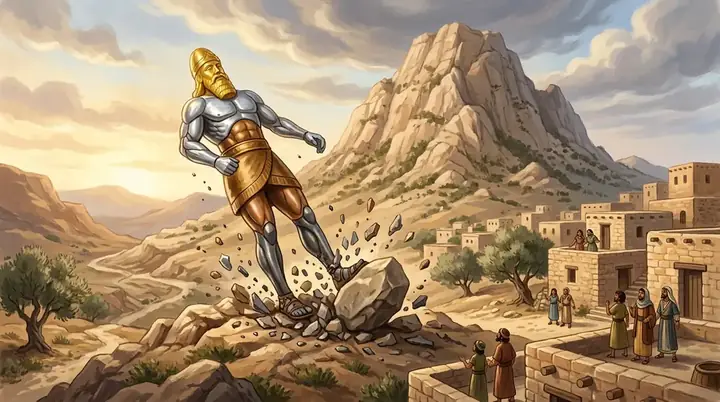
In the dream God gave the king of Babylon, the empires of the world are one shining statue, each kingdom a different metal, and all of them standing on feet of iron and clay. Against this comes a single stone. Nobody quarried it; it is "cut out without hands". It strikes the feet, and the whole statue crumbles to dust and blows away, while the stone grows into a mountain that covers the earth (Daniel 2:34–35).
Daniel told Nebuchadnezzar what the stone meant: a kingdom that "the God of heaven" himself would set up, which would never be destroyed or handed over to another people, and which would bring all those kingdoms to an end (Daniel 2:44).
How it has been read
From the earliest days Christians have seen the stone as Christ and his kingdom, which began in the time of the fourth empire, Rome. The picture fits the Bible's other stones: the stone the builders rejected (Psalms 118:22), the sure foundation laid in Zion (Isaiah 28:16), and Jesus' own warning that the stone falling on a man will grind him to powder (Luke 20:17–18). "Without hands" is the heart of it. God's kingdom does not come by force of arms, clever politics or human effort, and so no force of arms can bring it down. Some readers see the mountain filling the earth as the gospel spreading through the ages; others look for its fullness when Christ returns. Both agree that the stone has been cut and is on its way.
Key verses
- Daniel 2:34–35
Thou sawest till that a stone was cut out without hands, which smote the image upon his feet that were of iron and clay, and brake them to pieces. Then was the iron, the clay, the brass, the silver, and the gold, broken to pieces together, and became like the chaff of the summer threshingfloors; and the wind carried them away, that no place was found for them: and the stone that smote the image became a great mountain, and filled the whole earth.
- Daniel 2:44
And in the days of these kings shall the God of heaven set up a kingdom, which shall never be destroyed: and the kingdom shall not be left to other people, but it shall break in pieces and consume all these kingdoms, and it shall stand for ever.
- Luke 20:17–18
And he beheld them, and said, What is this then that is written, The stone which the builders rejected, the same is become the head of the corner? Whosoever shall fall upon that stone shall be broken; but on whomsoever it shall fall, it will grind him to powder.
Read next
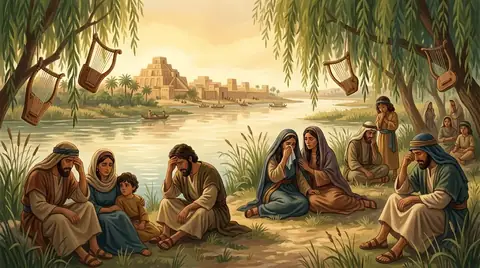 Place · CityBabylonThe great city on the Euphrates where the tower of Babel was built. Under Nebuchadnezzar it ruled the world, destroyed…
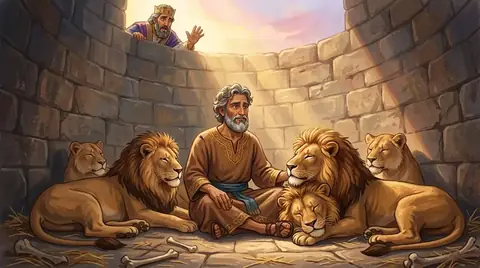 Person · ProphetDanielA young noble of Judah carried off to Babylon, who served four kings with wisdom and never bent his faith. God gave him…
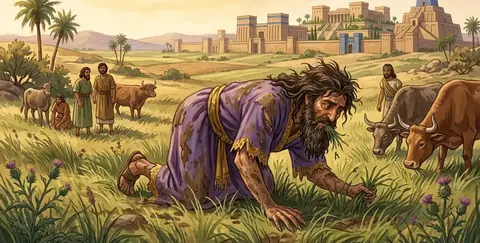 Person · KingNebuchadnezzarThe great king of Babylon who destroyed Jerusalem and its temple and carried Judah into exile. In Daniel he dreams of a…
 TeachingThe kingdom of GodGod's rule as King over his people and his world, the great theme of Jesus' preaching. It arrived with Jesus, grows now…
Written for this app in its own words, from the Bible, with the facts checked against Bible dictionaries and encyclopedias: Easton's, Smith's, Fausset's, ISBE, Holman, the New Bible Dictionary, Vine's and the Thompson Chain topics.
