
Custom · Law
Stoning
The death penalty of the Law of Moses · carried out by the whole community
The usual form of execution under the Law of Moses, in which the witnesses threw the first stones and the whole community followed. Achan, Naboth and Stephen died this way, and Paul survived it.
- For
- Idolatry, blasphemy, Sabbath-breaking, sorcery, adultery, a rebellious son and other grave sins
- Rules
- Two or three witnesses; they threw first (Deuteronomy 17:6–7); done outside the camp or city
- Victims
- The Sabbath-breaker (Numbers 15:36), Achan (Joshua 7:25), Naboth (1 Kings 21:13), Stephen (Acts 7:59)
What it was
Stoning was how Israel put a criminal to death. The condemned person was led outside the camp, or later outside the town, and the people threw stones until he died. The Law required it for the sins that struck at the life of the nation: worshipping other gods (Deuteronomy 13:10; Deuteronomy 17:5), blasphemy (Leviticus 24:14–16), breaking the Sabbath (Numbers 15:32–36), sorcery (Leviticus 20:27), adultery (Deuteronomy 22:21–24) and a son who defied his parents past all correction (Deuteronomy 21:21). Even an ox that gored a person to death was stoned (Exodus 21:28).
The rules were strict. No one could be executed on the word of one witness; it took two or three, and their hands had to be the first to throw (Deuteronomy 17:6–7). A false witness, then, was a murderer. Because every stone came from the community, stoning said that the whole people, not just a judge, had put the evil away from among them.
In the Bible
Achan, who stole from Jericho, was stoned with his family in the valley of Achor (Joshua 7:25). Wicked Queen Jezebel had Naboth stoned on the false word of two witnesses so that Ahab could take his vineyard (1 Kings 21:13). Crowds twice picked up stones to throw at Jesus (John 8:59; John 10:31), and the leaders brought him a woman taken in adultery to see whether he would order it; he answered that the one without sin should throw first, and they all went away (John 8:7–9). Stephen was stoned outside Jerusalem, praying for his killers, while a young man named Saul held the coats (Acts 7:58–60). Years later that same man, now Paul, was stoned at Lystra, dragged out of the city for dead, and got up and walked back in (Acts 14:19–20; 2 Corinthians 11:25).
Key verses
- Deuteronomy 17:6–7
At the mouth of two witnesses, or three witnesses, shall he that is worthy of death be put to death; but at the mouth of one witness he shall not be put to death. The hands of the witnesses shall be first upon him to put him to death, and afterward the hands of all the people. So thou shalt put the evil away from among you.
- Leviticus 24:16
And he that blasphemeth the name of the Lord, he shall surely be put to death, and all the congregation shall certainly stone him: as well the stranger, as he that is born in the land, when he blasphemeth the name of the Lord, shall be put to death.
- Joshua 7:25
And Joshua said, Why hast thou troubled us? the Lord shall trouble thee this day. And all Israel stoned him with stones, and burned them with fire, after they had stoned them with stones.
- John 8:7
So when they continued asking him, he lifted up himself, and said unto them, He that is without sin among you, let him first cast a stone at her.
- Acts 7:59
And they stoned Stephen, calling upon God, and saying, Lord Jesus, receive my spirit.
Read next
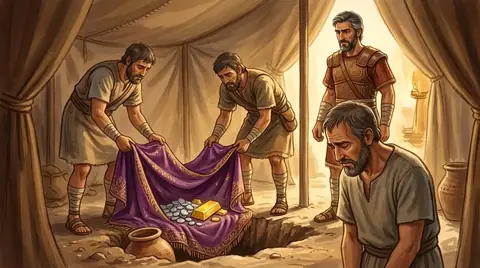 PersonAchanThe man who stole from Jericho's plunder, which God had set apart for himself. His hidden sin caused Israel's defeat at…
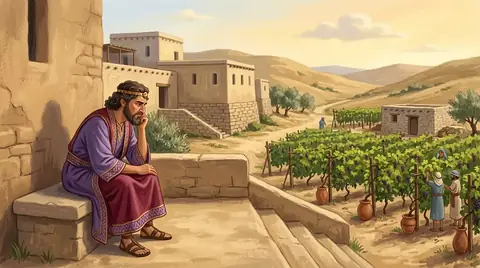 PersonNabothA man of Jezreel whose vineyard lay beside King Ahab's palace. He would not sell his family's land, so Jezebel had him…
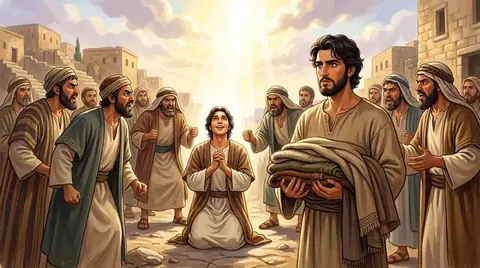 PersonStephenOne of the seven men chosen to care for the widows of the Jerusalem church. Full of faith and the Holy Spirit, he…
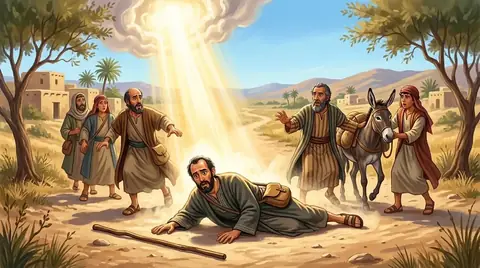 PersonPaulA Pharisee who hated the church until the risen Jesus met him on the road to Damascus. He became the apostle to the…
Written for this app in its own words, from the Bible, with the facts checked against Bible dictionaries and encyclopedias: Easton's, Smith's, Fausset's, ISBE, Holman, the New Bible Dictionary, Vine's and the Thompson Chain topics.
