
Group
The sons of the prophets
Bands of prophets who lived, learned and worshipped together under a master such as Samuel, Elijah or Elisha. "Sons" means pupils or members, not children. They appear mostly in the days of Elisha.
- Where
- 1 Samuel 10:5–10; 1 Samuel 19:20; 1 Kings 18:4; 1 Kings 20:35; 2 Kings 2:3–15; 2 Kings 4:1; 2 Kings 4:38–44; 2 Kings 6:1–7; 2 Kings 9:1–10
- Lived at
- Bethel, Jericho, Gilgal and by the Jordan (2 Kings 2:3–5; 2 Kings 4:38; 2 Kings 6:1–2)
Who they were
In the Old Testament "son of" often means "belonging to": the "sons of the prophets" were men attached to a prophet as his followers. In Samuel's day there was already a company of prophets at Gibeah coming down from the high place with harp, tambourine, flute and lyre, prophesying as they went; Saul met them and was caught up in it (1 Samuel 10:5–10). Later Samuel presided over a group at Naioth in Ramah (1 Samuel 19:20). The name "sons of the prophets" itself belongs to the time of Elijah and Elisha, when there were groups of them at Bethel, Jericho and Gilgal. Obadiah hid a hundred prophets in caves from Jezebel (1 Kings 18:4), so there were many.
How they lived
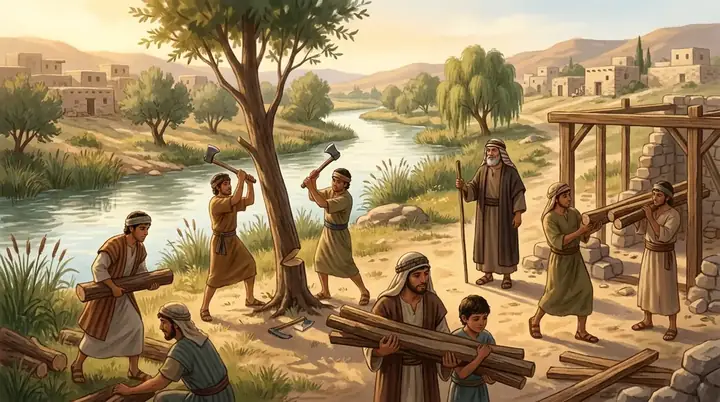
They lived simply and often poorly. One group's house got too small, so they went to the Jordan to cut timber and build a bigger one; the borrowed axe head that fell in the river tells how little they owned (2 Kings 6:1–7). In a famine they ate a stew of wild gourds that nearly poisoned them until Elisha threw in flour (2 Kings 4:38–41). A dead member's widow was about to lose her two sons to a creditor until Elisha multiplied her oil (2 Kings 4:1–7). Some were married, then; some were young men whom Elisha could send on an errand, like the one he sent to anoint Jehu (2 Kings 9:1–10). They sat before their master to be taught (2 Kings 4:38; 2 Kings 6:1), and they knew God's secrets: on the day Elijah was taken up, the sons of the prophets at both Bethel and Jericho told Elisha that his master would leave him that day (2 Kings 2:3–5). Fifty of them watched from a distance as the two crossed the Jordan on dry ground, and afterwards they bowed to Elisha as Elijah's heir (2 Kings 2:7–15).
What they mean
These groups kept the knowledge of God alive in the northern kingdom when the kings and most of the people had gone after Baal. They were the seedbed from which God drew his messengers. Amos insisted that he was no prophet's son but a herdsman whom God called directly (Amos 7:14): God used the schools, and he was not limited to them.
Key verses
- 1 Samuel 10:5
After that thou shalt come to the hill of God, where is the garrison of the Philistines: and it shall come to pass, when thou art come thither to the city, that thou shalt meet a company of prophets coming down from the high place with a psaltery, and a tabret, and a pipe, and a harp, before them; and they shall prophesy:
- 2 Kings 2:3–5
And the sons of the prophets that were at Beth–el came forth to Elisha, and said unto him, Knowest thou that the Lord will take away thy master from thy head to day? And he said, Yea, I know it; hold ye your peace. And Elijah said unto him, Elisha, tarry here, I pray thee; for the Lord hath sent me to Jericho. And he said, As the Lord liveth, and as thy soul liveth, I will not leave thee. So they came to Jericho. And the sons of the prophets that were at Jericho came to Elisha, and said unto him, Knowest thou that the Lord will take away thy master from thy head to day? And he answered, Yea, I know it; hold ye your peace.
- 2 Kings 4:38
And Elisha came again to Gilgal: and there was a dearth in the land; and the sons of the prophets were sitting before him: and he said unto his servant, Set on the great pot, and seethe pottage for the sons of the prophets.
- 2 Kings 6:1–2
And the sons of the prophets said unto Elisha, Behold now, the place where we dwell with thee is too strait for us. Let us go, we pray thee, unto Jordan, and take thence every man a beam, and let us make us a place there, where we may dwell. And he answered, Go ye.
- 2 Kings 9:1
And Elisha the prophet called one of the children of the prophets, and said unto him, Gird up thy loins, and take this box of oil in thine hand, and go to Ramoth–gilead:
Read next
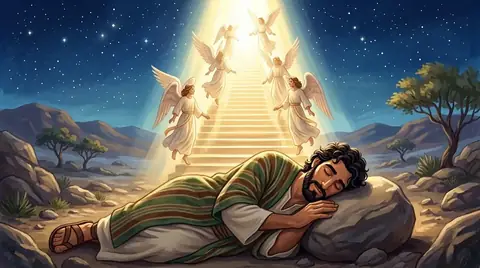 PlaceBethelA town about 10 miles north of Jerusalem where Jacob dreamed of a stairway to heaven. Later it became the home of…
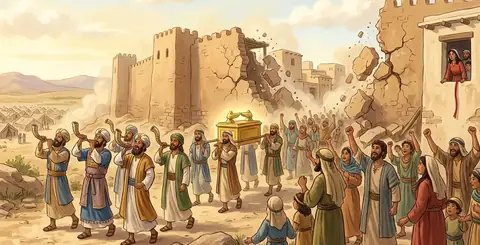 PlaceJerichoThe walled city in the Jordan valley whose walls fell flat when Israel marched round it. Called the city of palm trees…
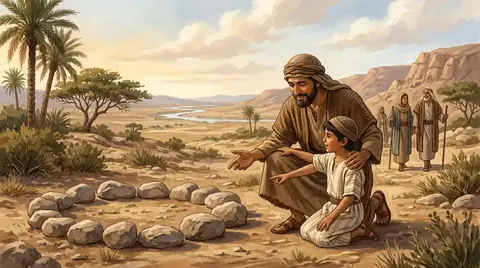 Place · CampGilgalIsrael's first camp in the promised land, where the twelve stones from the Jordan were set up and the reproach of Egypt…Place · RiverJordanThe river of the Bible: Israel crossed it on dry ground into the promised land, Elijah and Elisha parted it, Naaman…
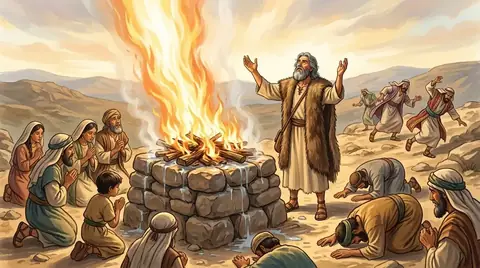 PersonElijahThe fiery prophet who stood alone against King Ahab and the prophets of Baal, called down fire on Mount Carmel, and was…
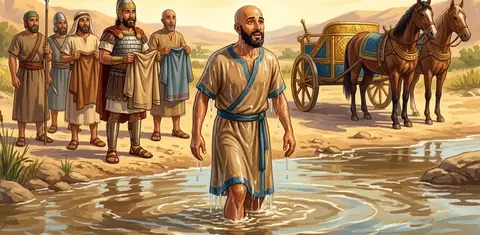 PersonElishaElijah's successor, a farmer's son who asked for a double share of his master's spirit and received it. His long…
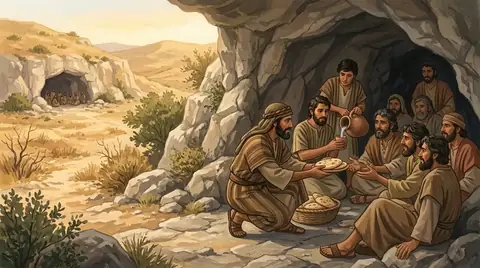 PersonObadiahThe God-fearing steward of King Ahab's palace, who hid a hundred prophets from Jezebel and brought Elijah's message to…
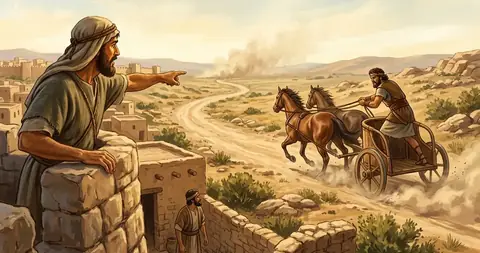 PersonJehuThe army commander anointed to wipe out Ahab's family. He drove his chariot furiously to Jezreel, shot King Joram, had…
Written for this app in its own words, from the Bible, with the facts checked against Bible dictionaries and encyclopedias: Easton's, Smith's, Fausset's, ISBE, Holman, the New Bible Dictionary, Vine's and the Thompson Chain topics.
