
Person
Amos
AY-musOld Testament prophet · about 760 BC
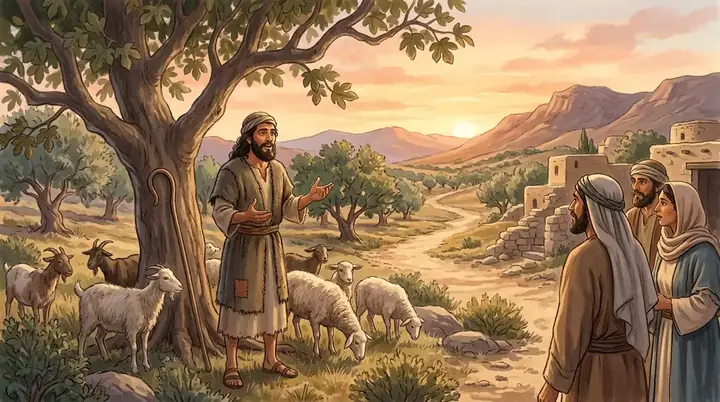
A shepherd and fig-grower from Tekoa in Judah whom God sent to warn the rich northern kingdom of Israel. He called for justice to "run down as waters" and wrote the book of Amos.
- From
- Tekoa, a few miles south of Bethlehem
- Work
- Herdsman and gatherer of sycamore figs
- When
- Under Uzziah of Judah and Jeroboam II of Israel, two years before the earthquake (Amos 1:1)
- Known for
- His visions, his stand at Bethel, his call for justice
- Meaning
- Burden, or one who carries
His life
Amos was not a trained prophet. He looked after sheep and tended sycamore fig trees at Tekoa, until the LORD took him from the flock and sent him north to Israel (Amos 7:14–15). Israel was at the height of its wealth under Jeroboam II. The rich lived in fine houses with ivory beds and drank wine by the bowlful, while the poor were sold for a pair of shoes and cheated in the market (Amos 2:6; Amos 6:4–6; Amos 8:4–6). Worship went on at Bethel and Gilgal, but God hated feasts kept by people who trampled the weak (Amos 5:21–24).
His message
Amos began with God's judgment on the nations round about, then turned to Judah, and then, at length, to Israel (Amos 1–2). God had chosen Israel, so its guilt was the greater (Amos 3:2). He called them to "seek the LORD, and ye shall live" (Amos 5:6). He saw visions: locusts and fire, which God held back when Amos prayed; a plumb line held against a crooked wall; and a basket of ripe summer fruit, which meant Israel was ripe for judgment (Amos 7:1–9; Amos 8:1–2).
At Bethel
Amaziah, the priest of the king's shrine at Bethel, told Amos to go home to Judah and do his prophesying there. Amos answered that he was no prophet's son, only a herdsman, but the LORD had sent him, and he went on with God's word (Amos 7:10–17). Within forty years Assyria carried Israel away, as he had warned.
Points to Christ
Amos ends with hope: God would raise up again the fallen "tabernacle of David" and bring the nations in (Amos 9:11–15). At the council in Jerusalem, James said this was coming true as the Gentiles turned to Christ (Acts 15:15–17).
Others with this name
Another Amos is named in Jesus' family line in Luke (Luke 3:25). Amos is not the same as Amoz, the father of Isaiah.
Key verses
- Amos 1:1
The words of Amos, who was among the herdmen of Tekoa, which he saw concerning Israel in the days of Uzziah king of Judah, and in the days of Jeroboam the son of Joash king of Israel, two years before the earthquake.
- Amos 5:24
But let judgment run down as waters, and righteousness as a mighty stream.
- Amos 7:14–15
Then answered Amos, and said to Amaziah, I was no prophet, neither was I a prophet’s son; but I was an herdman, and a gatherer of sycomore fruit: And the Lord took me as I followed the flock, and the Lord said unto me, Go, prophesy unto my people Israel.
- Amos 9:11
In that day will I raise up the tabernacle of David that is fallen, and close up the breaches thereof; and I will raise up his ruins, and I will build it as in the days of old:
- Acts 15:16
After this I will return, and will build again the tabernacle of David, which is fallen down; and I will build again the ruins thereof, and I will set it up:
On the map
Mentioned in 7 verses
- Amos 7
Read next
 PlaceTekoaA hill town of Judah on the edge of the desert, 10 miles or so from Jerusalem. It was the home of the prophet Amos and…
 PlaceBethlehemA small town in the hills of Judah, five miles south of Jerusalem. It was the home of Ruth and Boaz, the birthplace of…
 PersonUzziahKing of Judah for fifty-two years, a strong and godly ruler until pride led him into the temple to burn incense. God…
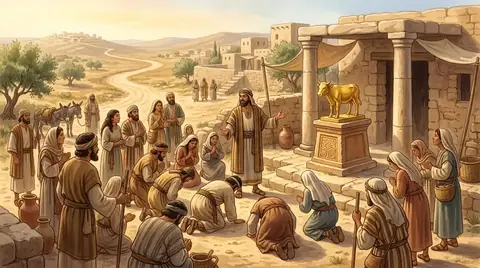 PersonJeroboamSolomon's overseer who became the first king of the breakaway northern kingdom. He set up golden calves at Bethel and…
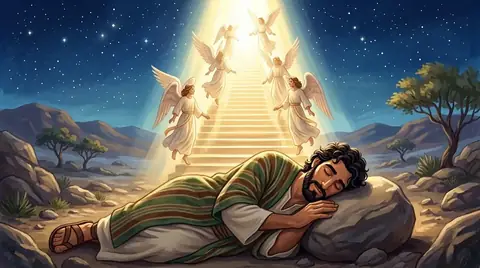 PlaceBethelA town about 10 miles north of Jerusalem where Jacob dreamed of a stairway to heaven. Later it became the home of…
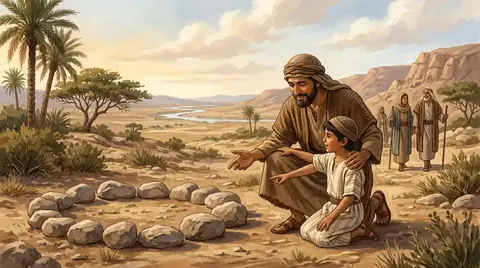 Place · CampGilgalIsrael's first camp in the promised land, where the twelve stones from the Jordan were set up and the reproach of Egypt…
 PersonAmozThe father of the prophet Isaiah. Isaiah is called "the son of Amoz" again and again, but nothing more is told of Amoz…
Written for this app in its own words, from the Bible, with the facts checked against Bible dictionaries and encyclopedias: Easton's, Smith's, Fausset's, ISBE, Holman, the New Bible Dictionary, Vine's and the Thompson Chain topics. People and places: STEPBible.org (TIPNR), CC BY 4.0; where a place is today and its photo: OpenBible.info, CC BY 4.0.
