
Place · Town
Shiloh
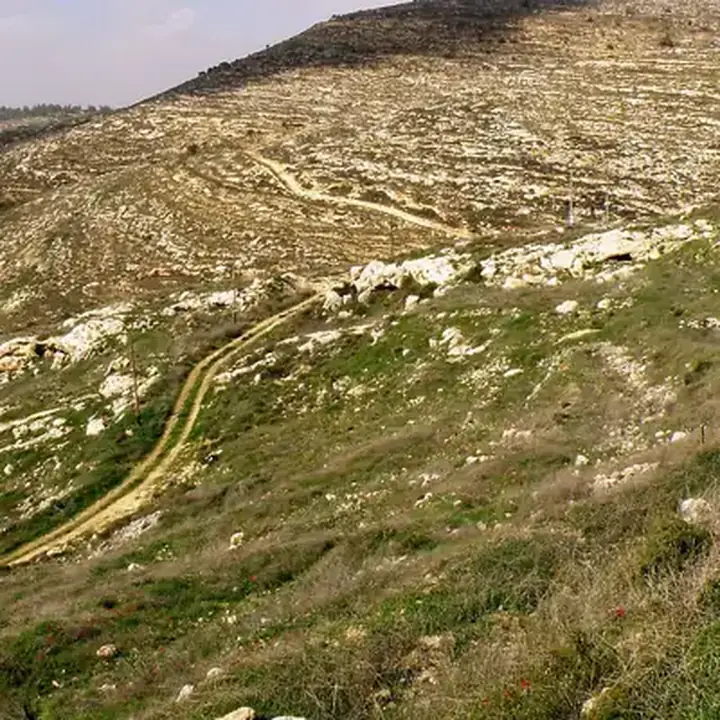
SHY-lohThe name probably means "rest" · today Khirbet Seilun, in the hills about 20 miles (30 km) north of Jerusalem
The town in the hills of Ephraim where the tabernacle stood for over three hundred years, from Joshua to Samuel. Hannah prayed there, and the ark was lost from there to the Philistines.
- Where
- In the hill country of Ephraim, north of Bethel, east of the road to Shechem (Judges 21:19)
- Known for
- The tabernacle; dividing the land; Hannah's prayer; Eli and Samuel; the ark captured
- Where
- Joshua 18:1; Judges 21:19–21; 1 Samuel 1–4; Psalms 78:60; Jeremiah 7:12
Israel's first centre of worship
Once the main fighting of the conquest was over, Joshua gathered the whole nation at Shiloh and pitched the tabernacle there (Joshua 18:1). It was a quiet, out-of-the-way spot, but it lay near the middle of the land, so the tribes could reach it. There Joshua cast lots to share out the land that was still unclaimed (Joshua 18:8–10), and from there the tribes of Reuben, Gad and half of Manasseh went home across the Jordan (Joshua 22:9).
Through the long years of the judges the tabernacle stayed at Shiloh (Judges 18:31). Once a year there was a feast there, and at one of them the men of Benjamin carried off wives from among the girls who came out to dance in the vineyards (Judges 21:19–23).
Hannah, Eli and Samuel
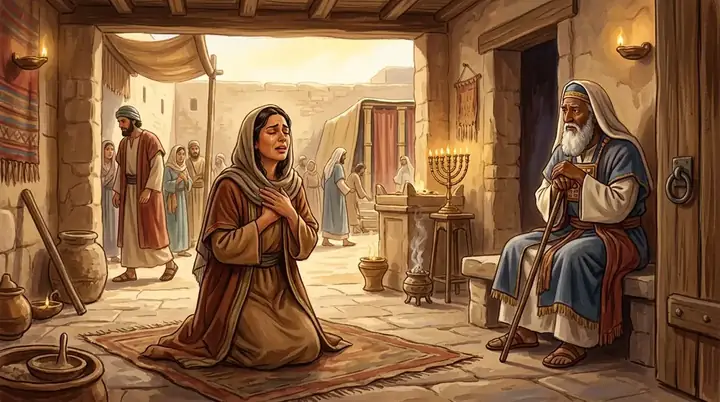
Elkanah came up to Shiloh each year to worship, and it was there that his wife Hannah, weeping at the door of the tabernacle, asked God for a son and promised to give him back. Old Eli the priest, watching her lips move, thought she was drunk. When Samuel was born she brought him to Shiloh to serve God all his life (1 Samuel 1). Eli's own sons, Hophni and Phinehas, treated the offerings and the worshippers with contempt there, and God spoke to the boy Samuel in the night to say that their house would fall (1 Samuel 2–3).
The ark is lost
When Israel fought the Philistines, the people sent to Shiloh for the ark of the covenant, thinking it would win the battle for them. The ark was captured, Eli's sons died, and Eli himself fell dead at the news (1 Samuel 4). The ark never came back to Shiloh. The psalmist says God "forsook the tabernacle of Shiloh" (Psalms 78:60), and Jeremiah later pointed to its ruins as a warning: God had let his own house there be destroyed, and he would do the same to the temple in Jerusalem if the people did not change (Jeremiah 7:12–14; Jeremiah 26:6). The prophet Ahijah, who tore his cloak into twelve pieces to show that the kingdom would be split, lived at Shiloh (1 Kings 11:29; 1 Kings 14:2).
A name in Jacob's blessing
In Jacob's blessing on Judah, the sceptre would not leave Judah "until Shiloh come" (Genesis 49:10). Christians have traditionally read this Shiloh as a name for the Messiah, the peaceful ruler from Judah whom the nations would obey; some take it as "until he comes to whom it belongs". Either way the verse looks ahead to Christ.
Today
The site, Khirbet Seilun, keeps the old name. Digging there has found walls and storerooms from the time of the judges, and a layer of burning that fits the destruction the Bible hints at.
Key verses
- Joshua 18:1
And the whole congregation of the children of Israel assembled together at Shiloh, and set up the tabernacle of the congregation there. And the land was subdued before them.
- 1 Samuel 1:9–11
So Hannah rose up after they had eaten in Shiloh, and after they had drunk. Now Eli the priest sat upon a seat by a post of the temple of the Lord. And she was in bitterness of soul, and prayed unto the Lord, and wept sore. And she vowed a vow, and said, O Lord of hosts, if thou wilt indeed look on the affliction of thine handmaid, and remember me, and not forget thine handmaid, but wilt give unto thine handmaid a man child, then I will give him unto the Lord all the days of his life, and there shall no razor come upon his head.
- 1 Samuel 4:3–4
And when the people were come into the camp, the elders of Israel said, Wherefore hath the Lord smitten us to day before the Philistines? Let us fetch the ark of the covenant of the Lord out of Shiloh unto us, that, when it cometh among us, it may save us out of the hand of our enemies. So the people sent to Shiloh, that they might bring from thence the ark of the covenant of the Lord of hosts, which dwelleth between the cherubims: and the two sons of Eli, Hophni and Phinehas, were there with the ark of the covenant of God.
- Psalms 78:60
So that he forsook the tabernacle of Shiloh, the tent which he placed among men;
- Jeremiah 7:12
But go ye now unto my place which was in Shiloh, where I set my name at the first, and see what I did to it for the wickedness of my people Israel.
- Genesis 49:10
The sceptre shall not depart from Judah, nor a lawgiver from between his feet, until Shiloh come; and unto him shall the gathering of the people be.
On the map
Mentioned in 36 verses
- Joshua 8
- Judges 4
- 1 Samuel 9
- 1 Kings 6
- 1 Chronicles 1
- 2 Chronicles 2
- Psalms 1
- Jeremiah 5
Read next
 Person · TribeEphraimJoseph's second son, whom Jacob blessed ahead of his older brother. His tribe became the strongest in the north, and…
 PlaceBethelA town about 10 miles north of Jerusalem where Jacob dreamed of a stairway to heaven. Later it became the home of…
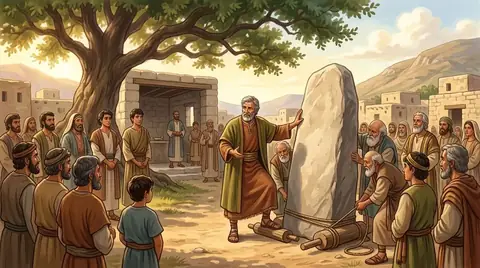 PlaceShechemAn ancient city in the heart of Canaan, between Mount Ebal and Mount Gerizim. Abraham built his first altar there…
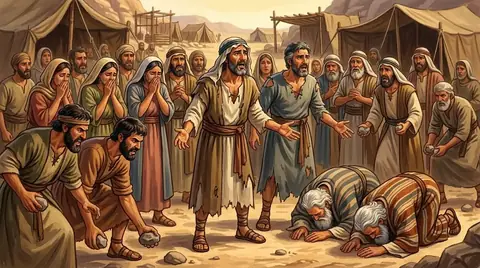 PersonJoshuaMoses' helper who took over from him and led Israel across the Jordan into the Promised Land. He fought the wars of…
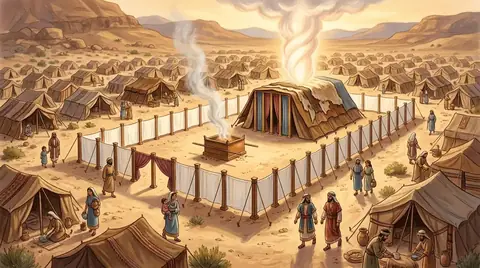 Thing · WorshipThe tabernacleThe holy tent Israel built in the wilderness, by God's own pattern, so that he could dwell in the middle of his people.…
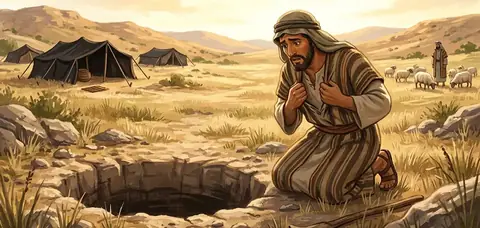 Person · TribeReubenJacob's firstborn, who lost the rights of the eldest by sleeping with his father's concubine. He tried to save Joseph…
 Person · TribeGadJacob's seventh son, by Leah's maid Zilpah, and the warlike tribe named after him that settled east of the Jordan. A…Person · TribeManassehJoseph's elder son, adopted by Jacob as a tribe of Israel, whose land straddled the Jordan. Also the longest-reigning…
Written for this app in its own words, from the Bible, with the facts checked against Bible dictionaries and encyclopedias: Easton's, Smith's, Fausset's, ISBE, Holman, the New Bible Dictionary, Vine's and the Thompson Chain topics. People and places: STEPBible.org (TIPNR), CC BY 4.0; where a place is today and its photo: OpenBible.info, CC BY 4.0.
