
Book
1 and 2 Samuel (book)
Old Testament · History · Samuel, then the prophets Nathan and Gad; about 930 BC in their final form
Two books of the Bible, once one, telling how Israel moved from judges to kings: the prophet Samuel, the rise and fall of Saul, and the reign of David, with God's promise of a lasting throne.
- Author
- Samuel wrote the early part; Nathan and Gad completed it (1 Chronicles 29:29)
- Written
- About 930 BC in final form; events about 1100–970 BC
- Chapters
- 31 and 24
- Key verse
- "The LORD looketh on the heart" (1 Samuel 16:7)
What it's about
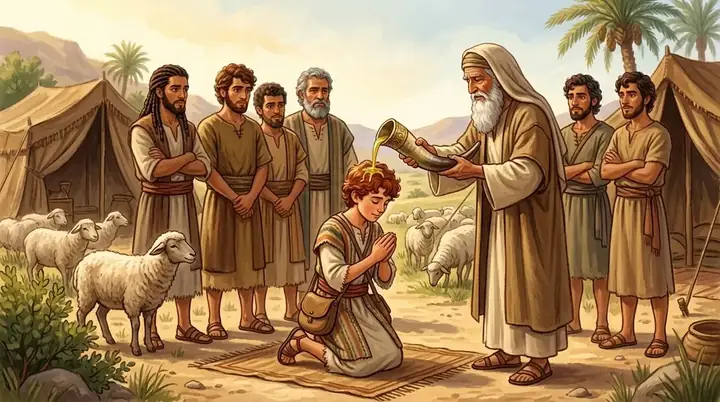
1 Samuel opens with Hannah's prayer for a son and the birth of Samuel, who grew up at the tabernacle and became Israel's last judge and a great prophet. When the people asked for a king like the other nations, God gave them Saul. Saul began well but disobeyed, and God chose a shepherd boy, David, instead. The rest of 1 Samuel tells of David and Goliath, his friendship with Jonathan, and the years he spent fleeing from Saul.
2 Samuel covers David's forty-year reign: the capture of Jerusalem, the ark brought to the city, his victories, then his sin with Bathsheba and the troubles in his family that followed, including Absalom's revolt.
Its message
God raises up and brings down. He wants obedience more than sacrifice (1 Samuel 15:22), and he looks at the heart rather than at height or looks. Even a king is under God's law, and David's honest repentance (2 Samuel 12:13) shows the way back after sin.
Points to Christ
God promised David that his house and kingdom would stand for ever (2 Samuel 7:16). The angel told Mary that her son would receive "the throne of his father David" and reign without end (Luke 1:32–33). Jesus is that Son of David.
Key verses
- 1 Samuel 2:2
There is none holy as the Lord: for there is none beside thee: neither is there any rock like our God.
- 1 Samuel 15:22
And Samuel said, Hath the Lord as great delight in burnt offerings and sacrifices, as in obeying the voice of the Lord? Behold, to obey is better than sacrifice, and to hearken than the fat of rams.
- 1 Samuel 16:7
But the Lord said unto Samuel, Look not on his countenance, or on the height of his stature; because I have refused him: for the Lord seeth not as man seeth; for man looketh on the outward appearance, but the Lord looketh on the heart.
- 2 Samuel 7:12–16
And when thy days be fulfilled, and thou shalt sleep with thy fathers, I will set up thy seed after thee, which shall proceed out of thy bowels, and I will establish his kingdom. He shall build an house for my name, and I will stablish the throne of his kingdom for ever. I will be his father, and he shall be my son. If he commit iniquity, I will chasten him with the rod of men, and with the stripes of the children of men: …
- Luke 1:32–33
He shall be great, and shall be called the Son of the Highest: and the Lord God shall give unto him the throne of his father David: And he shall reign over the house of Jacob for ever; and of his kingdom there shall be no end.
On the map
Read next
 Person · Prophet and judgeSamuelThe prophet who led Israel from the time of the judges into the time of the kings. Given to God by his mother Hannah…
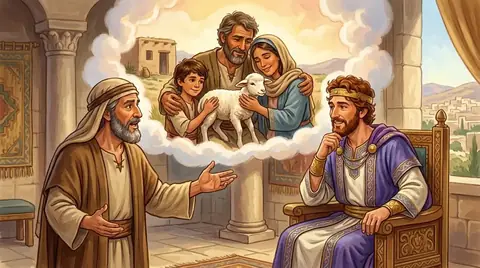 PersonNathanThe prophet who told David that his son, not he, would build the temple, who confronted him over Bathsheba with the…
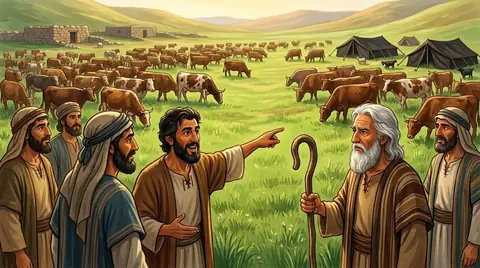 Person · TribeGadJacob's seventh son, by Leah's maid Zilpah, and the warlike tribe named after him that settled east of the Jordan. A…
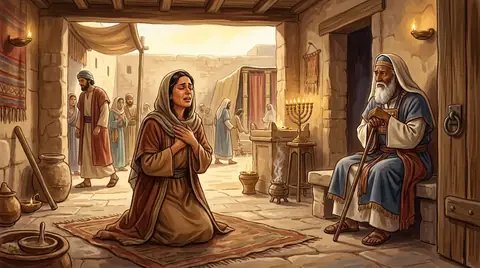 PersonHannahThe childless wife of Elkanah who prayed for a son at Shiloh, promised him to God, and became the mother of the prophet…
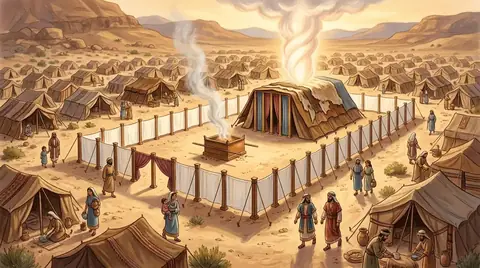 Thing · WorshipThe tabernacleThe holy tent Israel built in the wilderness, by God's own pattern, so that he could dwell in the middle of his people.…
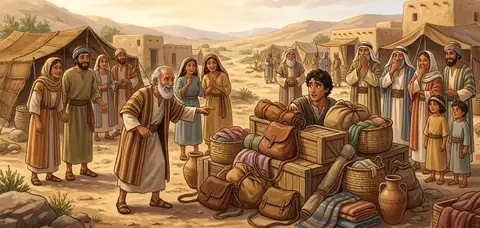 Person · KingSaulIsrael's first king, a tall Benjamite chosen when the people demanded a king like the nations. He began humbly and won…
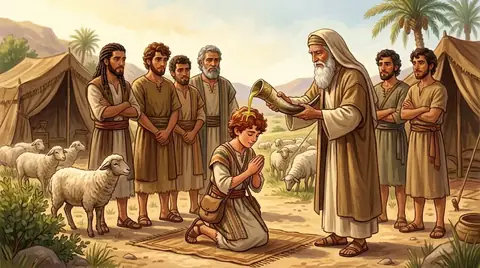 Person · KingDavidThe shepherd boy who killed Goliath and became Israel's greatest king, "a man after God's own heart". He wrote many…
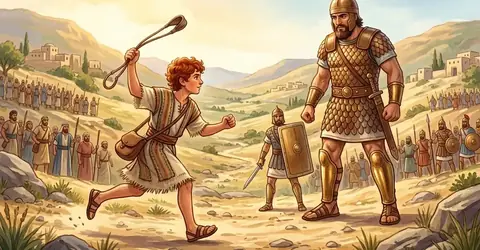 PersonGoliathThe giant champion of the Philistines from Gath, over nine feet tall, who taunted Israel's army for forty days until…
Written for this app in its own words, from the Bible, with the facts checked against Bible dictionaries and encyclopedias: Easton's, Smith's, Fausset's, ISBE, Holman, the New Bible Dictionary, Vine's and the Thompson Chain topics.
