
Custom · Law
The Sabbath year
Every seventh year · also called the year of release
Every seventh year Israel's fields lay unsown, loans to fellow Israelites were wiped out and Hebrew slaves went free. It said that the land, and the people, belonged to the Lord.
- When
- Every seventh year; the year after seven of them was the Jubilee
- Rules
- No sowing or reaping; debts released; Hebrew servants freed
- Commanded
- Exodus 23:10–11; Leviticus 25:1–7; Deuteronomy 15:1–11
What it was
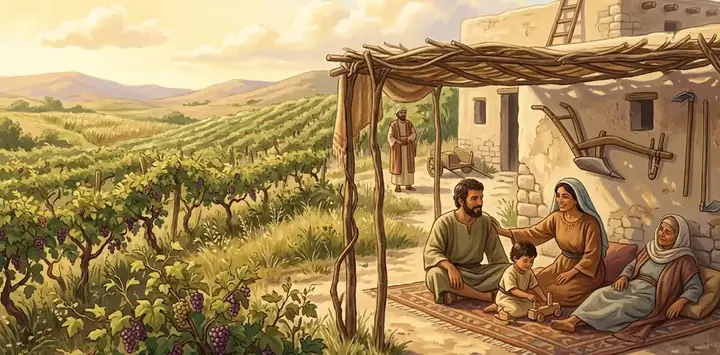
Just as every seventh day was a Sabbath for people, every seventh year was a Sabbath for the land. For a whole year nobody ploughed, sowed, pruned or gathered the harvest (Exodus 23:10–11; Leviticus 25:1–7). Whatever came up of its own accord was free for anyone to take: the owner, his servants, the poor and even the wild animals. God promised that the sixth year's crop would be big enough to carry them through (Leviticus 25:20–22).
The year also brought release. Loans between fellow Israelites were cancelled, and a Hebrew who had sold himself as a servant was set free with a generous gift to start again (Deuteronomy 15:1–11; Jeremiah 34:14). At the Feast of Tabernacles in that year the whole Law was to be read aloud to everyone, children and foreigners included (Deuteronomy 31:10–13).
What it meant
Resting the land was good farming, but the real point was trust and ownership. The land was the Lord's; Israel only held it from him. Leaving a field fallow for a year was a way of saying so, and of trusting him to provide. Cancelling debts kept the poor from sinking for ever.
When it was ignored
Israel largely failed to keep it. When the people were carried off to Babylon, the writer of Chronicles saw in the seventy years of exile the Sabbath years the land had never been given (2 Chronicles 36:21; Leviticus 26:34–35). After the return, Nehemiah and the people promised to keep the seventh year once more (Nehemiah 10:31).
Key verses
- Exodus 23:10–11
And six years thou shalt sow thy land, and shalt gather in the fruits thereof: But the seventh year thou shalt let it rest and lie still; that the poor of thy people may eat: and what they leave the beasts of the field shall eat. In like manner thou shalt deal with thy vineyard, and with thy oliveyard.
- Leviticus 25:1–7
And the Lord spake unto Moses in mount Sinai, saying, Speak unto the children of Israel, and say unto them, When ye come into the land which I give you, then shall the land keep a sabbath unto the Lord. Six years thou shalt sow thy field, and six years thou shalt prune thy vineyard, and gather in the fruit thereof; …
- Deuteronomy 15:1–2
At the end of every seven years thou shalt make a release. And this is the manner of the release: Every creditor that lendeth ought unto his neighbour shall release it; he shall not exact it of his neighbour, or of his brother; because it is called the Lord’s release.
- 2 Chronicles 36:21
To fulfil the word of the Lord by the mouth of Jeremiah, until the land had enjoyed her sabbaths: for as long as she lay desolate she kept sabbath, to fulfil threescore and ten years.
Read next
 Feast · LawThe JubileeEvery fiftieth year in Israel, announced by a trumpet blast on the Day of Atonement. Sold land went back to its first…
 Custom · Day of restThe SabbathThe seventh day of the week, kept holy for rest and worship because God rested after creation. It was the sign of God's…
 Thing · WorshipThe tabernacleThe holy tent Israel built in the wilderness, by God's own pattern, so that he could dwell in the middle of his people.…
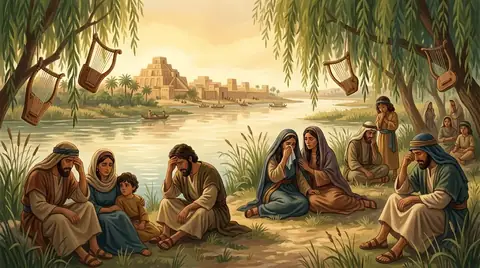 Place · CityBabylonThe great city on the Euphrates where the tower of Babel was built. Under Nebuchadnezzar it ruled the world, destroyed…
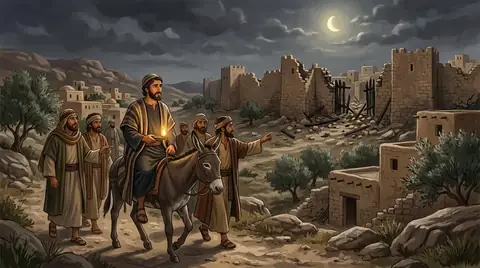 PersonNehemiahThe king of Persia's cupbearer who got leave to go to Jerusalem and rebuilt its broken walls in fifty-two days, despite…
Written for this app in its own words, from the Bible, with the facts checked against Bible dictionaries and encyclopedias: Easton's, Smith's, Fausset's, ISBE, Holman, the New Bible Dictionary, Vine's and the Thompson Chain topics.
