
Custom · Worship
Ritual washing
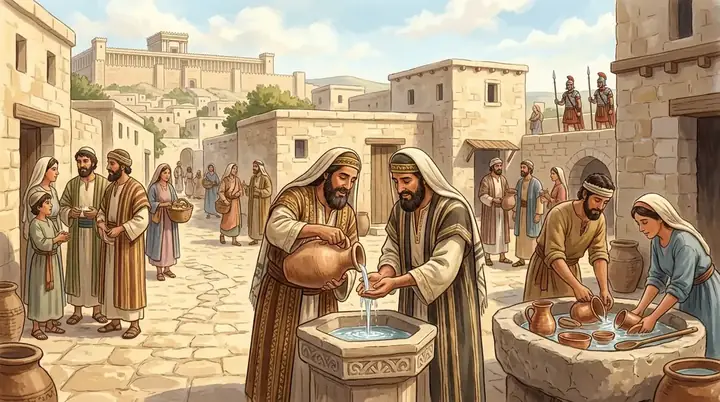
Washing with water as part of worship. The law required it of priests before serving; by Jesus' day the Pharisees had piled up extra washings of hands, cups and pots, which Jesus refused to treat as God's commands.
- Where
- Exodus 30:17–21; Leviticus 15; Mark 7:1–8; John 2:6
- See also
- Ablution
In the law
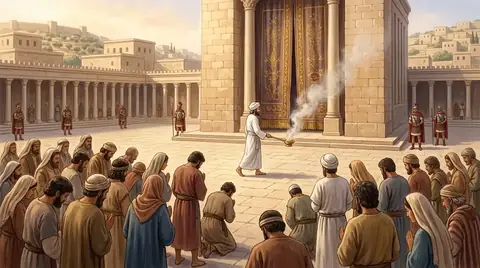
At the door of the tabernacle stood the bronze laver, and Aaron and his sons washed their hands and feet in it before going in to serve, "that they die not" (Exodus 30:17–21). Those made unclean by disease, bodily discharges or touching a dead body washed their clothes and bathed as part of becoming clean (Leviticus 15; Numbers 19:19). On the Day of Atonement the high priest bathed before and after entering the Most Holy Place (Leviticus 16:4; Leviticus 16:24). All of it taught that a holy God must be approached clean.
In Jesus' day
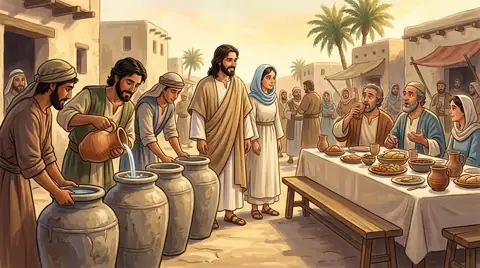
Jewish teachers had built on the law a whole system of washings before meals, after coming from the market, and of cups, pots and couches, handed down as "the tradition of the elders" (Mark 7:3–4). The six stone water jars at the wedding in Cana, each holding twenty or thirty gallons, were there for this purifying (John 2:6), and the pools at the temple were busy before every feast (John 11:55). Mark explains the custom for his Gentile readers.
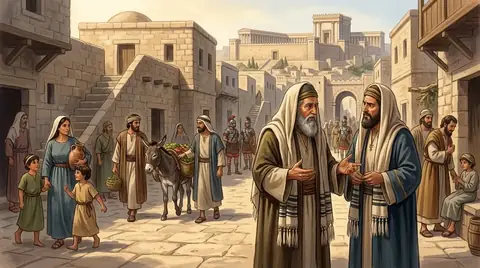
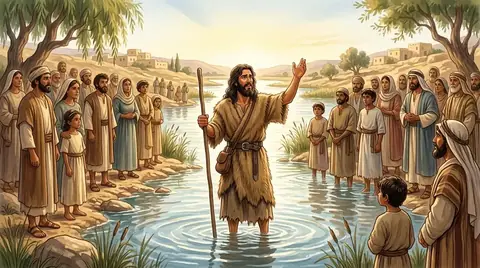
The Pharisees were shocked that Jesus' disciples ate with unwashed hands, and that Jesus himself did not wash before dinner (Mark 7:2; Luke 11:38). Jesus answered that they held on to human tradition while setting aside God's commandment, and that nothing from outside can defile a person; what defiles comes out of the heart (Mark 7:8; Mark 7:14–23). John's disciples argued with a Jew about purifying too (John 3:25).
What it meant
The washings were "carnal ordinances", Hebrews says, outward rules "imposed on them until the time of reformation" (Hebrews 9:10). What they pointed to, a clean heart, Christ gives: believers draw near "having our hearts sprinkled from an evil conscience, and our bodies washed with pure water" (Hebrews 10:22).
Key verses
- Exodus 30:19–21
For Aaron and his sons shall wash their hands and their feet thereat: When they go into the tabernacle of the congregation, they shall wash with water, that they die not; or when they come near to the altar to minister, to burn offering made by fire unto the Lord: So they shall wash their hands and their feet, that they die not: and it shall be a statute for ever to them, even to him and to his seed throughout their generations.
- Mark 7:2–8
And when they saw some of his disciples eat bread with defiled, that is to say, with unwashen, hands, they found fault. For the Pharisees, and all the Jews, except they wash their hands oft, eat not, holding the tradition of the elders. And when they come from the market, except they wash, they eat not. And many other things there be, which they have received to hold, as the washing of cups, and pots, brasen vessels, and of tables. …
- John 2:6
And there were set there six waterpots of stone, after the manner of the purifying of the Jews, containing two or three firkins apiece.
- Hebrews 10:22
Let us draw near with a true heart in full assurance of faith, having our hearts sprinkled from an evil conscience, and our bodies washed with pure water.
Read next
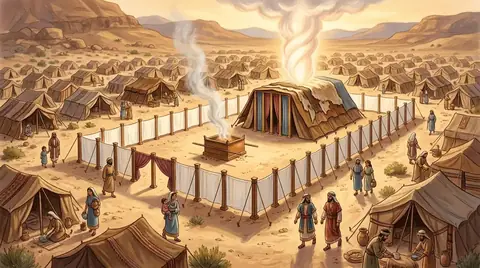 Thing · WorshipThe tabernacleThe holy tent Israel built in the wilderness, by God's own pattern, so that he could dwell in the middle of his people.…
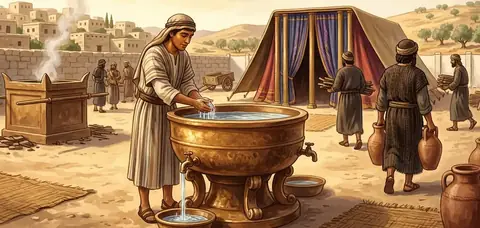 Thing · WorshipLaverThe large bronze basin that stood in the tabernacle court at which the priests washed hands and feet before they served…
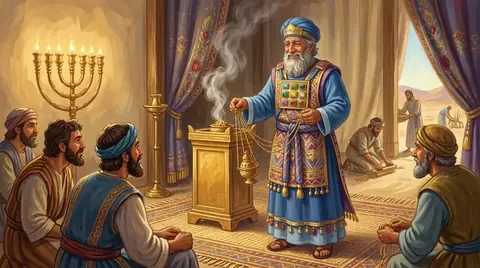 PersonAaronMoses' older brother and Israel's first high priest. He spoke for Moses before Pharaoh and served God at the tabernacle…
 Feast · FastThe Day of AtonementThe one day in the year when the high priest went behind the veil with blood to atone for all Israel's sins, while a…
 Place · VillageCanaA village in Galilee where Jesus did his first miracle, turning water into wine at a wedding. From Cana he also healed…
 GroupPhariseesThe most exacting of the Jewish religious parties in Jesus' day, devoted to keeping the Law and the traditions added to…
 PersonJohn the BaptistThe prophet God sent to prepare the way for Jesus. He called Israel to repent, baptized in the Jordan, pointed to Jesus…
Written for this app in its own words, from the Bible, with the facts checked against Bible dictionaries and encyclopedias: Easton's, Smith's, Fausset's, ISBE, Holman, the New Bible Dictionary, Vine's and the Thompson Chain topics.
