
Custom · Worship
Ablution
Also called cleansing or washing
Ceremonial washing with water. The law required it of priests before serving and of anyone made unclean; later teachers added many rules of their own, which Jesus did not keep.
- Who
- Priests before every service; anyone unclean; the dead; guests' feet
- Where
- Exodus 30:17–21; Leviticus 8:6; Leviticus 15; Mark 7:1–5
What it was
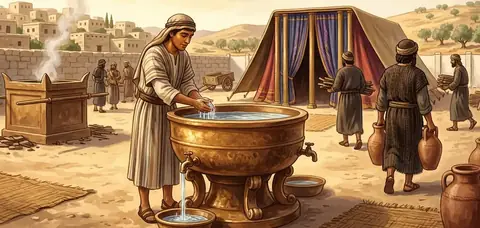
Water in the Bible stands for cleansing, and washing was woven into Israel's worship. When Aaron and his sons were made priests, Moses first washed them with water (Leviticus 8:6). After that, every time a priest went into the tabernacle or came to the altar he had to wash his hands and feet at the bronze laver, on pain of death (Exodus 30:17–21). The law listed many things that made a person unclean, from skin disease to touching a dead body, and washing in water, often with a wait until evening, was part of being made clean again (Leviticus 14:8; Leviticus 15:5–13).
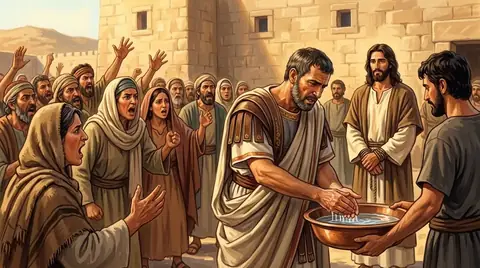
Washing could also declare innocence. When a murdered body was found and the killer unknown, the elders of the nearest town washed their hands over a slain heifer and said that they had not shed this blood (Deuteronomy 21:6–7). The psalmist says, "I will wash mine hands in innocency" (Psalms 26:6), and Pilate washed his hands before the crowd to disown the death of Jesus (Matthew 27:24).
Ordinary life had its washings too: a host gave water for a guest's dusty feet (Genesis 18:4; Luke 7:44), and the dead were washed before burial (Acts 9:37).
In Jesus' day
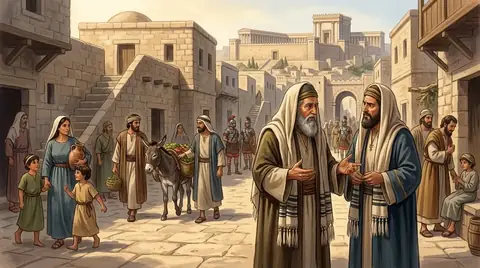
The Pharisees had built up detailed rules about washing hands before eating and rinsing cups and pots, and treated them as if God had commanded them. Jesus and his disciples did not keep these rules, and when challenged he said they were honouring tradition above God's word, and that what defiles a person comes from the heart, not from unwashed hands (Mark 7:1–23; Luke 11:38–41).
What it meant
Outward washing pointed to an inward need. David prayed, "Wash me, and I shall be whiter than snow" (Psalms 51:7). The New Testament says that need is met by Christ: believers are "washed" in his name (1 Corinthians 6:11), and come to God with their hearts sprinkled clean (Hebrews 10:22).
Key verses
- Exodus 30:17–21
And the Lord spake unto Moses, saying, Thou shalt also make a laver of brass, and his foot also of brass, to wash withal: and thou shalt put it between the tabernacle of the congregation and the altar, and thou shalt put water therein. For Aaron and his sons shall wash their hands and their feet thereat: …
- Leviticus 8:6
And Moses brought Aaron and his sons, and washed them with water.
- Mark 7:1–8
Then came together unto him the Pharisees, and certain of the scribes, which came from Jerusalem. And when they saw some of his disciples eat bread with defiled, that is to say, with unwashen, hands, they found fault. For the Pharisees, and all the Jews, except they wash their hands oft, eat not, holding the tradition of the elders. …
- Psalms 51:7
Purge me with hyssop, and I shall be clean: wash me, and I shall be whiter than snow.
- Hebrews 10:22
Let us draw near with a true heart in full assurance of faith, having our hearts sprinkled from an evil conscience, and our bodies washed with pure water.
Read next
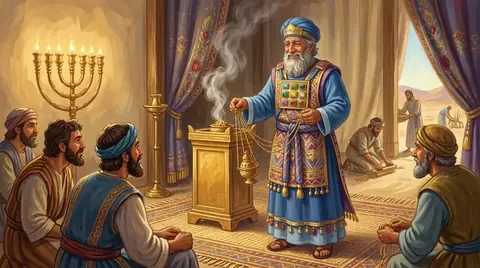 PersonAaronMoses' older brother and Israel's first high priest. He spoke for Moses before Pharaoh and served God at the tabernacle…
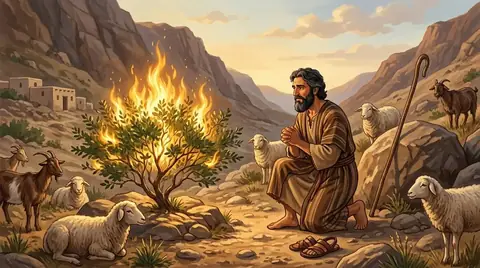 PersonMosesThe man God used to bring Israel out of Egypt, give them his Law at Sinai, and lead them for forty years in the…
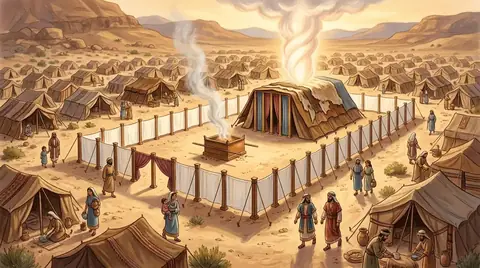 Thing · WorshipThe tabernacleThe holy tent Israel built in the wilderness, by God's own pattern, so that he could dwell in the middle of his people.…
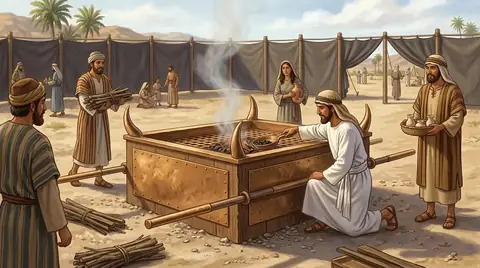 Thing · WorshipThe altarA raised structure of earth, stone or bronze on which sacrifices were offered to God. The big bronze altar stood in the…
 Thing · WorshipLaverThe large bronze basin that stood in the tabernacle court at which the priests washed hands and feet before they served…
 PersonPilateThe Roman governor of Judea who tried Jesus. He said three times that he found no fault in him, yet handed him over to…
 GroupPhariseesThe most exacting of the Jewish religious parties in Jesus' day, devoted to keeping the Law and the traditions added to…
 Person · KingDavidThe shepherd boy who killed Goliath and became Israel's greatest king, "a man after God's own heart". He wrote many…
Written for this app in its own words, from the Bible, with the facts checked against Bible dictionaries and encyclopedias: Easton's, Smith's, Fausset's, ISBE, Holman, the New Bible Dictionary, Vine's and the Thompson Chain topics.
