
Thing · Custom
Razor
A blade for shaving hair. Those under a Nazirite vow could never let one touch their head, while Levites were shaved all over when set apart. Prophets used the razor as a picture of judgment.
- Where
- Numbers 6:5; Numbers 8:7; Judges 13:5; Psalms 52:2; Isaiah 7:20
Men in Israel generally wore beards, and shaving carried special meanings. A man or woman who took a Nazirite vow promised that "there shall no razor come upon his head" for the whole time of the vow; the long hair was the sign of being set apart for God (Numbers 6:5). Samson was to be a Nazirite from birth, and when Delilah had his hair shaved his strength left him (Judges 13:5; Judges 16:17–19). Samuel's mother made the same promise for her son (1 Samuel 1:11). By contrast, the Levites were shaved over their whole bodies when they were cleansed for service (Numbers 8:7).
The prophets turned the razor into a picture. David said a lying tongue cuts like a sharp razor (Psalms 52:2). Isaiah warned that God would use the king of Assyria like a hired razor to shave Judah bare, head, beard and all, a humiliation for a nation (Isaiah 7:20). Ezekiel was told to shave his own head and beard with a sharp sword as a sign of Jerusalem's coming fall (Ezekiel 5:1).
Key verses
- Numbers 6:5
All the days of the vow of his separation there shall no razor come upon his head: until the days be fulfilled, in the which he separateth himself unto the Lord, he shall be holy, and shall let the locks of the hair of his head grow.
- Judges 13:5
For, lo, thou shalt conceive, and bear a son; and no razor shall come on his head: for the child shall be a Nazarite unto God from the womb: and he shall begin to deliver Israel out of the hand of the Philistines.
- Isaiah 7:20
In the same day shall the Lord shave with a razor that is hired, namely, by them beyond the river, by the king of Assyria, the head, and the hair of the feet: and it shall also consume the beard.
Read next
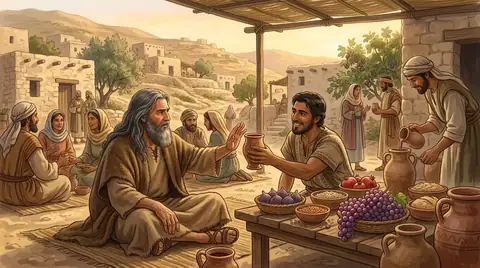 Custom · VowThe NaziriteA man or woman who vowed to belong wholly to God, for a set time or for life, drinking no wine, never cutting their…
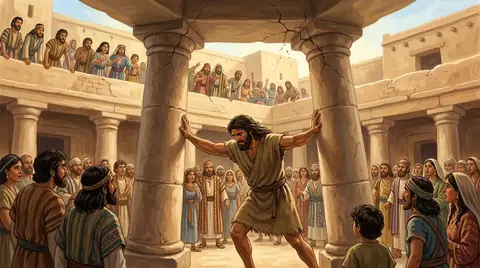 Person · JudgeSamsonThe judge of Israel with superhuman strength from God, a Nazirite from birth. He fought the Philistines single-handed…
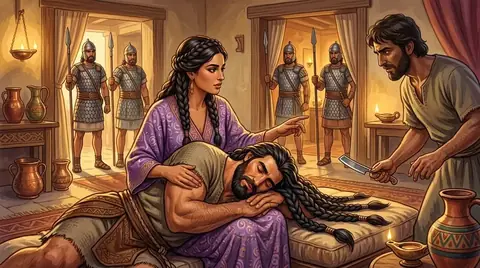 PersonDelilahThe woman from the valley of Sorek whom Samson loved. Bribed by the Philistine rulers, she wore him down until he told…
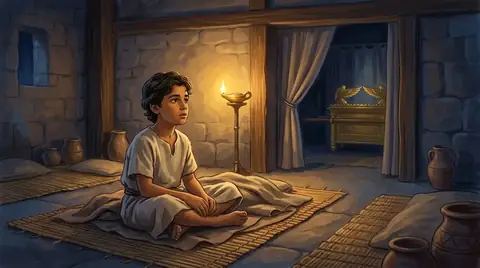 Person · Prophet and judgeSamuelThe prophet who led Israel from the time of the judges into the time of the kings. Given to God by his mother Hannah…
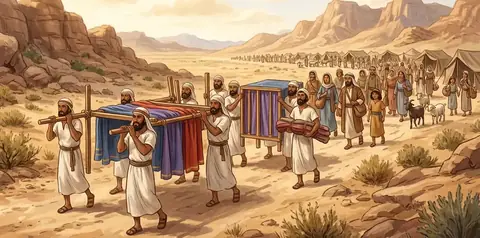 Group · WorshipThe LevitesThe men of the tribe of Levi, chosen to serve God instead of Israel's firstborn sons. They carried the tabernacle…
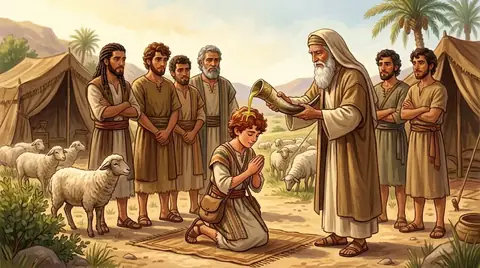 Person · KingDavidThe shepherd boy who killed Goliath and became Israel's greatest king, "a man after God's own heart". He wrote many…
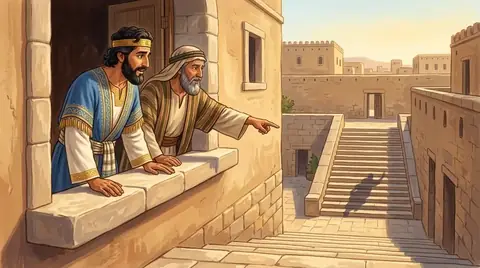 Person · ProphetIsaiahThe prophet of Jerusalem who served four kings, saw the LORD on his throne, and foretold the virgin's son, the…
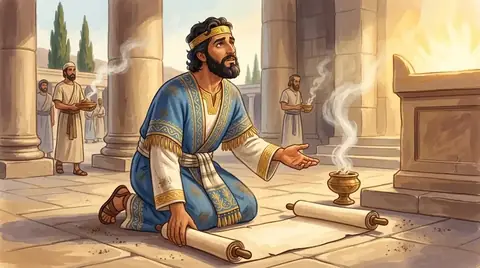 Place · EmpireAssyriaThe land and empire on the upper Tigris whose capital was Nineveh. Assyria crushed the northern kingdom of Israel in…
Written for this app in its own words, from the Bible, with the facts checked against Bible dictionaries and encyclopedias: Easton's, Smith's, Fausset's, ISBE, Holman, the New Bible Dictionary, Vine's and the Thompson Chain topics.
