
Teaching · Title of Christ
The Propitiation
pro-pish-ee-AY-shun"God... sent his Son to be the propitiation for our sins" (1John 4:10)
A sacrifice that turns aside God's righteous anger at sin. Christ is the propitiation: by his blood God's wrath is satisfied and the sinner who trusts him is forgiven.
- Greek
- Hilasterion (Romans 3:25), the word for the mercy seat; hilasmos (1 John 2:2; 4:10)
- Where
- Romans 3:25; Hebrews 2:17; 1 John 2:2; 1 John 4:10
What it means
To propitiate is to turn aside anger, to make someone favourable again. God is holy, and his anger against sin is real and right. A propitiation is the sacrifice that meets that anger so that he can forgive without ceasing to be just. The Bible never says that Christ persuaded an unwilling God to love us; it says the opposite: because God loved us, he himself provided the sacrifice (1 John 4:10).
In the Old Testament
The Greek word Paul chooses in Romans 3:25 is the same one the Greek Old Testament uses for the mercy seat, the golden lid on the ark of the covenant, where God met with Israel (Exodus 25:17–22). On the Day of Atonement the high priest took the blood of the sin offering behind the veil and sprinkled it on the mercy seat, and the sins of the whole nation were covered for another year (Leviticus 16:14–16). The blood on the lid stood between God's law in the ark and his presence above it.
In Christ
Paul says God set forth Christ "to be a propitiation through faith in his blood", to show that he is just even while he justifies the one who believes (Romans 3:25–26). The mercy seat has become a person. Jesus was made like his brothers "to make reconciliation for the sins of the people" (Hebrews 2:17), where the word is again propitiation. John says that if anyone sins we have an advocate with the Father, "and he is the propitiation for our sins: and not for ours only, but also for the sins of the whole world" (1 John 2:1–2). No one is outside its reach.
For us
The sinner does not have to calm God's anger; it has been done. "Herein is love, not that we loved God, but that he loved us, and sent his Son" (1 John 4:10). That is the ground of peace.
Key verses
- Romans 3:25
Whom God hath set forth to be a propitiation through faith in his blood, to declare his righteousness for the remission of sins that are past, through the forbearance of God;
- Hebrews 2:17
Wherefore in all things it behoved him to be made like unto his brethren, that he might be a merciful and faithful high priest in things pertaining to God, to make reconciliation for the sins of the people.
- 1 John 2:2
And he is the propitiation for our sins: and not for ours only, but also for the sins of the whole world.
- 1 John 4:10
Herein is love, not that we loved God, but that he loved us, and sent his Son to be the propitiation for our sins.
Read next
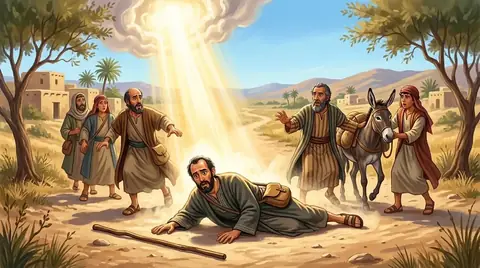 PersonPaulA Pharisee who hated the church until the risen Jesus met him on the road to Damascus. He became the apostle to the…Thing · WorshipThe mercy seatThe solid gold cover on top of the ark, with two cherubim rising from it, where God met Israel and where blood was…
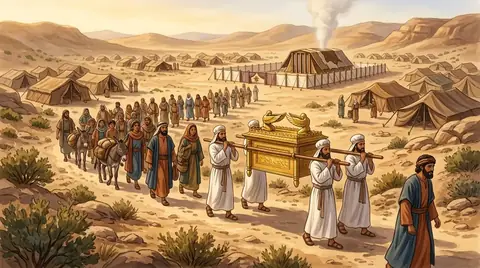 Thing · WorshipThe ark of the covenantThe gold-covered chest that held the Ten Commandments and stood in the Most Holy Place. God promised to meet with…
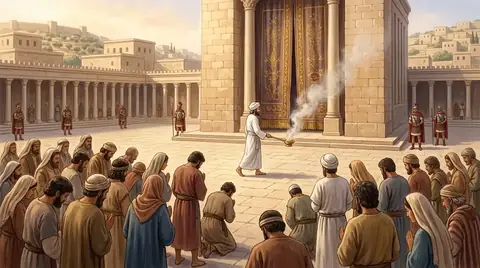 Feast · FastThe Day of AtonementThe one day in the year when the high priest went behind the veil with blood to atone for all Israel's sins, while a…
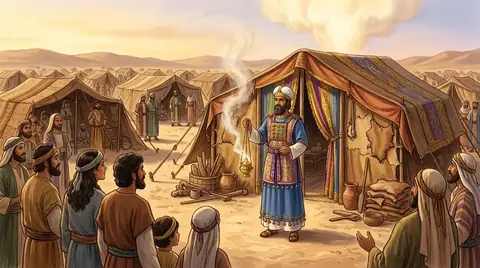 Custom · WorshipThe high priestThe head of Israel's priests, descended from Aaron, who alone went into the Most Holy Place once a year to make…
 PersonJohnThe fisherman who became "the disciple whom Jesus loved". Youngest of the twelve, he stood at the cross, ran to the…
Written for this app in its own words, from the Bible, with the facts checked against Bible dictionaries and encyclopedias: Easton's, Smith's, Fausset's, ISBE, Holman, the New Bible Dictionary, Vine's and the Thompson Chain topics.
