
Group
Patriarchs
The founding fathers of Israel
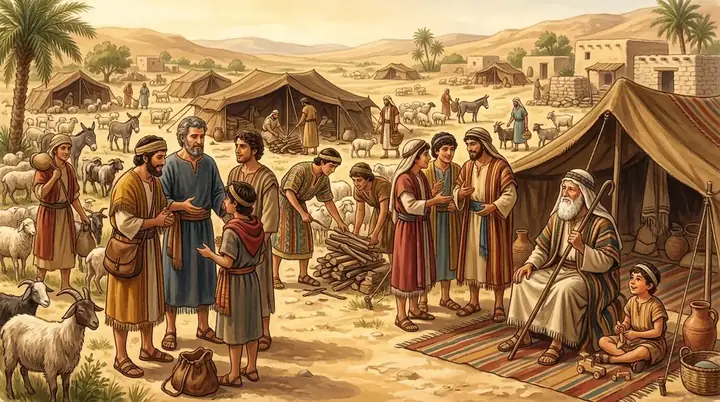
The fathers of the nation of Israel: Abraham, Isaac and Jacob, and then the twelve sons of Jacob from whom the tribes descend. The word means the head and founder of a family line.
- The three
- Abraham, Isaac and Jacob
- The twelve
- Jacob's sons, fathers of the twelve tribes
- Also called patriarchs
- David (Acts 2:29); the long-lived fathers before the flood
Who they were
A patriarch is the father from whom a whole family line descends. In the Bible the name belongs first to Abraham, Isaac and Jacob, the three men to whom God gave his promises of a people and a land. God still calls himself by their names: "the God of Abraham, the God of Isaac, and the God of Jacob" (Exodus 3:6). Then it is used of the twelve sons of Jacob, who head the twelve tribes; Stephen speaks of them as "the twelve patriarchs" who sold Joseph into Egypt (Acts 7:8–9). Peter gives the title to David too, as the father of the royal line (Acts 2:29). The book of Genesis also tells of the fathers before the flood, from Adam to Noah, who lived for hundreds of years (Genesis 5).
Why they matter
The patriarchs lived by faith in promises they never saw fulfilled. Abraham left his home for a land he did not know; all three lived in tents as strangers in the country God had promised them. Hebrews says they were looking for a better country, "a city which hath foundations, whose builder and maker is God" (Hebrews 11:8–16).
Through them God's plan for the world took shape. The nation of Israel, the Law, the kings and at last the Messiah all came from this one family. Paul counts "the fathers" among Israel's great privileges, "of whom as concerning the flesh Christ came" (Romans 9:5). And Jesus said that people from east and west would one day sit down with Abraham, Isaac and Jacob in the kingdom of heaven (Matthew 8:11).
Key verses
- Genesis 12:1–3
Now the Lord had said unto Abram, Get thee out of thy country, and from thy kindred, and from thy father’s house, unto a land that I will shew thee: And I will make of thee a great nation, and I will bless thee, and make thy name great; and thou shalt be a blessing: And I will bless them that bless thee, and curse him that curseth thee: and in thee shall all families of the earth be blessed.
- Exodus 3:6
Moreover he said, I am the God of thy father, the God of Abraham, the God of Isaac, and the God of Jacob. And Moses hid his face; for he was afraid to look upon God.
- Acts 7:8–9
And he gave him the covenant of circumcision: and so Abraham begat Isaac, and circumcised him the eighth day; and Isaac begat Jacob; and Jacob begat the twelve patriarchs. And the patriarchs, moved with envy, sold Joseph into Egypt: but God was with him,
- Romans 9:5
Whose are the fathers, and of whom as concerning the flesh Christ came, who is over all, God blessed for ever. Amen.
- Hebrews 7:4
Now consider how great this man was, unto whom even the patriarch Abraham gave the tenth of the spoils.
- Hebrews 11:8–16
By faith Abraham, when he was called to go out into a place which he should after receive for an inheritance, obeyed; and he went out, not knowing whither he went. By faith he sojourned in the land of promise, as in a strange country, dwelling in tabernacles with Isaac and Jacob, the heirs with him of the same promise: For he looked for a city which hath foundations, whose builder and maker is God. …
On the map
Read next
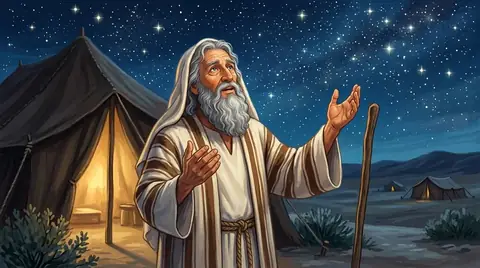 PersonAbrahamThe man God called out of Ur to a land he had never seen, promising him a people and a blessing for the whole world. He…
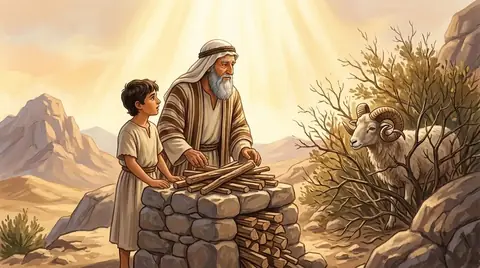 PersonIsaacThe son God promised to Abraham and Sarah when they were far too old for children, offered on Mount Moriah and spared.…
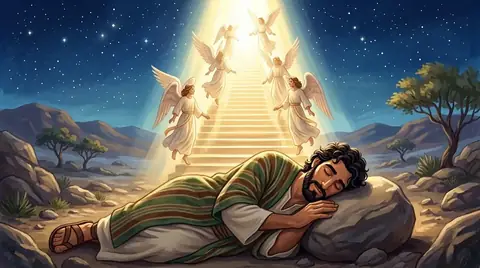 PersonJacobIsaac's younger twin son, who won his brother's birthright and blessing by cunning, was changed by God, and was renamed…
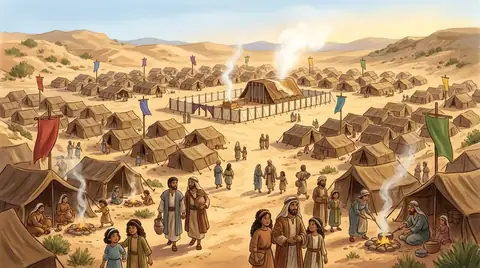 Group · NationThe twelve tribesThe twelve families that made up the nation of Israel, one from each of Jacob's sons. Each tribe had its place in the…
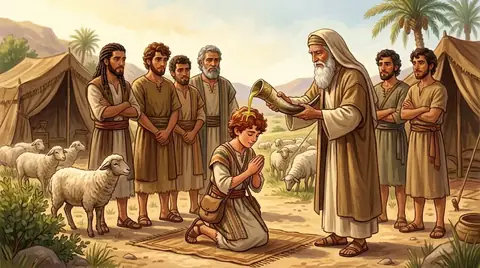 Person · KingDavidThe shepherd boy who killed Goliath and became Israel's greatest king, "a man after God's own heart". He wrote many…
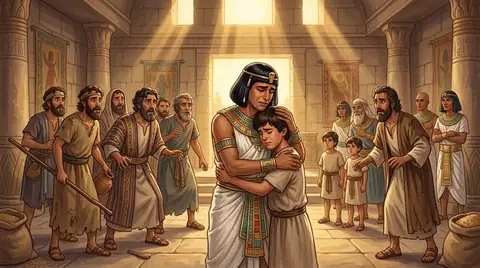 PersonJosephJacob's favourite son, sold by his brothers into Egypt, where he rose from prison to rule the land and saved his family…
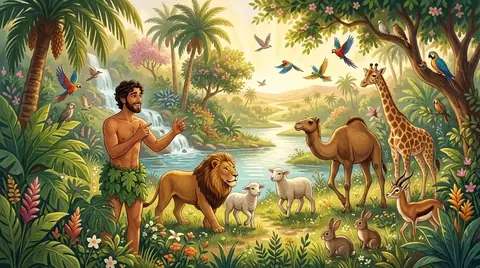 PersonAdamThe first man, made by God from the dust and given life by his breath. His disobedience in Eden brought sin and death…
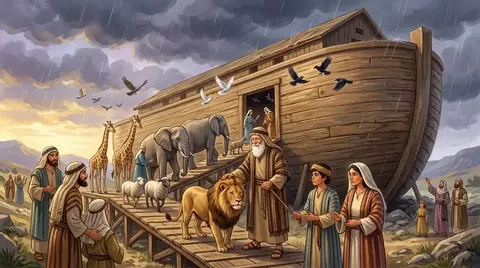 PersonNoahThe one righteous man of his age. God told him to build an ark, and through it saved him, his family and the animals…
Written for this app in its own words, from the Bible, with the facts checked against Bible dictionaries and encyclopedias: Easton's, Smith's, Fausset's, ISBE, Holman, the New Bible Dictionary, Vine's and the Thompson Chain topics.
