
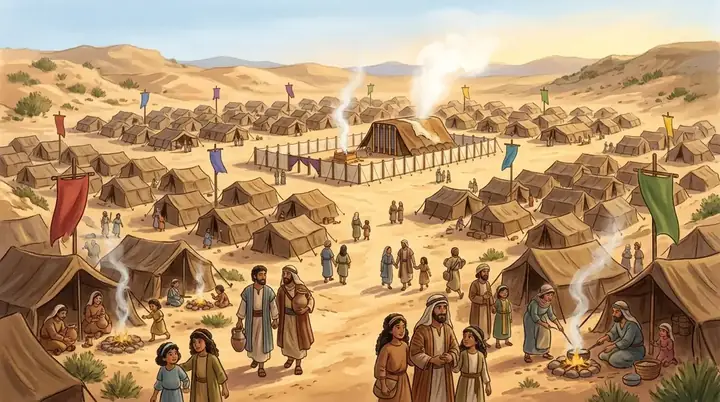
Group · Nation
The twelve tribes
The families of Israel, descended from the twelve sons of Jacob
The twelve families that made up the nation of Israel, one from each of Jacob's sons. Each tribe had its place in the camp and its share of the land; Levi served God instead of holding land.
- The sons
- Reuben, Simeon, Levi, Judah, Dan, Naphtali, Gad, Asher, Issachar, Zebulun, Joseph, Benjamin
- The land tribes
- Joseph's sons Ephraim and Manasseh counted as two tribes, and Levi took no land, so the number stayed twelve
- Later
- Ten tribes formed the northern kingdom, Judah and Benjamin the southern (1 Kings 12)
Who they were
Jacob, whose other name was Israel, had twelve sons by his two wives and their two maids. On his deathbed he blessed each one and spoke of what would become of his family (Genesis 49). In Egypt the families grew into tribes, and when they came out, Moses counted them tribe by tribe (Numbers 1). Each tribe had its own flag and its own place around the tabernacle in the camp, three on each side (Numbers 2). Levi was set apart to serve the sanctuary and received no land of its own but towns scattered among the others (Numbers 18:20–24); Joseph's two sons Ephraim and Manasseh were each counted as a tribe (Genesis 48:5), so there were still twelve to share out the land (Joshua 13–21).
Together and apart
The tribes were one nation under Joshua, but they quarrelled often in the time of the judges, and Benjamin was nearly wiped out in one civil war (Judges 20–21). David united them, and under Solomon they were one kingdom. After his death the ten northern tribes broke away under Jeroboam, leaving Judah and Benjamin to the house of David (1 Kings 12). The northern kingdom was carried off by Assyria in 722 BC and its tribes scattered; Judah went into exile in Babylon and came back.
In the New Testament
By the time of Jesus the tribes were mixed, though many Jews still knew theirs: Paul was a Benjamite and Anna was of Asher (Philippians 3:5; Luke 2:36). James wrote his letter to "the twelve tribes which are scattered abroad" (James 1:1), and Paul spoke before Agrippa of "our twelve tribes" hoping for God's promise (Acts 26:7). Jesus promised his apostles they would judge the twelve tribes (Matthew 19:28). Revelation lists twelve thousand sealed from each tribe (Revelation 7:4–8), and the twelve gates of the new Jerusalem carry their names (Revelation 21:12): God has not forgotten one of them.
Key verses
- Genesis 49:28
All these are the twelve tribes of Israel: and this is it that their father spake unto them, and blessed them; every one according to his blessing he blessed them.
- Numbers 1:1–4
And the Lord spake unto Moses in the wilderness of Sinai, in the tabernacle of the congregation, on the first day of the second month, in the second year after they were come out of the land of Egypt, saying, Take ye the sum of all the congregation of the children of Israel, after their families, by the house of their fathers, with the number of their names, every male by their polls; From twenty years old and upward, all that are able to go forth to war in Israel: thou and Aaron shall number them by their armies. …
- Joshua 13:7
Now therefore divide this land for an inheritance unto the nine tribes, and the half tribe of Manasseh,
- 1 Kings 12:20
And it came to pass, when all Israel heard that Jeroboam was come again, that they sent and called him unto the congregation, and made him king over all Israel: there was none that followed the house of David, but the tribe of Judah only.
- James 1:1
James, a servant of God and of the Lord Jesus Christ, to the twelve tribes which are scattered abroad, greeting.
- Revelation 21:12
And had a wall great and high, and had twelve gates, and at the gates twelve angels, and names written thereon, which are the names of the twelve tribes of the children of Israel:
On the map
Read next
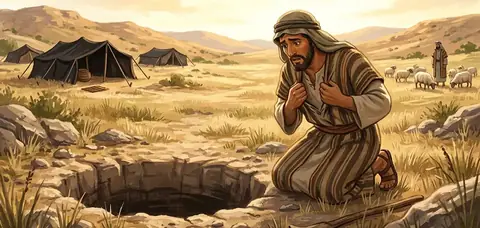 Person · TribeReubenJacob's firstborn, who lost the rights of the eldest by sleeping with his father's concubine. He tried to save Joseph…
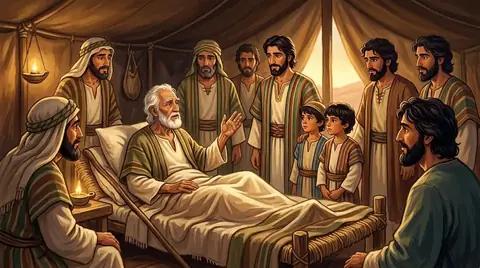 Person · PatriarchSimeonJacob's second son, by Leah. With Levi he massacred the men of Shechem to avenge their sister Dinah, and for that his…PersonLeviJacob's third son by Leah, and father of the tribe of priests and Levites. With Simeon he massacred the men of Shechem…
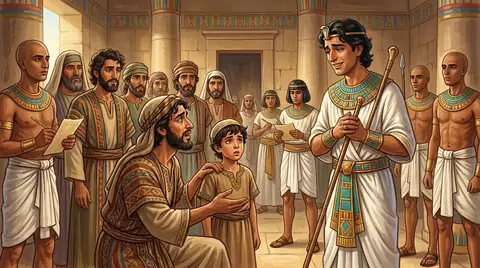 PersonJudahJacob's fourth son, who became leader among his brothers and the father of Israel's royal tribe. David, the kings of…Place · Tribe · PersonDanJacob's fifth son, the tribe that came from him, and the city in the far north that the tribe captured and renamed.…Person · TribeNaphtaliJacob's sixth son, born to Rachel's maid Bilhah, and the tribe that came from him, settled in the hills of northern…
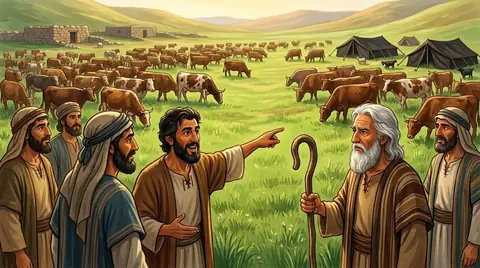 Person · TribeGadJacob's seventh son, by Leah's maid Zilpah, and the warlike tribe named after him that settled east of the Jordan. A…
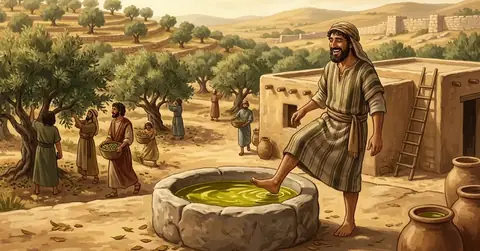 Person · TribeAsherJacob's eighth son, born to Leah's maid Zilpah, and the tribe that came from him. Asher's land was the rich coast north…
Written for this app in its own words, from the Bible, with the facts checked against Bible dictionaries and encyclopedias: Easton's, Smith's, Fausset's, ISBE, Holman, the New Bible Dictionary, Vine's and the Thompson Chain topics.
